An O-1 visa denial can feel like a dead end, but it is often a strategy problem, not the end of the case. The next step depends on why USCIS denied the petition and whether the case is better suited for an appeal, a motion, or a stronger new filing. Depending on your case for your O-1 application, whether you are a founder, a developer, a product manager, a business executive, or other professionals, all that matters is that you have strong evidence and a clear understanding for USCIS approval.
An O-1 visa denial means USCIS did not approve the Form I-129 petition. This is different from a Request for Evidence, where USCIS asks for more proof before making a final decision.
It is also different from a consular visa refusal after the petition has already been approved. Many applicants use “denial,” “rejection,” and “refusal” interchangeably, but they do not always mean the same thing.
The denial notice is the starting point. It usually explains whether USCIS questioned your extraordinary ability, evidence quality, petitioner structure, proposed work, or legal argument. A good move for an O-1 visa appeal after rejection starts with reading that notice line by line, not rushing into another filing.

Many O-1 cases are denied because the petition does not prove that the applicant has reached the required level of recognition. USCIS does not approve an O-1 just because someone is skilled, educated, employed, or promising.
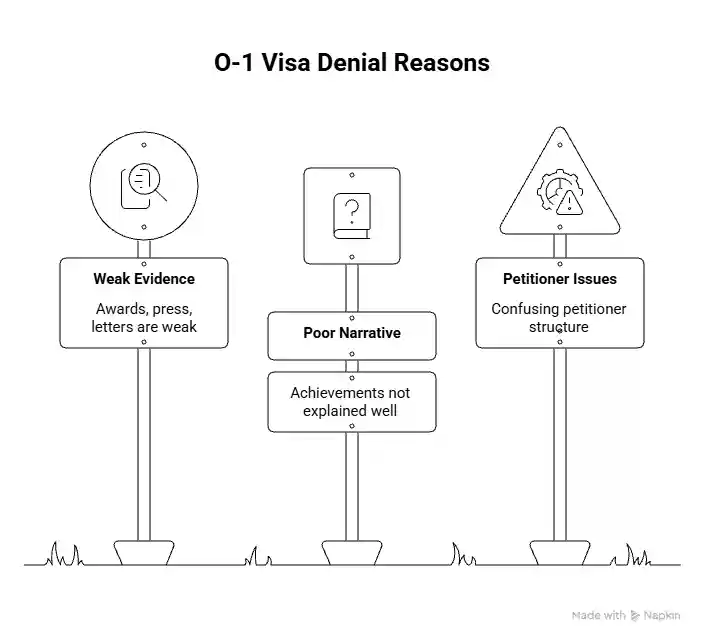
Common O-1 visa denial reasons include weak awards, limited press, vague recommendation letters, unclear critical role evidence, poor proof of original contribution, or salary evidence that is not properly benchmarked.
Learn more about which of the best criteria for the O-1 visa can strengthen your evidence.
A weak petition narrative can also cause problems. If the filing only lists achievements without explaining why they matter in the field, USCIS may decide the applicant has not shown extraordinary ability.
Some petitions fail because the petitioner structure is confusing, especially in founder, consultant, and agent petitioner cases.
USCIS must understand who is petitioning, what work will be performed in the United States, and why the work arrangement is valid.
After an O-1 visa rejection, there are usually three main routes: appeal, motion, or refile. Review the denial notice carefully to understand whether USCIS rejected the evidence, the legal argument, the petitioner's structure, or the overall case presentation.
An appeal asks a higher reviewing office to look at the decision. This may make sense if USCIS misunderstood the evidence, ignored important documents, or applied the wrong legal standard. An appeal is usually stronger when the original record already contained solid evidence that was not properly considered.
However, an appeal is not always the fastest or most practical route. If the case was genuinely weak or incomplete, appealing may only repeat the same problems without giving USCIS a stronger petition to review.
An O-1 visa motion to reopen is usually based on new facts or new evidence. This may help if you can provide stronger documents that directly address the denial. For example, new proof of impact, updated contracts, clearer expert letters, or stronger recognition evidence may support this route.
A motion to reconsider argues that USCIS made a legal or policy error based on the record already submitted. This option is usually more focused on how USCIS applied the rules, not on adding a large amount of new evidence.
This is different from simply saying the officer was wrong. The argument needs to point to law, policy, or a clear mistake in how the case was reviewed. It should clearly explain why the decision should change based on the existing petition record.
Refiling means submitting a new O-1 petition. This is often the better option when the first petition was underdeveloped, poorly organized, or missing key evidence. A refile gives you the chance to rebuild the case, fix weak areas, and present the applicant’s achievements in a clearer way.
A good O-1 visa appeal after rejection strategy should be honest. If USCIS clearly made a mistake, an appeal may be worth considering. But if the petition lacked strong evidence, refiling may give you more room to rebuild the case.

To refile O-1 visa petition materials properly, do not simply resend the same documents with a few extra letters attached. USCIS may see the same weaknesses again if the new petition does not clearly address the first denial. A strong refile should feel like a rebuilt case, not a recycled case.
Identify exactly what USCIS challenged. Was the issue the applicant’s field, evidence categories, petitioner, final merits analysis, itinerary, or advisory opinion? This diagnosis matters because each denial needs a different fix. If USCIS questioned original contributions, the new filing may need stronger proof of impact. If USCIS questions the petitioner, the refile may need clearer contracts, company documents, or agent authorization materials.
Next, match each document to the strongest O-1 criteria instead of submitting evidence in a scattered way. Evidence may include awards, published material, judging, original contributions, critical role proof, high salary, memberships, scholarly articles, or commercial success. The petition should explain why each piece matters and how it proves recognition in the applicant’s field.
The new petition should explain why the applicant is recognized in the field, not just why they are talented or valuable to one company. USCIS needs to understand what the applicant does, why their work matters, how their achievements have been recognized, and why the U.S. role requires someone with their level of ability. If you are still planning the filing process, see Beyond Borders’ guide to the O-1 visa application process.
For founders, consultants, advisors, and multi-project professionals, the work arrangement must be clear. A U.S. employer, U.S. company, or agent petitioner structure should show who is filing, what work the applicant will do, and why the petitioner has the authority to file. Useful proof may include contracts, advisory agreements, itineraries, company documents, or client letters.
A refile is not about adding more pages. It is about removing doubt. The new petition should directly answer the denial concerns, improve weak evidence, clarify the applicant’s field, and present a cleaner case strategy. Repeating the same filing with minor edits is risky, but rebuilding the case around the actual denial reasons can give the applicant a stronger path forward.
After a denial, stay calm and review the denial notice before taking action. Moving too quickly can lead to another weak filing, so the goal is to understand the problem first and choose the strongest next step.
Do not immediately refile the same petition with minor edits. USCIS may raise the same concerns again if the new filing does not fix the weaknesses from the first denial.
Recommendation letters can help, but they rarely fix a weak case by themselves. Strong letters should be specific, credible, and supported by proof such as press, metrics, contracts, awards, citations, or other objective evidence.
If you are considering an appeal, motion to reconsider, or O-1 visa motion to reopen, the petitioner must act quickly. Missing the filing deadline can remove important legal options, so review the denial notice as soon as it is received.
Sometimes, an O-1 visa is still the right path after a denial, especially if the case can be strengthened with better evidence or a clearer petitioner structure. In other cases, it may be worth comparing O-1 with EB-1A, EB-2 NIW, H-1B, L-1, or another visa option based on the applicant’s recognition, employer setup, U.S. timeline, and long-term green card goals.
Beyond Border reviews your denial notice, identifies what USCIS challenged, and helps decide whether an O-1 visa appeal after rejection, motion, or new filing is the strongest path.
We focus on fixing the real problem: weak evidence, unclear petitioner structure, poor field positioning, or an underdeveloped petition narrative. If refilling is the better option, we help rebuild the case with stronger evidence and a clearer legal strategy.
If your O-1 was denied, do not guess your next step. Review your case with an expert.
Schedule your free consultation and profile evaluation.
In many cases, the petitioner may be able to file an appeal or motion if the denial notice allows it. The beneficiary usually does not control the appeal independently. Review the denial notice quickly because appeal and motion deadlines can be strict.
It depends on why the case was denied. Appeal may make sense if USCIS made a clear legal or factual mistake. Refiling may be better if the original petition had weak evidence, poor organization, or an unclear petitioner structure.
Many USCIS appeals and motions must be filed within 30 calendar days, or 33 calendar days if the decision was mailed. Always follow the deadline listed in the denial notice.
An O-1 denial does not automatically prevent a future approval. However, the next petition should directly address the original denial. Repeating the same weak evidence can create avoidable risk.
Yes, O-1 petitions are generally eligible for premium processing. But premium processing only speeds USCIS review. It does not improve the quality of the petition or guarantee approval.

Address: 4 W 4th Ave, San Mateo, CA 94402, United States
Email: info@beyondborderglobal.com