The O-1 visa application process involves more documentation, more preparation time, and more moving parts than most other nonimmigrant visa categories. The petition must establish extraordinary ability through independently verifiable evidence across multiple regulatory criteria, obtain a written advisory opinion from a professional organisation in the field, and be filed correctly by a qualifying U.S. sponsor before any USCIS adjudication begins.
Understanding the full sequence of steps before starting prevents the most common delays and errors. Evidence that would take months to gather cannot be assembled in days. Advisory opinions from relevant organisations take 2 to 4 weeks. USCIS standard processing runs 11 months. A consular interview adds several more weeks for applicants outside the United States. Planning the full timeline from eligibility assessment through U.S. entry requires accounting for all of these stages.
Beyond Border files O-1A petitions for technology professionals, founders, researchers, and executives. This guide covers every stage of the O-1 application process in 2026, from sponsor identification through visa stamp issuance, including the exact documents required at each step, the fees involved, and the most common errors that produce RFEs and denials.
Book a consultation with Beyond Border today
The first decision in the O-1 process is determining the sponsorship structure. The petitioner must be either a U.S. employer, a U.S. agent, or a foreign employer filing through a U.S. agent. The sponsorship structure affects how the petition is organised, how employment changes are handled, and what documentation the petitioner must provide.
The table below compares the three sponsorship options and their practical implications.
The agent arrangement is particularly well-suited to technology founders who control their own U.S. entity, to performing artists working across multiple venues or production companies, and to independent consultants with multiple clients. A single O-1 petition through an agent can cover all planned U.S. work engagements during the approval period. The agent assumes the petitioner obligations under USCIS regulations, including the obligation to notify USCIS of material changes in employment.
Confirming the sponsorship structure before any evidence gathering begins ensures that the correct Form I-129 package is prepared and that the employment documentation reflects the actual work arrangement accurately.
O-1A eligibility requires either receipt of a major internationally recognised award, such as a Nobel Prize, Olympic medal, or Turing Award, or satisfying at least three of the eight regulatory evidentiary criteria. For the vast majority of applicants, qualification is established through the three-criteria pathway.
Before beginning the formal petition process, conducting a thorough and honest assessment of which criteria the applicant satisfies with strong, independently verifiable documentation is essential. Attempting to build a petition around weak or marginal evidence for three criteria produces an application that may pass the threshold review but fails the final merits determination where USCIS assesses whether the totality of evidence demonstrates genuine extraordinary ability.
The evidence gathering phase typically takes three to twelve months depending on how complete the existing record is and how many additional elements, such as advisory opinion initiations, expert letter requests, and publication or award documentation, need to be assembled. Common evidence categories include documented awards with selectivity data, published material about the applicant in major or trade publications, membership records in associations with expert-based admission criteria, peer review invitations and confirmation letters, patents and adoption metrics, scholarly articles with citation data, senior role documentation with evidence of the organisation's distinguished reputation, and compensation contracts benchmarked against industry salary data.
Expert recommendation letters from five to eight independently recognised figures in the field who have no direct personal or financial interest in the petition's outcome are required alongside documentary evidence. Each letter must address specific evidentiary criteria, compare the applicant's achievements to peers in the field, and include specific examples with metrics rather than generic praise. Letters from direct colleagues, supervisors, or collaborators with a personal stake in the outcome carry less evidentiary weight than letters from independently recognised experts who know the applicant only through their professional reputation and published work.
A written advisory opinion is required for all O-1A and O-1B petitions. The advisory opinion is a formal letter from a relevant peer group, labour union, or management organisation confirming that the applicant has the skills and recognition to work at the level described in the petition and that the proposed U.S. activities fall within the field of extraordinary ability claimed.
For O-1A petitions, the relevant organisation depends on the field. Technology and engineering professional associations, scientific societies, and business professional bodies are common sources. For O-1B petitions, SAG-AFTRA handles actors and performers in film and television, the Directors Guild of America handles directors, and the American Federation of Musicians handles musicians.
The advisory opinion process should be initiated at least four to six weeks before the planned petition filing date to allow time for the organisation to process the request and issue the opinion. Advisory opinion fees typically range from $250 to $350 depending on the organisation. USCIS may waive the requirement in limited circumstances where no appropriate peer group or labour organisation exists for the specific field, but such waivers are uncommon and should not be relied upon as a planning assumption.
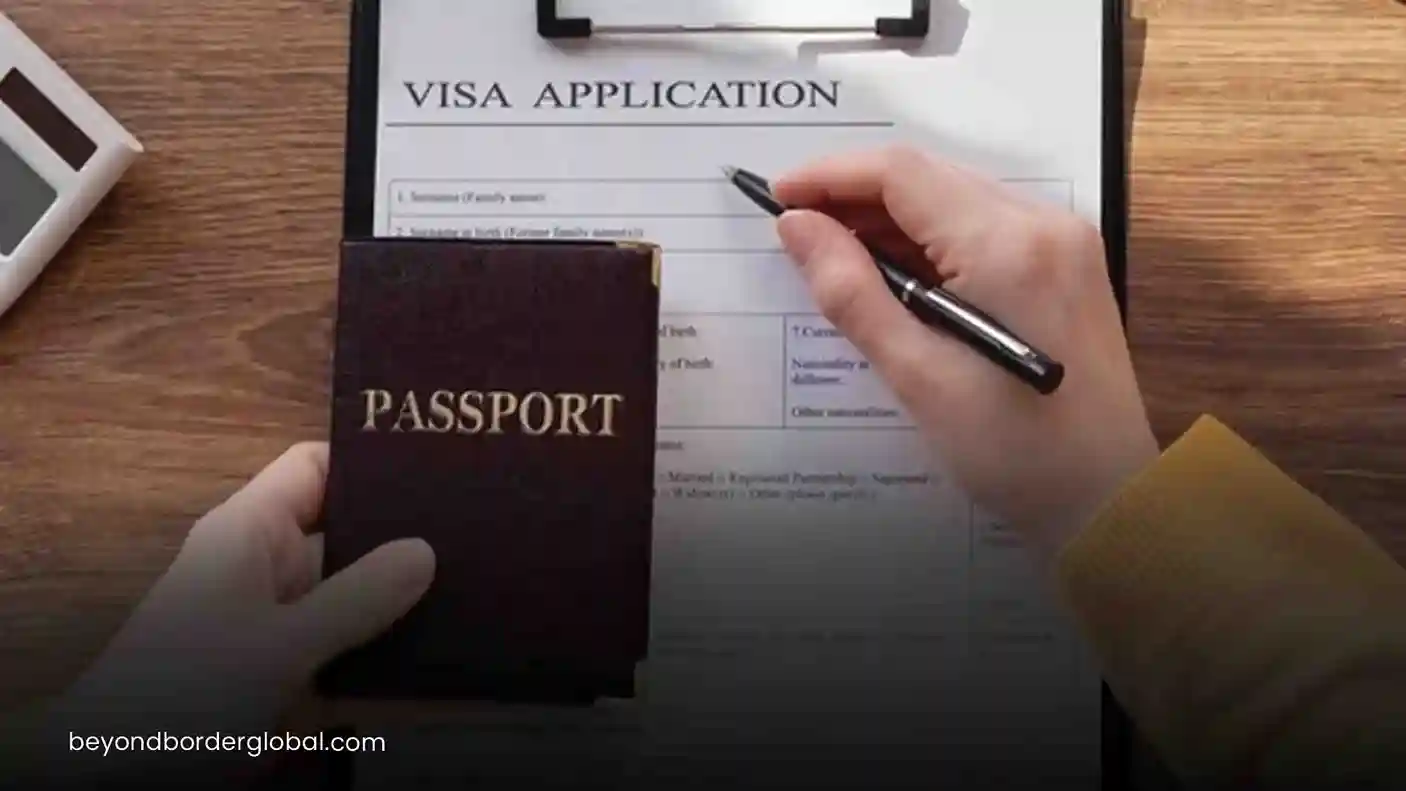
Form I-129 (Petition for a Nonimmigrant Worker) is the core filing document. The sponsor submits Form I-129 along with the O/P supplement, the complete evidence package, the advisory opinion, employment contract or agent agreement, a detailed itinerary or description of events and activities, and the applicable filing fees.
The petition package must present the evidence in a clear, organised structure that directly connects each piece of evidence to the specific criterion it satisfies and explains why the evidence meets that criterion's definition. USCIS officers reviewing O-1 petitions are not specialists in every applicant's field. The petition must provide sufficient context for a non-specialist to evaluate the significance of each piece of evidence without requiring independent research.
The current USCIS government fees for O-1 petitions in 2026 are as follows. Form I-129 base filing fee is $460 for most petitioners. The Asylum Programme fee is $600 for large employers with 26 or more full-time equivalent employees and $300 for small employers. The Fraud Prevention and Detection Fee of $500 applies to initial L-1 petitions but does not apply to O-1 petitions. Premium processing via Form I-907 adds $2,965 effective March 1, 2026.
The petition must be filed at the correct USCIS service centre. The California Service Centre and Vermont Service Centre handle most O-1A petitions. Filing at the wrong service centre causes delays and potential rejection. The sponsor confirms the correct filing address based on the employer's or agent's location before submitting.
[Check the USCIS processing times page for current O-1 petition processing estimates, as USCIS updates these weekly.]
After the petition is received, USCIS issues a receipt notice (Form I-797C) confirming the receipt date and the case number. Standard processing currently runs 3 to 6 months. USCIS can take several actions on the petition.
An approval notice (Form I-797) confirms the petition has been approved for the period requested. For applicants inside the United States changing status, the approval notice itself authorises the new status. For applicants outside the United States, the approval notice is presented at the consulate for visa stamp issuance.
A Request for Evidence pauses the adjudication clock and asks for additional documentation. The petitioner typically has 87 days to respond. The response must address each specific RFE point with the exact evidence requested. Restating the original petition arguments without new evidence or legal analysis does not satisfy an RFE. A comprehensive initial petition that anticipates USCIS concerns reduces RFE risk substantially.
A Notice of Intent to Deny identifies specific grounds on which USCIS is considering denial and provides an opportunity to respond. A well-prepared response to a NOID can save the petition where the officer's concerns can be addressed with additional evidence or legal argument.
A denial is a final negative decision. The sponsor can file a motion to reconsider, a motion to reopen, or a new petition with strengthened evidence.
Premium processing via Form I-907 at $2,965 effective March 1, 2026 guarantees USCIS action within 15 business days. This is strongly recommended for any petition with a defined start date, performance commitment, or operational deadline within the standard processing window. The premium processing clock starts when USCIS receives the correctly filed I-907.
Applicants outside the United States must obtain a visa stamp at a U.S. embassy or consulate before entering the country to begin O-1 status work. The approved I-129 petition alone does not authorise entry.
The consular process begins after I-129 approval with completion of Form DS-160 (the online nonimmigrant visa application) and payment of the $205 nonimmigrant visa application fee to the State Department. The applicant then schedules a visa interview appointment through the scheduling system for the relevant consulate.
Employment-based H, L, O, P, Q, and R category interviews at major consular posts typically have availability within 4 to 10 weeks. The consular interview for O-1 applicants is typically brief. The officer verifies the I-797 approval, the DS-160, and confirms there are no admissibility concerns. Documents to bring include the valid passport (with at least six months of remaining validity), the I-797 approval notice, the DS-160 confirmation page, the nonimmigrant visa fee receipt, two passport-sized photographs, and key supporting evidence from the petition.
After a successful interview, the passport is retained for visa stamping and returned within approximately 5 to 10 business days. Some cases enter administrative processing after the interview for additional security review, which can add weeks to months. Building buffer time into the start date plan accounts for this risk.
The O-1 visa stamp in the passport authorises the holder to present for U.S. entry at a port of entry. The Customs and Border Protection officer confirms admissibility and issues an I-94 record. The I-94 reflects the approved O-1 period from the I-797 plus a 10-day grace period at the end.
Work authorisation under O-1 status begins on the start date shown in the I-797 approval notice and ends on the expiry date shown. Working before the approved start date or after the approved end date is not permitted. O-1 status is petitioner-specific, meaning the beneficiary may only work for the sponsoring employer or through the sponsoring agent. If the employment arrangement changes before an extension petition is filed, a new I-129 must be approved before work with the new arrangement begins.
A 10-day grace period before the approved start date allows the beneficiary to enter the United States for preparatory activities such as finding housing and completing orientation without beginning authorised work. A corresponding 10-day grace period after the approved end date allows for departure preparation.
O-1 extensions are filed by the sponsor through a new Form I-129 with updated documentation demonstrating that the beneficiary continues to qualify for O-1 status. Extensions are granted in one-year increments with no maximum stay limit. Extension petitions can be filed up to six months before the current O-1 period expires, which provides substantial buffer for standard processing timelines.
Changing employers under O-1 requires the new employer or agent to file a new I-129 petition. The new petition must be approved before work with the new employer begins. There is no portability provision for O-1 comparable to H-1B's AC21 portability. A 60-day grace period following termination of employment allows time to prepare and file a new petition without falling out of status, provided the overall O-1 validity period has not expired.
Spouses and unmarried children under 21 of O-1 beneficiaries qualify for O-3 status. O-3 dependents may study in the United States but are not authorised to work. O-3 status follows the O-1 period and must be maintained through the same extension process.
Explore Beyond Border's O-1 visa for founders page for guidance on the agent arrangement for founders, and Beyond Border's EB-1 visa page for information on concurrent EB-1A green card filing alongside O-1A status.
Insufficient evidentiary quality is the most common cause of RFEs and final merits determination failures. Each criterion must be supported by specific, independently verifiable documentation rather than general assertions or generic letters. An award certificate without documentation of the award programme's selectivity and the awarding organisation's standing does not establish the criterion. A recommendation letter that praises the applicant without addressing specific criteria, providing field comparisons, or including concrete examples contributes little evidentiary weight.
Advisory opinion delays are avoidable by initiating the advisory opinion process at least four to six weeks before the planned filing date rather than treating it as an afterthought after the evidence package is assembled. A missing advisory opinion at the time of filing produces an RFE that adds months to the timeline.
Incorrect sponsorship structure produces I-129 packages that do not accurately reflect the employment arrangement. An agent arrangement that is structured as a single employer relationship, or a single employer relationship where the agent arrangement would be more appropriate for the actual work pattern, creates complications during adjudication and at consular processing.
Underestimating preparation time prevents applicants from building the full evidence portfolio before filing. Evidence gathering, advisory opinion procurement, expert letter writing, and petition drafting collectively require months rather than weeks. Rushing the preparation to meet an arbitrary filing deadline produces a weaker petition than taking the time to build the strongest possible case.
Use the Beyond Border USCIS Fee Calculator to estimate total government fees before beginning.
No. O-1 petitions must be filed by a U.S. employer, a U.S. agent, or a foreign employer through a U.S. agent. Self-petitioning is not permitted. For founders and self-employed professionals, the agent arrangement is the most common sponsorship structure, allowing the petitioner to file on behalf of the beneficiary for multiple engagements through a single petition.
Standard processing runs 3 to 6 months. Premium processing via Form I-907 at $2,965 effective March 1, 2026 guarantees USCIS action within 15 business days. Premium processing is strongly recommended for any petition with a defined start date, performance commitment, or operational deadline within the standard processing window.
An RFE pauses the adjudication clock and requests additional documentation or evidence addressing specific questions the officer has identified. The petitioner typically has 87 days to respond. The response must address each RFE point specifically with the exact evidence requested. A comprehensive initial petition that anticipates USCIS concerns reduces RFE risk substantially. Building a strong petition before filing is more effective than planning to address weaknesses through the RFE process.
Applicants outside the United States must attend a consular interview after I-129 approval to obtain the O-1 visa stamp. Applicants inside the United States who are changing status through a new I-129 petition do not need a consular interview. The change of status takes effect upon I-797 approval without requiring departure from the United States, though the applicant will need to obtain a visa stamp before any future international travel and return.
The advisory opinion is a written statement from a relevant peer group, labour union, or management organisation confirming that the applicant has the skills and recognition to work at the level described in the petition and that the proposed U.S. activities fall within the field of extraordinary ability. It is mandatory for all O-1 petitions. It must be initiated well in advance of the planned filing date and typically takes 2 to 4 weeks to obtain.


Address: 4 W 4th Ave, San Mateo, CA 94402, United States
Email: info@beyondborderglobal.com