Robotics engineers can qualify for the O-1 visa when they show strong evidence of extraordinary ability in robotics, automation, AI, hardware systems, or applied engineering. The case should prove more than technical employment. It should show original contributions, recognition, critical roles, product impact, patents, research, or other evidence that the engineer stands out in the field.
This is especially relevant for robotics professionals working on autonomous systems, robotic perception, control systems, industrial automation, humanoid robotics, simulation platforms, or AI-powered hardware. A strong O-1 visa case explains the engineer’s individual contribution in plain language and connects complex technical work to measurable impact.
Robotics professionals with AI-heavy work may also find similar evidence patterns in the O-1 visa for AI engineers, while robotics software engineers may overlap with the O-1 visa for software developers.
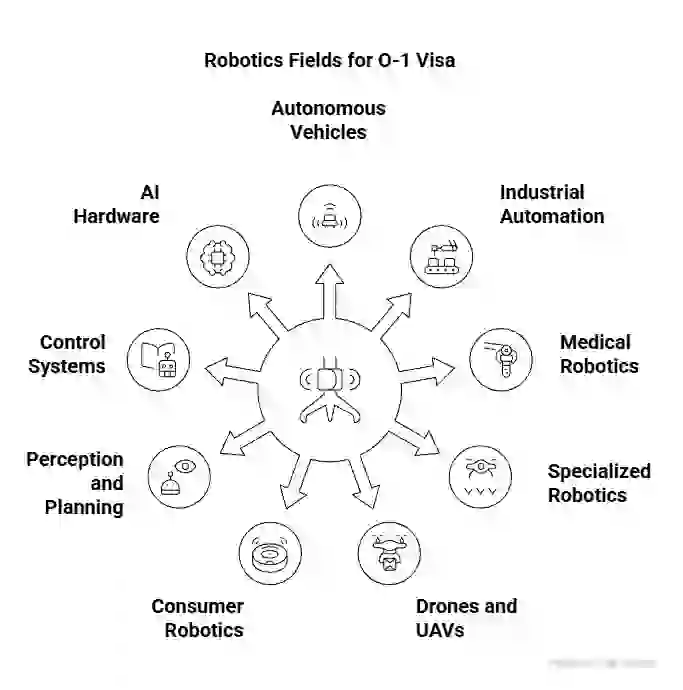
Robotics covers many specialized areas, and an O-1 case can be built around different types of technical work. Examples include:
The area itself does not decide the case. What matters is whether the engineer can show original work, recognition, critical roles, or measurable impact. For example, a warehouse automation engineer may show deployment scale and efficiency gains, while a robotic surgery engineer may show clinical or product impact. An autonomous systems engineer may rely on patents, safety improvements, or technical leadership in a major deployment.
The strongest O-1 cases for robotics engineers usually rely on evidence that proves both technical contribution and outside recognition. The most important evidence may include patents, deployed robotics systems, published research, technical leadership, peer review activity, awards, media coverage, high compensation, and expert letters. Patents can show originality, but they become stronger when connected to real use or product impact. Product deployments can show practical value, especially when the robotics system improved automation, safety, efficiency, accuracy, or scale.
Peer review, judging, awards, and media coverage help show recognition beyond normal employment. Since robotics often blends software, AI, hardware, and physical systems, the petition should explain the work in plain language: what the engineer built, why it was difficult, who used it, and what impact it created. Robotics professionals who review technical papers, judge robotics competitions, or evaluate other experts’ work may also use peer review evidence in O-1 and EB-1 cases to strengthen their profile.
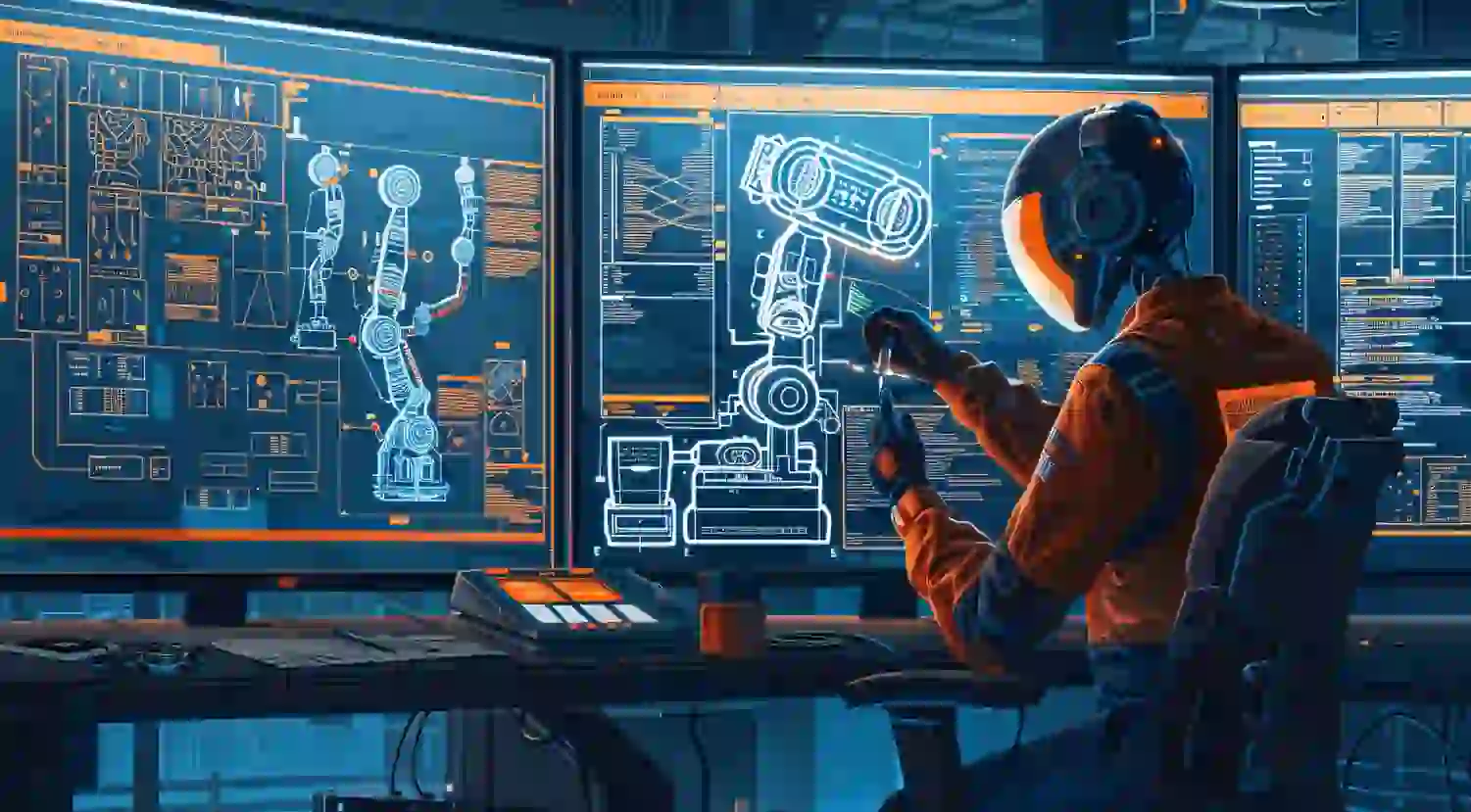
Patents, product deployments, and technical contributions can help show that a robotics engineer has created original work with real-world value. For O-1 cases, the key is not just proving that the work was technical, but showing why it mattered, how it was used, and why the applicant’s role was important.
Patents can support an O-1 case when they show original technical work in areas such as robotic manipulation, machine vision, autonomous movement, sensor fusion, gripper systems, localization, industrial automation, or robotic safety. A patent becomes stronger when it is connected to product use, commercial value, citations, licensing, or a major technical advancement.
Product deployments matter because robotics is an applied field. A robotics system used in warehouses, factories, hospitals, farms, logistics networks, autonomous vehicle programs, or consumer products can show practical impact. Strong proof may include adoption metrics, customer use, internal performance data, safety improvements, efficiency gains, uptime improvements, revenue impact, or reduced manual labor.
Yes. Many robotics engineers build core systems that never appear in press releases. This may include simulation environments, motion planning frameworks, testing pipelines, perception stacks, hardware integration systems, or automation infrastructure. These contributions can be documented through employer letters, technical summaries, internal recognition, architecture documents, product roadmaps, and expert statements.
Yes, confidential robotics work can still support an O-1 case if handled carefully. Sensitive work may be documented through redacted materials, non-confidential summaries, employer letters, technical explanations, and measurable impact statements that do not reveal trade secrets or protected information.
Industry recognition is one of the most important parts of an O-1 visa for robotics engineers. USCIS needs evidence that the applicant is not just skilled, but recognized for achievement in robotics, automation, AI, hardware engineering, or a related technical field. A senior title alone is not enough.
Recognition can come from employers, customers, researchers, investors, professional groups, media, or other credible third parties. Useful examples may include awards, speaking invitations, judging roles, peer review activity, conference committee participation, patent citations, publications, open-source adoption, media coverage, enterprise customers, partnerships, or technical validation from recognized organizations.
Awards from robotics competitions, innovation programs, research institutions, technical conferences, or industry groups can help show recognition. Selective professional memberships may also support the case if they require real achievement, not just payment or basic enrollment. For more details, see Beyond Border’s guide on O-1 visa awards and memberships.
Published material can help when credible media, industry publications, company announcements, or research profiles discuss the applicant or their work. For robotics engineers, this may include coverage of a robotics product launch, technical breakthrough, startup milestone, award, research contribution, or major deployment. Learn more about O-1 visa published material.
Peer review, judging, and evaluation activities can show that the applicant is trusted to assess the work of others in the field. Robotics professionals may use evidence from reviewing technical papers, judging robotics competitions, evaluating grant applications, serving on program committees, or reviewing other experts’ technical work. Beyond Border explains this further in its article on peer review evidence in O-1 and EB-1 cases.
Expert letters should be specific and evidence-driven. A weak letter simply says the applicant is talented. A strong letter explains what the applicant built, why the work was original, how it affected a product or field, and why the recommender is qualified to evaluate it. For robotics engineers, strong letters often come from senior technical leaders, founders, researchers, customers, investors, or recognized industry experts.
Robotics engineers do not need to satisfy every O-1 criterion. Most strong cases focus on the criteria that best match the applicant’s real achievements. For robotics professionals, the most relevant categories often include original contributions, critical roles, published material, judging or peer review, scholarly authorship, awards, high compensation, and recognition from experts in the field.
The key is to avoid listing evidence without strategy. A patent should be tied to technical originality or product use. A critical role should explain why the organization or project was distinguished. Published material should show meaningful coverage, not just a passing mention. Judging or peer review should show that the applicant was trusted to evaluate others in robotics, AI, automation, or engineering. A strong O-1 case connects each evidence category to a clear story of individual contribution and industry recognition.
The O-1 visa and EB-1A green card are both used by high-achieving robotics professionals, but they serve different goals. O-1 is usually better for temporary U.S. work authorization, while EB-1A is a long-term green card pathway for professionals with stronger sustained recognition.
For many robotics engineers, O-1 can be the practical first step. EB-1A may become realistic later if the engineer continues building stronger evidence through patents, publications, product adoption, awards, judging, media coverage, and recognized technical leadership.
Beyond Border helps robotics engineers, automation specialists, AI engineers, hardware innovators, and technical founders turn complex engineering work into a clear O-1 visa strategy. For robotics professionals, the challenge is not just collecting patents, papers, or project documents. The challenge is proving individual contribution, technical originality, and recognition in a way USCIS can understand.
Beyond Border can help identify the strongest evidence, structure the case around relevant O-1 criteria, prepare expert letters, and connect robotics achievements to measurable impact. Whether your work involves autonomous systems, industrial automation, AI robotics, hardware products, confidential R&D, or startup deployments, the right evidence strategy matters.
Schedule your free consultation and profile evaluation.


Address: 4 W 4th Ave, San Mateo, CA 94402, United States
Email: info@beyondborderglobal.com