The O-1 visa is designed for individuals who possess extraordinary abilities in their respective fields. Whether you are a scientist, artist, business leader, or athlete, demonstrating your exceptional talent and achievements is a key aspect of your O-1 petition. One of the most impactful ways to establish your qualifications is through awards and memberships, which validate your expertise and highlight your standing in your industry.
But what exactly counts as an "award" or "membership" for the O-1 visa? This blog explores the types of awards and memberships that can strengthen your petition, as well as those that do not hold much weight with U.S. Citizenship and Immigration Services (USCIS). Understanding these distinctions is crucial to presenting a compelling and well-documented O-1 petition.
What Is an O-1 Visa and Why Are Awards Important?
The O-1 visa is a non-immigrant visa granted to individuals with extraordinary abilities in fields such as arts, sciences, education, business, and athletics. It is one of the few visa categories that does not require a job offer from a U.S. employer, allowing highly skilled individuals to work in their area of expertise in the United States.
For the O-1 visa petition to be successful, applicants must provide evidence of their extraordinary ability. This is where awards and memberships play a critical role. USCIS relies on these forms of recognition to verify that the applicant’s achievements are significant and noteworthy in their field. While there are other ways to demonstrate extraordinary ability, awards and memberships provide an important, tangible form of evidence that bolsters your case.
O-1 Visa Awards: What Counts?
In order to be considered for an O-1 visa, the awards you submit must be substantial and reflective of your achievements. Below are the types of awards that are typically recognized by USCIS:
International Recognition Awards
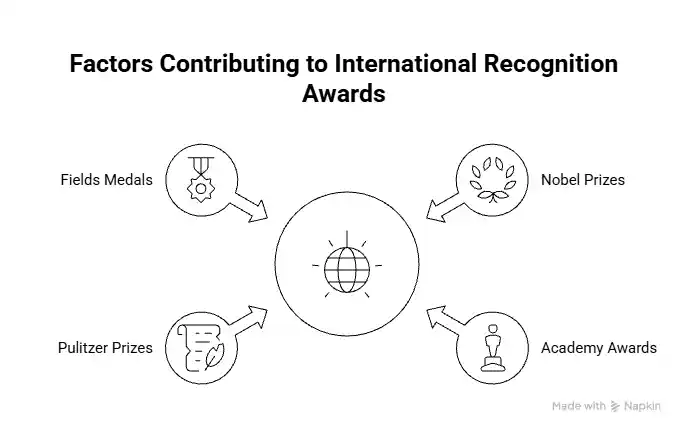
Awards that have international prestige are often the most impactful for an O-1 petition. These awards are generally seen as a benchmark for outstanding achievement in their respective fields. Examples of internationally recognized awards include:
- Nobel Prizes (for various fields such as Physics, Chemistry, Peace, etc.)
- Academy Awards (Oscars) for film-related contributions.
- Pulitzer Prizes for journalism, literature, and the arts.
- Fields Medals for mathematics.
These types of awards are universally acknowledged and are often used to demonstrate extraordinary ability in a field. They offer indisputable evidence of a person’s exceptional achievements and set them apart from others in their industry.
National Recognition Awards
National awards are also valuable for O-1 petitions, especially if they are from respected organizations within the U.S. or the applicant’s home country. For example, a U.S.-based artist or scientist might receive awards such as:
- The National Medal of Science (for contributions to science).
- The Tony Awards for theatrical achievements.
- The Presidential Early Career Award for Scientists and Engineers (PECASE).
These awards represent significant recognition within the nation and can bolster the case for an O-1 petition, especially if the individual is involved in important or innovative work that has had a meaningful impact in the U.S.
Industry-Specific Awards
For individuals in specialized industries, awards granted by industry-specific bodies also count toward demonstrating extraordinary ability. These can be professional recognition awards such as:
- The Grammy Awards (for music).
- The BAFTA Awards (for film and television).
- The Webby Awards (for technology and internet achievements).
These awards are respected within their respective fields, offering concrete evidence that the individual has been recognized for their excellence by peers or authoritative bodies within the industry.
High-Impact Local/Regional Awards
While international and national awards are typically the most impactful, in some cases, regional or local awards may also be used to support an O-1 petition. For example, prestigious awards from the applicant's home country or from a notable regional organization may be sufficient, as long as the award demonstrates significant recognition in the field. Examples include:
- A local or regional award for leadership in innovation or science.
- Industry-specific awards from notable institutions within the applicant’s region.
Though these awards may not carry the same weight as international or national recognition, they can still be valuable in supporting your petition if they reflect substantial achievements within your professional community.
Common Examples of Awards That Do Not Count for O-1 Visa?
Not all awards qualify for the O-1 visa petition, and understanding what does not count is equally important. Below are common examples of awards that will not significantly support an O-1 petition:
Low Prestige or Generic Awards
Awards that are given without substantial criteria or that have low prestige in the field do not hold much value for O-1 petitions. For example:
- Participation awards in competitions or events.
- Certificates of appreciation for general contributions or attendance.
These types of awards do not demonstrate extraordinary ability or significant achievements and are unlikely to strengthen your petition.
Honorary or Non-Merit-Based Awards
While honorary awards may be prestigious, they are typically not considered evidence of extraordinary ability because they are often given to individuals without regard to their specific contributions to the field. For instance:
- Honorary doctorates or titles given for community service or general contributions, rather than exceptional achievements.
Honorary awards do not reflect extraordinary ability or the kind of high-level accomplishments that are required for an O-1 petition.
Awards from Non-Credible or General Organizations
In some cases, awards from non-credible or non-recognized organizations will not be sufficient. This includes:
- Awards from small, non-reputable organizations that are not widely recognized or established in the field.
- Local awards from organizations without merit-based selection criteria.
Awards from these organizations may not carry enough weight to demonstrate extraordinary ability in a given field, as they do not require the same level of expertise or merit.
Memberships and Affiliations: What Counts for O-1 Visa?

In addition to awards, memberships and affiliations with exclusive, merit-based organizations can further demonstrate your qualifications for the O-1 visa. Memberships in certain organizations serve as evidence that your peers or colleagues recognize your extraordinary ability. Here are some memberships that will count for an O-1 visa petition:
Exclusive Professional Organizations
Memberships in professional organizations that have stringent selection criteria based on achievements or skills in your field are highly valuable. Examples include:
- IEEE (Institute of Electrical and Electronics Engineers) for engineers and computer scientists.
- American Medical Association (AMA) for physicians and healthcare professionals.
- American Institute of Architects (AIA) for architects.
These organizations often require members to meet specific criteria and demonstrate exceptional abilities or contributions to their profession, making them a strong addition to an O-1 petition.
Selective Industry Associations
Memberships in highly selective associations related to your field also strengthen your petition. These organizations are typically only accessible to individuals who have a demonstrated impact on the industry. Examples include:
- The Academy of Motion Picture Arts and Sciences (for filmmakers, actors, and industry professionals).
- The National Academy of Sciences (for scientists and researchers).
These memberships showcase your active participation in an elite group and help prove that you are considered an expert by your peers.
Recognition-Based Memberships
Some organizations offer membership only to individuals who have been recognized for their outstanding work. For example, Fellowships from prominent scientific organizations or invitation-only memberships in professional groups can validate your extraordinary ability in the field.
What Types of Memberships Do Not Count for O-1 Visa?
Memberships that do not require merit-based selection or those that do not demonstrate extraordinary ability are not considered useful for the O-1 petition. These include:
- General memberships in public organizations that do not require selection based on merit.
- Non-selective, non-professional memberships that do not reflect industry recognition or achievement.
For example, memberships in organizations such as local hobby clubs or non-professional groups would not support an O-1 petition.
How to Strengthen Your O-1 Visa Application with Awards and Memberships?

Now that we’ve covered the types of awards and memberships that count, here are some tips to present these in your O-1 visa application:
Documenting Recognition
Make sure to include detailed descriptions of the awards and memberships you are submitting. This includes providing context for the significance of each award and how it relates to your extraordinary abilities in your field.
Letters of Recommendation
Use letters from experts in your field to provide validation of the significance of your awards and memberships. These letters can confirm the impact of your work and emphasize the recognition you’ve received.
Demonstrating Impact
Show how your awards and memberships reflect your contributions to your industry. Provide evidence of the direct effect your work has had, and explain how these recognitions fit into your overall career narrative.
Examples of Awards for O-1 Visa
Understanding how awards and memberships apply to specific target personas can help strengthen your O-1 visa petition. Here’s how the concept of qualifying awards and memberships might apply to Beyond Border’s target personas:
Startup Founders
For a startup founder, awards such as “Entrepreneur of the Year” or recognition from prestigious accelerators (e.g., Y Combinator) could prove the founder’s extraordinary ability in leading and growing a successful business. Memberships in exclusive entrepreneurial networks or associations would further validate their leadership and innovation.
If you’re a founder seeking O‑1 visa representation, consider our expertise for O‑1 Visa for Founders to assess your awards, craft your strategy, and prepare compelling evidence that meets USCIS standards.
Product Managers
A product manager’s O-1 petition might benefit from awards in innovation, product design, or industry leadership (e.g., awards for a product launch or market impact). Memberships in industry-specific organizations such as the Product Management Association would be an excellent addition to demonstrate expertise in managing high-impact products.
For product professionals aiming to build a strong O‑1 profile, our O‑1 Visa for Product Managers service provides tailored guidance on presenting your awards and memberships effectively.
Software Developers
For a software developer, industry recognition through tech innovation awards, open-source contributions, or invitations to elite programming competitions (e.g., Google Code Jam) can demonstrate exceptional technical ability. Memberships in organizations like IEEE Computer Society would strengthen their case for O-1 eligibility.
If you’re a software developer ready to pursue an O‑1 petition, our O‑1 Visa for Software Developers service page outlines how to position your accomplishments for success.
Business Executives
Business executives could present executive leadership awards, recognition from major industry bodies (e.g., Business Leadership Awards), or invitations to speak at top-tier business conferences. Memberships in exclusive networks such as The Executive Leadership Council could add additional weight to their petition.
Business leaders seeking specialized O‑1 visa strategy and preparation can visit O‑1 Visa for Executives to see how we can help shape your evidence and narrative.
What Are the Other Key Evidence for O-1 Visa Petitions?
While awards and memberships are crucial, there are other forms of evidence that strengthen your O-1 visa petition. This includes:
- Publications in high-profile journals or media outlets.
- Media coverage such as interviews or features in prominent publications.
- Contracts or letters from clients that demonstrate your value in your industry.
Make sure your application is comprehensive and includes various forms of evidence that collectively demonstrate your extraordinary ability.
Are you ready to start your O-1 Visa journey?
At Beyond Border, we specialize in helping professionals like you navigate the O-1 Visa application process. Whether you're a startup founder, software developer, product manager, or business executive, our expert team can assist you in gathering and presenting the strongest possible evidence to support your petition.
Schedule your free consultation and profile evaluation.
Let us help you take the next step toward securing your O-1 Visa. Reach out today to discuss how we can strengthen your petition and improve your chances for approval.
Frequently Asked Questions
For O-1 petitions, awards must demonstrate international or national recognition for extraordinary ability, such as Nobel Prizes, Academy Awards, or similar prestigious honors.
Only memberships in organizations that select members based on merit and extraordinary ability in a specific field are considered valid for O-1 Visa applications.
Local awards may count if they are highly recognized within your field and are associated with substantial contributions to your industry.
Include detailed documentation such as certificates, descriptions of the significance of the award or membership, and letters of recommendation from industry experts.
Non-professional memberships or those not based on merit do not count towards your O-1 Visa petition.