Medical professionals do not always fit neatly into standard U.S. work visa categories. A doctor may have clinical expertise, a surgeon may have a rare procedural specialty, and a healthcare founder may be building technology that changes patient care. For these profiles, the O-1 visa can be a strong option when the evidence shows extraordinary ability.
The O-1 visa for medical professionals is not limited to academic researchers. It may work for physicians, surgeons, clinical leaders, healthcare founders, medical device innovators, biotech professionals, and digital health experts who can prove recognition in their field.
Medical professionals can qualify for an O-1 visa if they can show extraordinary ability in a clearly defined field. This may include medicine, surgery, clinical research, biotechnology, digital health, public health, medical devices, or healthcare AI.
USCIS needs evidence that the individual has above ordinary professional practice and is recognized as highly accomplished in their area.
For a deeper breakdown of the legal standard, review Beyond Borders’ guide on O-1A visa requirements.
For doctors, surgeons, and physicians, the O-1 standard usually depends on proof of recognition. This may include leadership at a respected hospital, authorship of medical research, specialist expertise, awards, speaking invitations, clinical innovation, or evidence that other professionals rely on their work.
An O-1 visa for doctors is strongest when the case explains why the applicant stands out compared with others in the same specialty.
When you mention a vague field like “medicine”, this could weaken the case. A stronger field might be “robotic colorectal surgery,” “AI-based diagnostic tools,” “interventional cardiology,” “oncology clinical research,” or “medical device innovation.”
The narrower and more accurate the field, the easier it becomes to show that the applicant has achieved recognition within it.

Strong evidence is the heart of the O-1 visa for medical professionals. USCIS does not approve a case because someone has a medical degree, a hospital job, or years of experience. The petition must connect achievements to recognized O-1 criteria.
Clinical evidence may include rare procedural expertise, leadership in complex cases, specialist training, hospital appointments, invited lectures, clinical outcomes, or expert letters from senior medical leaders.
For an O-1 visa for surgeons, useful evidence may include advanced surgical techniques, leadership in surgical programs, case complexity, training of other surgeons, or measurable impact on patient care.
A medical professional may qualify by showing they played a critical role in a distinguished organization. This could include a major hospital, academic medical center, research institution, biotech company, or healthcare startup.
The petition should explain both sides: why the organization is distinguished and why the applicant’s role was critical.
Peer review can be strong O-1 visa medical evidence. This may include reviewing journal articles, evaluating grant applications, judging medical competitions, serving on advisory boards, reviewing clinical protocols, or assessing the work of other professionals.
For many medical professionals, research and innovation are the strongest parts of the case. Publications alone may help, but they are more persuasive when supported by citations, journal quality, clinical relevance, or adoption by other experts.
Medical publications can support the O-1 visa for medical professionals when they show a meaningful contribution to the field. USCIS may consider peer-reviewed articles, book chapters, conference papers, citation records, clinical guidelines, and presentations at respected medical events.
The strongest cases explain why the research matters, not just where it was published.
Original contributions may include new treatment methods, surgical approaches, diagnostic tools, clinical workflows, medical devices, AI healthcare systems, patient safety improvements, or public health programs.
For healthcare innovators, the case should show real-world use. Adoption by hospitals, citations, customer letters, patents, regulatory progress, or measurable patient impact can make the contribution stronger.
Awards can help when they are selective and respected. Strong examples may include competitive research awards, medical society recognition, national fellowships, innovation prizes, or honors from distinguished institutions.
Weak internal awards usually need more support. The petition should explain the award’s criteria, selectivity, and reputation.
For a broader overview, see Beyond Borders’ O-1 visa guide.
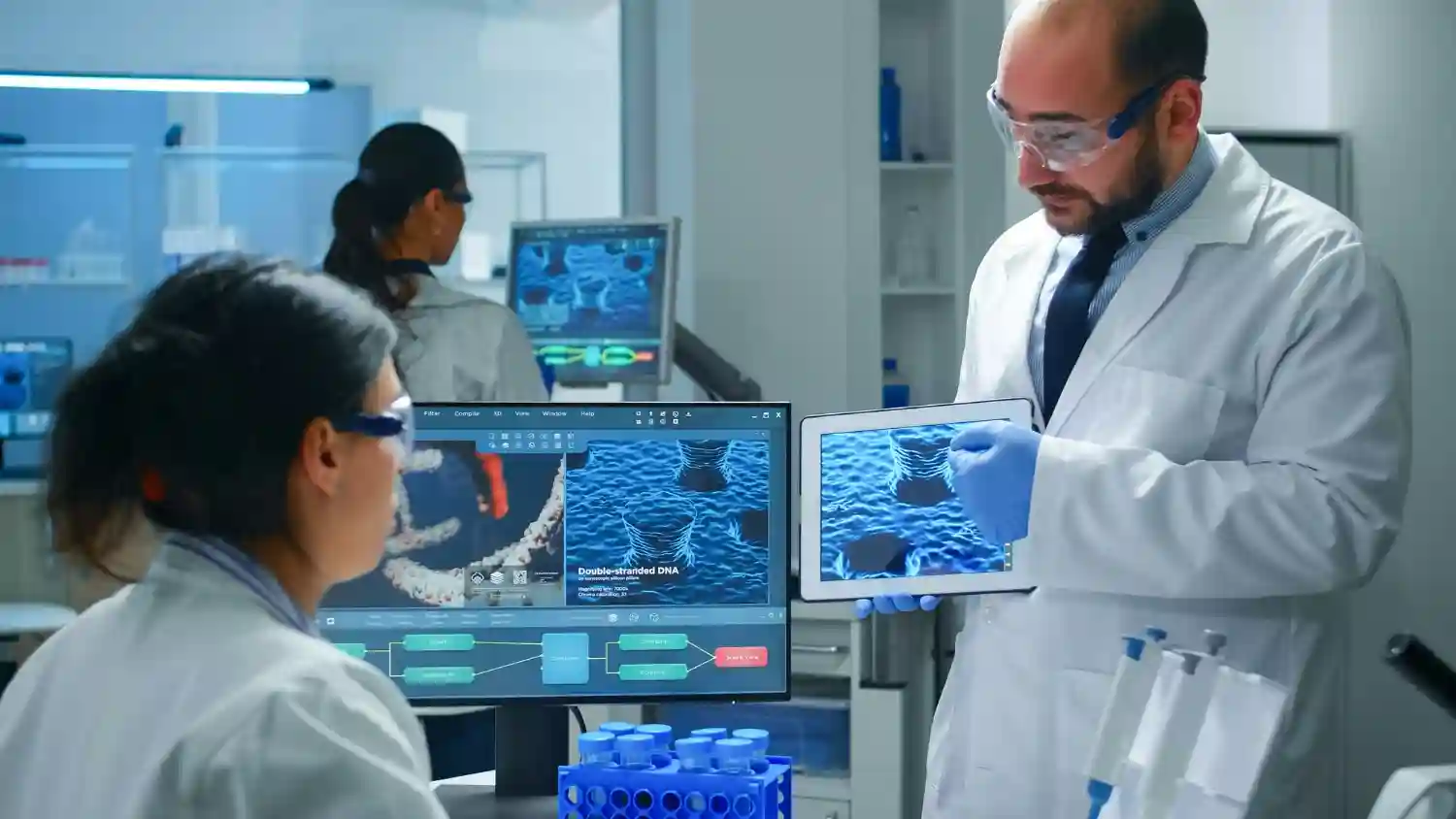
The O-1 visa for medical professionals can also apply to healthcare founders, biotech builders, medical device entrepreneurs, and digital health leaders. These cases often rely less on traditional clinical credentials and more on innovation, adoption, and market recognition. This O-1 case is very related to the founders' case.
An O-1 visa for healthcare founders may be supported by venture funding, revenue, pilot programs, hospital partnerships, product launches, patents, press, accelerator acceptance, customer letters, or investor letters.
The founder’s personal role must be clear. USCIS needs to understand what the applicant personally built, led, improved, or commercialized.
Read Beyond Border’s guide on evidence for an O-1 visa for founders.
Healthcare innovation evidence may include FDA-related milestones, clinical validation, institutional adoption, user growth, partnerships with hospitals, research collaborations, or expert confirmation that the product solves a meaningful medical problem.
This is especially important for founders working in AI diagnostics, biotech platforms, care delivery tools, remote monitoring, or medical devices.
O-1 applicants need a U.S. petitioner. This may be an employer, a U.S. company, or an agent. Founders must be careful because self-sponsorship is not the same as having a valid petitioner structure.
A strong case should show what work the applicant will do in the U.S., who is petitioning, and how the role connects to their extraordinary ability.
Learn more about the O-1 visa for startup founders here.

Many medical professionals compare O-1, EB-1A, and EB-2 NIW. The right path depends on timing, evidence strength, immigration goals, and whether the applicant needs temporary work authorization or a green card strategy.
O-1 may work well when a medical professional needs to begin working in the U.S. while building a long-term immigration strategy. It can also help organize evidence that may later support a green card case.
EB-1A may fit doctors, surgeons, or researchers with major recognition, strong publications, awards, critical roles, and original contributions. EB-2 NIW may be better when the work has national importance, such as improving healthcare access, advancing public health, or developing medical technology.
Read more about moving from an O-1 visa to a green card.
Beyond Border helps medical professionals turn complex careers into clear immigration arguments. We define the right field, identify the strongest evidence, connect achievements to USCIS criteria, and structure the case around clinical impact, research, innovation, and recognition.
For doctors, surgeons, physicians, founders, and healthcare innovators, the goal is simple: make the evidence easy for USCIS to understand and hard to dismiss.
Schedule your free consultation and profile evaluation.
Yes. Doctors can apply for an O-1 visa if they can show extraordinary ability through strong evidence such as publications, awards, clinical leadership, peer review, original contributions, high salary, or recognition from respected medical experts.
No. The O-1 visa can also work for surgeons, physicians, healthcare founders, medical device innovators, biotech professionals, hospital leaders, and digital health experts.
Yes. A healthcare founder may qualify if they can show strong evidence of innovation, traction, funding, hospital partnerships, product adoption, patents, press, or other proof that their work is recognized.
O-1 is a temporary work visa, while EB-1A is a green card category. O-1 may be better for short-term U.S. work authorization, while EB-1A may be better for doctors with stronger long-term green card evidence.
Not always. Publications help, but they are not the only form of evidence. Doctors may also rely on clinical leadership, awards, judging, original contributions, critical roles, high salary, or other recognized achievements.

Camila is the Head of Legal at Beyond Border, where she specializes in O-1, EB-1A and EB2-NIW visas. Camila is an OAB-certified lawyer, with 8 years of relevant US immigration experience. Camila has personally secured approval more than 100 O-1, EB-1A and EB2-NIW cases and maintained a perfect approval track record so far. Camila holds a Master's degree in Law from the Universidade Catolica Portuguesa, and is a sought after voice in the U.S. extraordinary alien visa field in press including Times of India.

Address: 4 W 4th Ave, San Mateo, CA 94402, United States
Email: info@beyondborderglobal.com