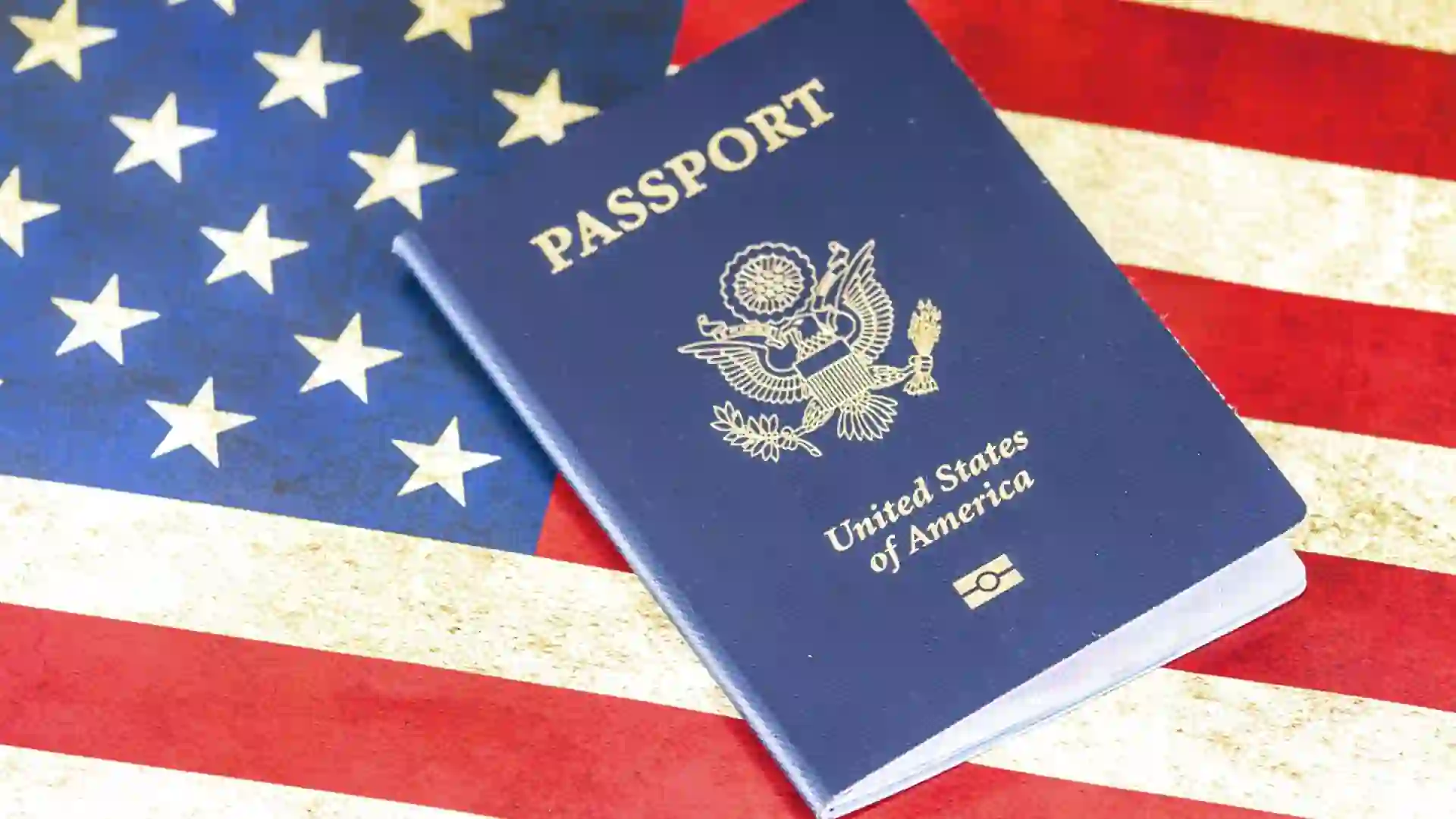
A green card that has not arrived does not mean permanent resident status has been lost. The problem is having acceptable proof of that status while the physical card is unavailable.
Form I-551 is the official designation for the Permanent Resident Card, commonly called a green card. An ADIT stamp, also known as a temporary I-551, can be issued as temporary proof of permanent resident status when the physical card is unavailable.
This guide explains when an ADIT stamp may be needed, how it can be requested, what it can be used for, and how long it remains valid once issued.
Form I-551 refers to two different things, hence why it is easy to confuse meanings. Here is a thorough explanation of each:
Form I 551 is the official government name for what everyone calls the green card. It is the physical, wallet-sized card that proves lawful permanent resident status. USCIS issues it after your case is approved and mails it directly to you.
For most permanent residents, the card carries a ten-year validity period. Conditional residents get two years instead, if their status comes from a marriage that was under two years old at the time of approval.
When the physical card is not available, USCIS can issue temporary evidence of that same status. This is the I-551 stamp, commonly called the Alien Documentation, Identification and Telecommunication (ADIT) stamp.
The stamp does not create or extend your status. Think of it like a certified copy of a document: it proves what the original says without being a new original. USCIS places it directly in your passport, or on a Form I-94 with a printed photo if you do not have a passport available.
Three situations account for most ADIT stamp requests. Interestingly, each one has its own timeline and its own fix.
Filing Form I-90 to renew an expired or expiring green card does not leave you undocumented while USCIS processes it. Most I-90 receipt notices now carry a 36-month automatic extension of your card's validity, shown directly on the notice itself.
This extension covers most situations on its own, including many Form I-90 checks and some travel. It does not always satisfy every requester, though, particularly airlines or agencies unfamiliar with the extension notice. An ADIT stamp fills that specific gap when a plain receipt notice is not accepted as proof.
A green card can also simply not show up. Production delays, a mailing error, or a card lost in transit all leave a permanent resident with an approval on file but nothing physical to carry.
This becomes urgent fastest for residents outside the United States. A card lost, stolen, or never delivered while abroad can block re-entry entirely without some form of temporary proof. The ADIT stamp, placed in the passport, becomes the direct fix for exactly this situation.
Conditional residents face a narrower two-year card. This is tied to a marriage-based green card granted less than two years before approval. Removing those conditions requires filing Form I-751 before the card expires.
A properly filed I-751 receipt notice now extends conditional status 48 months past the card's expiration date, which covers most of USCIS's current processing time on its own. An ADIT stamp becomes necessary mainly when:
Requesting an ADIT stamp used to mean booking an InfoPass slot online and showing up. However, that option no longer exists. USCIS now routes every request through its Contact Center, and where you end up from there depends on details specific to your case.
Self-scheduled InfoPass appointments no longer exist. You start by calling the USCIS Contact Center at 800-375-5283, or 800-767-1833 for TDD users. An officer verifies your identity and mailing address, then checks whether that address can receive UPS or FedEx express mail.
That call determines which path you're on. If your situation qualifies for mail delivery, USCIS sends a request to your local field office to prepare a Form I-94 with the ADIT stamp.
If it does not qualify, you get an in-person appointment instead. USCIS schedules one when your case is urgent, when it does not have a usable photo of you on file, or when your identity or address could not be confirmed by phone.
An in-person appointment still requires proof of the situation behind your request. Bring the receipt notice for your pending Form I-90, I-751, or N-400. You will also need government-issued photo identification, plus your passport if you have one.
Know your case details before you arrive. The officer who confirmed your appointment worked from what you told them on the phone, so if your documents do not match that account, expect delays or a request for more evidence.
When mail delivery applies, you do not send anything to USCIS. The field office prepares a Form I-94 with the ADIT stamp and the DHS seal, pulls a printed photo from your existing file, and mails the document to your address of record.
This mailed I-94 works as a full replacement for an in-person passport stamp for most purposes, including Form I-9 and E-Verify. Mail delivery is not guaranteed. USCIS can decline on several situations:
USCIS caps every ADIT stamp at one year, but the actual validity period is set case by case and often runs shorter. The officer handling your request picks the exact date based on your situation. There is no fixed rule that applies the same way to everyone.
That discretion shows up in practice.
Once the printed expiration date passes, the stamp stops working as proof of status, even if your underlying case is still pending. If your case is still unresolved at that point, you will need to call the USCIS Contact Center again and go through the same verification process to request a new one.
The stamp does the same job as the card, but not everyone treats it that way. Here's how airlines, CBP, and employers actually handle it in practice.
An I-551 stamp on a passport functions as valid boarding and re-entry documentation, recognized by both airlines and U.S. Customs and Border Protection (CBP) officers. It is processed the same way a physical green card is, at a port of entry: the stamp's validity date and matching photo are checked
Airlines follow CBP's lead here, but individual gate agents do not always recognize a stamped passport as readily as a standard green card. Carrying the physical Form I-94 alongside the stamped passport, when you have both, gives the agent a second document to cross-check if the stamp alone raises questions at check-in.
A stamped passport or a Form I-94 bearing the ADIT stamp qualifies as a List A document for Form I-9 purposes, satisfying both identity and work authorization in a single document. Employers accept it exactly as they would accept a physical green card at the point of hire.
The difference shows up later. A green card is never reverified once accepted. In contrast, an ADIT stamp is temporary evidence tied to an expiration date, so employers must reverify your status before that date passes. They can ask for updated documentation, whether a new stamp, a physical card that has since arrived, or another acceptable List A document.
Three different documents can prove permanent resident status at different points in the same process, and confusing them is a common, avoidable mistake.
The extension notice and the ADIT stamp solve different problems. An I-90 extension notice automatically extends the validity of an expiring or expired card without any separate request, simply by filing Form I-90 itself. It works well for most Form I-9 checks and many routine situations.
As earlier stated, an ADIT stamp becomes necessary specifically when the extension notice is not enough (most often for international travel) or deemed insufficient proof to an official requester.
The green card remains the only one of the three that is permanent. It requires no renewal request, expiration tracking, or reverification once an employer has seen it.
Remember, a missing card does not mean missing status. Both Form I551 and ADIT stamps exist for exactly the moment between approval and the physical card arriving in your hands.
Getting the right proof does not have to mean guessing which document a given employer or agency will accept.
Our network of experienced attorneys has walked permanent residents through this exact path, from a first call to the USCIS Contact Center through to the right stamp landing in the right document.
Is your card delayed, lost, or expired while a renewal or removal of conditions is pending? Schedule a free consultation today to discuss your situation and our specialist will provide a clear answer on what proof is needed and next steps.
USCIS issues an ADIT stamp as proof of lawful permanent resident status when your physical green card is not available. It goes in a passport or on a Form I-94, and it holds up for as long as one year, depending on what USCIS decides for your case.
Start by calling the USCIS Contact Center at 800-375-5283 and explaining your situation. An officer verifies your identity and address first, then either arranges mail delivery of a stamped Form I-94 or books you an in-person appointment if your case needs one.
Up to one year, though USCIS decides the exact date case by case and can set it shorter. Once that date passes, the stamp no longer works as proof of status, even if your underlying case is still pending.
Yes, CBP and airlines both accept a valid ADIT stamp for re-entry to the United States. They check the validity date and photo the same way they would with a physical green card.
Not quite. Form I 551 is the official name for the green card itself, and the ADIT stamp is only temporary evidence of that same status for when the physical card is not on hand. It is a stand-in, not a separate form of status.

David Munam is an experienced writer with 10 years of expertise in researching and producing clear, authoritative content on complex and highly technical subjects. His work has focused on turning dense information into accurate, well-structured, and accessible content across areas such as U.S. customs and trade, Web3, fintech, immigration law, and technology. At Beyond Border, he applies this experience to researching and writing in-depth content on U.S. immigration pathways, including O-1, EB-1A, and EB-2 NIW.

Address: 4 W 4th Ave, San Mateo, CA 94402, United States
Email: info@beyondborderglobal.com