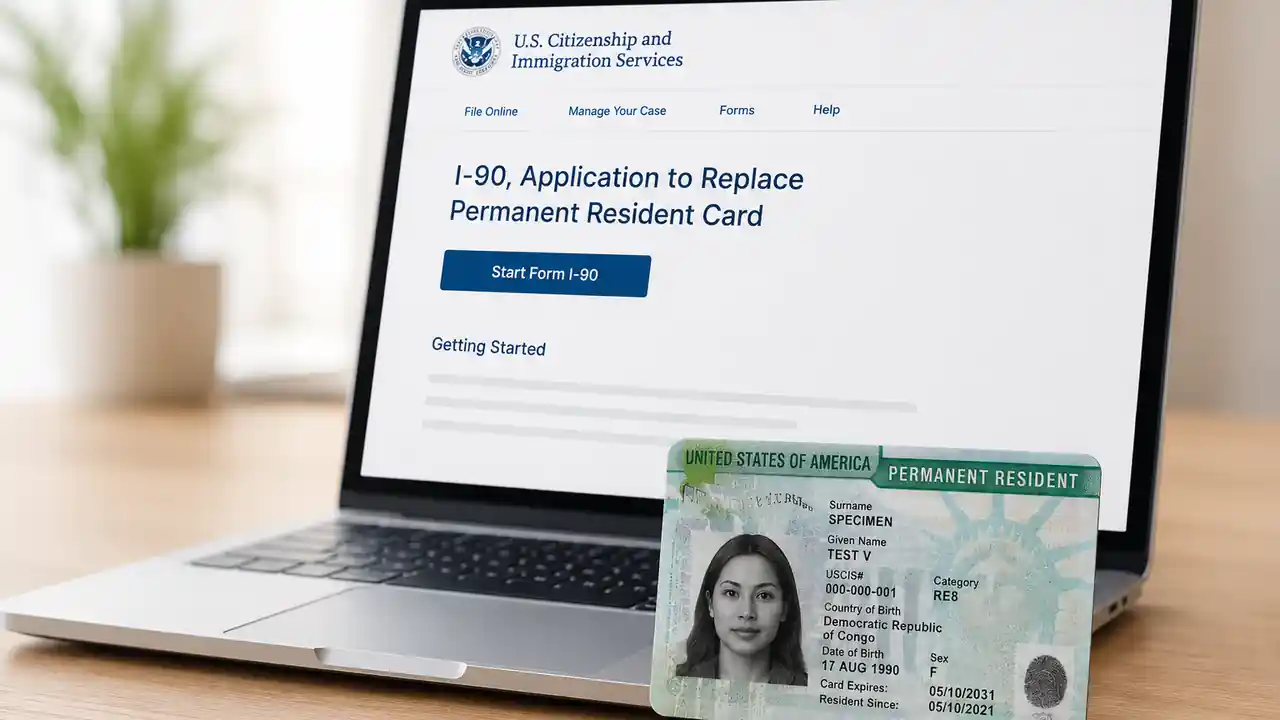
Your status as a permanent resident doesn’t end just because the date on your card passes. Your status is intact; it's the card itself that expires. Think of it as a driver’s license: you’re still you, but you need a valid card to prove it when travelling, starting a new job, or renewing your state ID.
The form you’ll use for green card renewal is the I-90, called the "Application to Replace Permanent Resident Card." It can be a little confusing that it says "Replace" instead of "Renew," but if you have a 10-year card, that’s the form you need. If you have a 2-year conditional card, the rules are a bit different, and we’ll explain the details in this article.
At Beyond Border, our attorneys have worked through thousands of cases. We’ve put this guide together to make the green card renewal process easy. Before you start, take a look at the table below to make sure you’re filing the right form for your specific situation.
If you have a 10-year card, you're simply renewing it. However, if you have a 2-year "conditional" card, you are not actually renewing; you’re asking USCIS to "remove the conditions" and make your residency permanent. The timing and the stakes are different for each, so double-check which one you hold before you hit submit.
Whether your card is expiring or it was unfortunately lost or stolen, you’ll use the same Form I-90 for green card renewal. You’ll just select the specific reason that fits your situation, and that will determine the evidence you need to provide.
Removing conditions is a different thing. Instead of getting a new card, you’re providing proof that your residency should be made permanent.
If your green card has already expired and you need proof of status right away for travel or work, you will need an ADIT (I-551) stamp. This is a temporary stamp placed in your passport that acts as your green card while your application is being processed.
These stamps are usually valid for up to a year. USCIS now mails these directly to you if you’re eligible, so you might not even need to visit a field office in person.
Filing online is usually the easiest path. Here is how to renew a green card step-by-step:
Visit myaccount.uscis.gov to set up your account. This is where you'll track your case, see any updates, and receive notices from USCIS.
You need the Form I-90 to renew your green card. There is no separate renewal form for a 10-year card. The reason you select is what tells USCIS which of the form's several purposes applies to you. Select the right reason for your renewal: whether expired, lost, or damaged. Selecting the wrong reason may lead to denial.
You’ll need your Alien Registration Number (A-Number) and the date you became a permanent resident; both are on your card. Make sure the dates match exactly what’s on your card to avoid RFEs. If you're not sure where to find your A-Number, read our guide on where to find your A-Number. If you've legally changed your name, make sure you enter it exactly as it appears on your supporting documents.
Take clear, legible photos or scans of your card (front and back). If the copies are blurry, USCIS might ask for new ones, which can slow everything down. If you have a name change or are correcting an error, upload those documents here too.
Check your documents, sign it, and pay the fee via Pay.gov. You'll get a confirmation, followed by a formal receipt notice in the mail or in your online account.
Your receipt notice has a 13-character number you’ll use to check your status. Keep this notice properly as it’s the document that officially extends your card’s validity for 36 months.
Note: If you need a fee waiver, you have to file on paper.
You can start the green card renewal process as early as six months (180 days) before your card expires. If your card has already expired, you can still file. Once you do, your receipt notice will automatically extend your status.
If you submit before that six-month window opens, USCIS might reject your application. Since fees aren't refundable, it’s best to wait until you're officially within the filing period.
For most people, the paperwork is straightforward. You’ll generally need:
Essentially, this is about confirming you are who you say you are. If you’re worried about the photo part, we have a separate guide on green card photo requirements that walks you through the specifics.
As of August 2026, it costs US$415 to file online and US$465 to file by mail. Filing online is not only faster but also saves you US$50.
In some cases, the fee is waived. For example, if USCIS made an error on your previous card or if your card was lost in the mail, you don’t have to pay. The fee is non-refundable, even if your application wasn’t approved.
Applicants who meet the financial hardship criteria can apply for a fee waiver through Form I-912. However, it requires a paper filing. Check the USCIS Fee Calculator for the current fees before filing.
Once you file, there are three main things to look out for.
You’ll receive a Notice of Action (Form I-797C). This includes your tracking number so you can monitor USCIS's progress.
Most importantly, this notice extends your green card by 36 months. When you pair this notice with your expired card, it proves you are still a lawful resident and can continue working and travelling. Processing can take a while, so always check current wait times to know what to expect.
A few weeks after filing, you'll get a notice for a biometrics appointment. This is for fingerprints and a photo. The fee you already paid covers this, so you won't have to pay anything extra at the appointment. Interviews for renewals are rare, but USCIS might ask for one if they have questions.
As of August 2026, it takes about 8 to 14 months to get a new card. If you change your address while your case is pending, update it right away. This prevents issues where your new card is sent to your old address.
To renew your green card, the typical expectation is that you file Form I-90 from inside the United States. If your card is expiring within six months and you will return before it expires, file once you are back.
If your card expires while you're already abroad, reach out to the nearest U.S. embassy or consulate before flying back. Airlines usually won't let you board without valid proof of status, so it’s better to sort it out before you head to the airport. If your green card renewal is already pending when you leave, just make sure you have your receipt notice and your card with you.
if you’ve been outside the U.S. for a long time, USCIS might ask if you’ve "abandoned" your residency. Talk to an expert before you file anything.
If your application is denied, the rules are strict. Usually, you can't appeal a Form I-90 denial. You can either file a "motion to reopen" if you have new evidence, or a "motion to reconsider" if you think USCIS made a legal mistake.
Knowing which motion to file is important; one is for new facts, the other is for legal arguments. Picking the right one gives you the best chance of success.
Yes. Form I-90 can be filed online through a USCIS account, and online filing costs US$415, compared with US$465 for paper filing.
As of August 2026, Form I-90 costs US$415 when filed online and US$465 when filed by mail. Fees are non-refundable regardless of the outcome, and you should confirm the current amount using the USCIS fee calculator before paying.
For a routine renewal of a 10-year card, a copy of your current Permanent Resident Card, front and back, is generally the only evidence required, even if the card has expired. If your name has legally changed, you will also need supporting evidence such as a marriage certificate or court order. If you are asking USCIS to correct an error it made on your card, you submit the incorrect card along with documentation of the correct information.
The earliest you can file is 180 days, or six months, before your card's expiration date, and USCIS recommends filing within that window. Filing earlier may lead to rejection or denial, and the filing fee is not refunded. If your card has already expired, you can still file, and the receipt notice will extend its validity.
Your Form I-797C receipt notice extends the validity of your green card by 36 months from its expiration date. When presented together with your expired card, it serves as evidence of your status. Carry both documents whenever you travel, because the notice alone is not sufficient.
Your permanent resident status does not lapse when your card expires, and your right to work continues. For employment verification purposes, the receipt notice from a pending Form I-90 presented with your expired card demonstrates continued employment authorization for 36 months from the card's expiration date.
A legal name change is a valid reason to file Form I-90. You also need to submit evidence of the change along with your application. Acceptable evidence includes a marriage certificate, a divorce decree, or a court order, depending on how the change occurred. Make sure the name you enter on the form exactly matches the name on your supporting evidence.
Yes, although denials are uncommon for routine renewals. The major reasons for denial include failure to attend the biometrics appointment, failure to respond to a request for evidence, certain criminal history identified by the background check, and evidence suggesting abandonment of permanent residence. A Form I-90 denial generally cannot be appealed; you can only apply for a motion to reopen or a motion to reconsider.

Address: 4 W 4th Ave, San Mateo, CA 94402, United States
Email: info@beyondborderglobal.com