Alien Registration Number (A-Number): What It Is and Where to Find It
Your Alien Registration Number, explained: exact format, where it appears on your green card, EAD, I-797, and visa, and which USCIS forms actually need it.
Your Alien Registration Number, or A-Number, is a seven- to nine-digit number, beginning with the letter A, that the Department of Homeland Security assigns to track your immigration file.
»
The A-Number is not the same as your USCIS Online Account Number, your green card number, or your USCIS receipt number.
»
Where your A-Number appears depends entirely on the document in front of you. A green card, an EAD, an I-797 notice, and an immigrant visa each show it in a different spot, and an I-94 usually does not show it at all.
»
Forms including the I-9, I-90, N-400, DS-260, and the FAFSA each ask for a specific identifying number, and entering the wrong one is a common, avoidable cause of processing delay.
»
Beyond Border helps clients confirm they are using the correct case identifier on every form throughout an active petition, not only at the point of filing.
You are staring at a form field right now. Maybe it is Form I-9 for a new job, a green card renewal on Form I-90, an N-400 naturalization application, or a FAFSA form for a child starting college.
The field asks for your Alien Registration Number, and you are not sure whether the number in your wallet or your inbox is the right one.
That confusion is common, and it is not because the concept is complicated. At least four different government-issued numbers show up on similar-looking documents, and nothing on the page tells you which is which.
This guide helps you to identify your A-Number on your most common documents: a green card, an EAD, a USCIS notice, an immigrant visa, or an I-94. It also covers the forms that ask for it, so you enter the right number the first time.
What Is an Alien Registration Number?
An Alien Registration Number, or A-Number, is a unique 7-9 digits identifier that the Department of Homeland Security assigns to a noncitizen. It always carries the letter "A" in front of it.
USCIS, Immigration and Customs Enforcement, and Customs and Border Protection all use it to pull up the same immigration file, regardless of which agency you are dealing with.
Think of the A-Number as the case number for your entire immigration history, not one form or one filing alone. A single petition may generate its own separate tracking number, but your A-Number is attached to you across every filing you make from that point forward.
A-Number vs Alien Number vs USCIS Number
"Alien Registration Number," "A-Number," "A#," and "alien number" all refer to the same number. USCIS also uses the term USCIS Number on newer documents. According to USCIS, the USCIS Number is the same number as your A-Number, printed without the leading "A." If a form or card shows "USCIS#" instead of "A#," it is the same identifier under a different label.
How A-Numbers Are Formatted
Your A-Number is the letter A followed by seven, eight, or nine digits. Many USCIS forms require the full nine-digit format, so if your number is shorter, you add zeros directly after the "A" until it reaches nine digits.
For example, A1234567 becomes A001234567, and A12345678 becomes A012345678. USCIS allows for this padding. So, if a form rejects your entry or a field expects exactly nine digits, the fix is almost always a missing zero, not a wrong number.
Lawful permanent residents, including green card holders
Asylees, refugees, and Temporary Protected Status beneficiaries receive an A-Number when their status is granted.
Applicants with a pending or approved immigrant petition, such as Form I-130, Form I-140, or Form I-485.
Most nonimmigrant visa holders, including H-1B, L-1, TN, E-2, and B-1/B-2 visitors, generally do not receive an A-Number unless their case connects to an immigrant petition, such as an approved I-140, or to a work-authorization filing.
F-1 students are a common exception. Students who apply for Optional Practical Training or STEM OPT through an Employment Authorization Document are assigned an A-Number as part of that EAD filing, even without pursuing a green card.
If you hold a temporary work visa and have never filed an immigrant petition or an EAD application, there is a reasonable chance you do not have an A-Number yet. That is normal, and nothing is missing from your file. Check the document types below to confirm either way.
Where to Find Your Alien Registration Number on Each Document
Your A-Number is in a specific spot on different types of document. Here’s where to look.
On a Green Card (Form I-551)
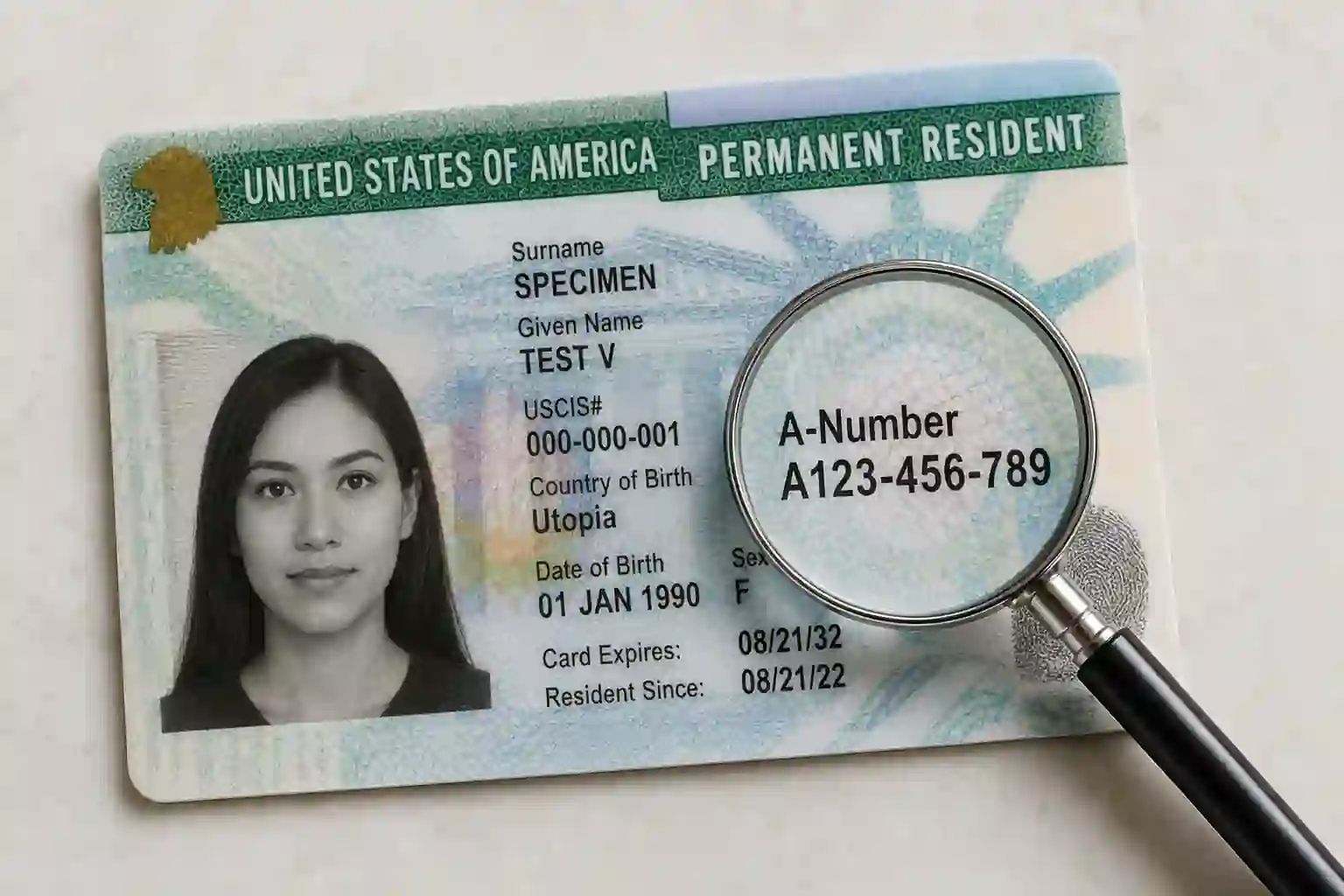
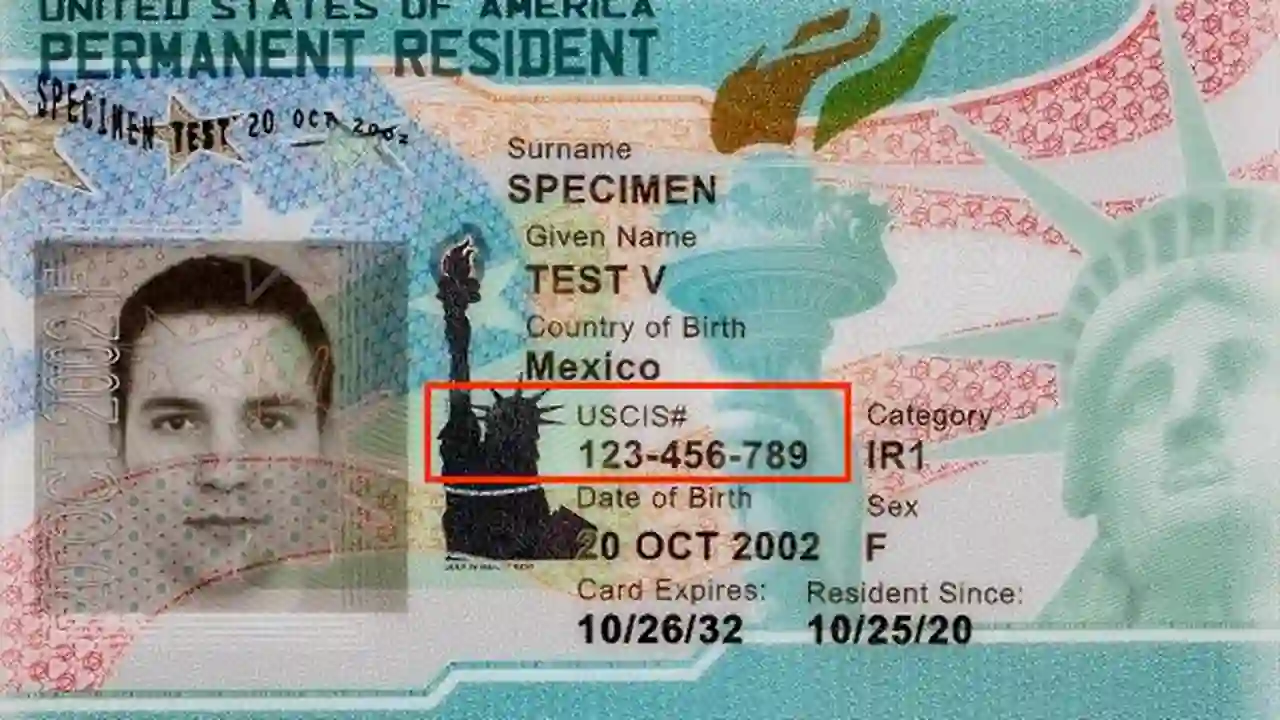
Your alien number on the green card is shown on the number on the front, next to your photo. If your card is older, look for the label "A#" in the same position instead of "USCIS#."
On an Employment Authorization Document (EAD)
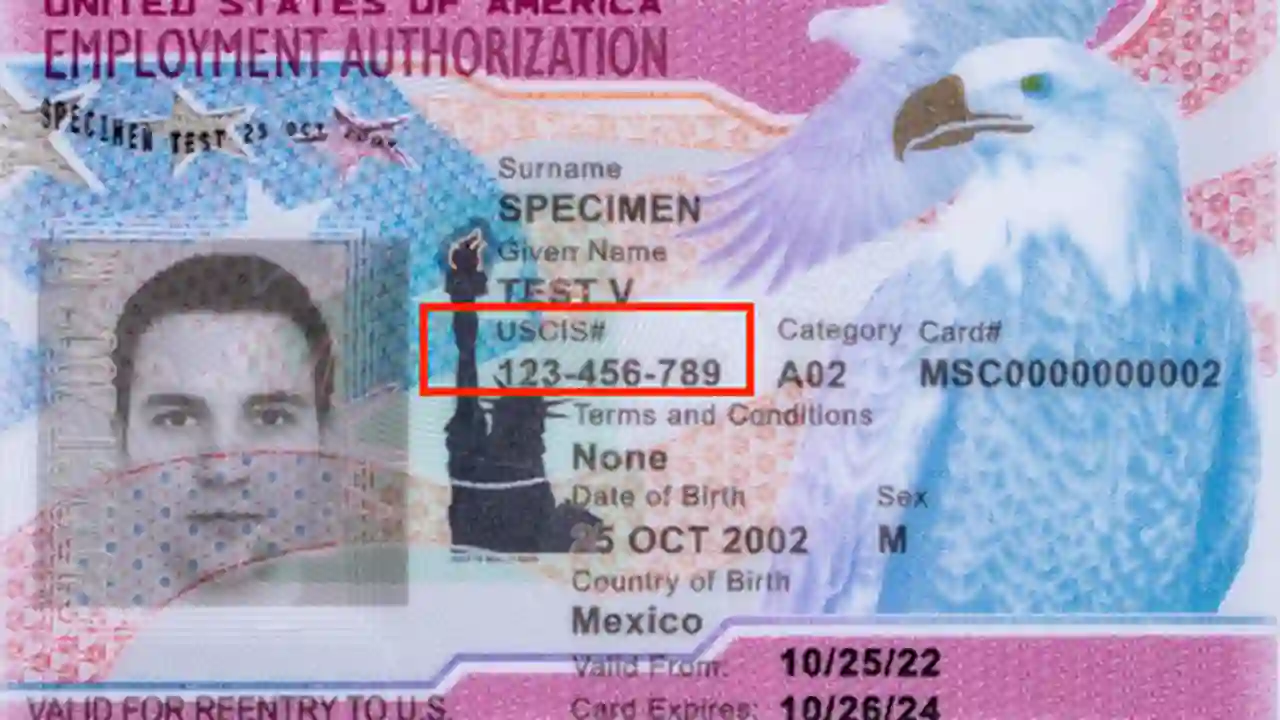
Your work permit shows the number in the same "USCIS#" field as the green card, on the front of the card.
On a USCIS Receipt or Approval Notice (I-797)
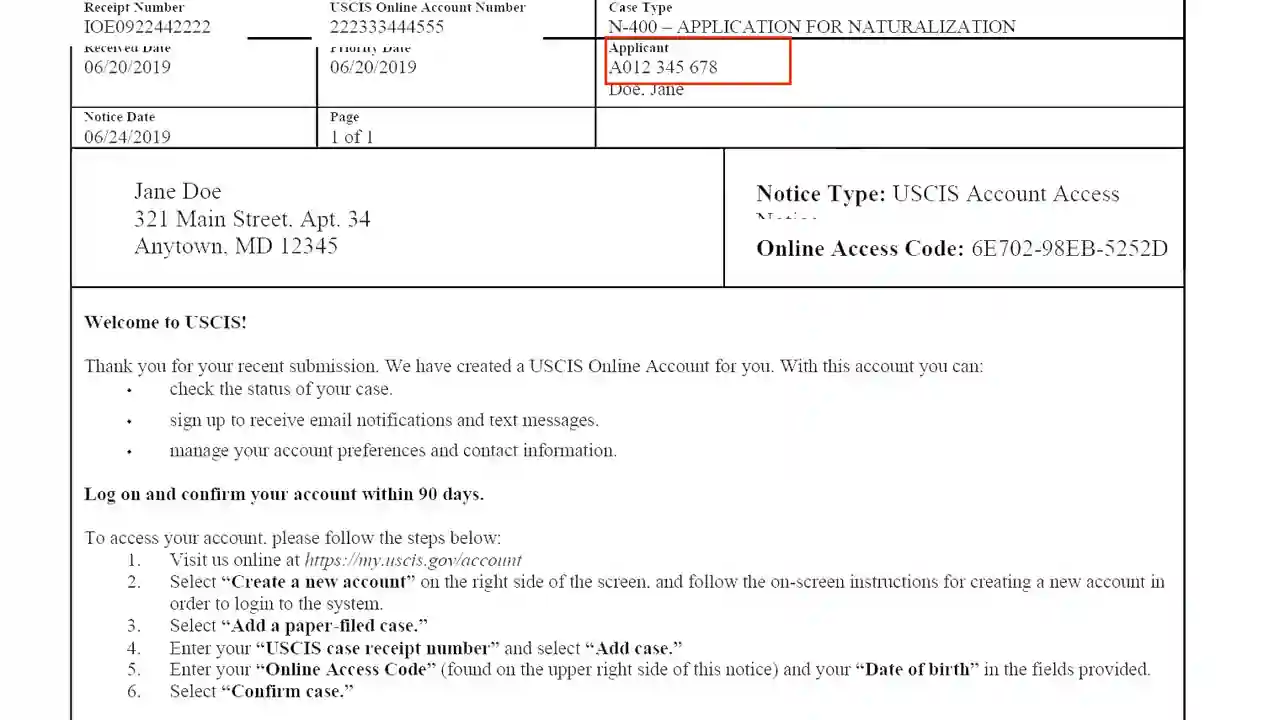
Many, though not all, versions of Form I-797 include the A-Number near the top right. If your notice does not show it there, check an accompanying document from the same filing before assuming the number is missing.
On an Immigrant Visa or Consular Packet
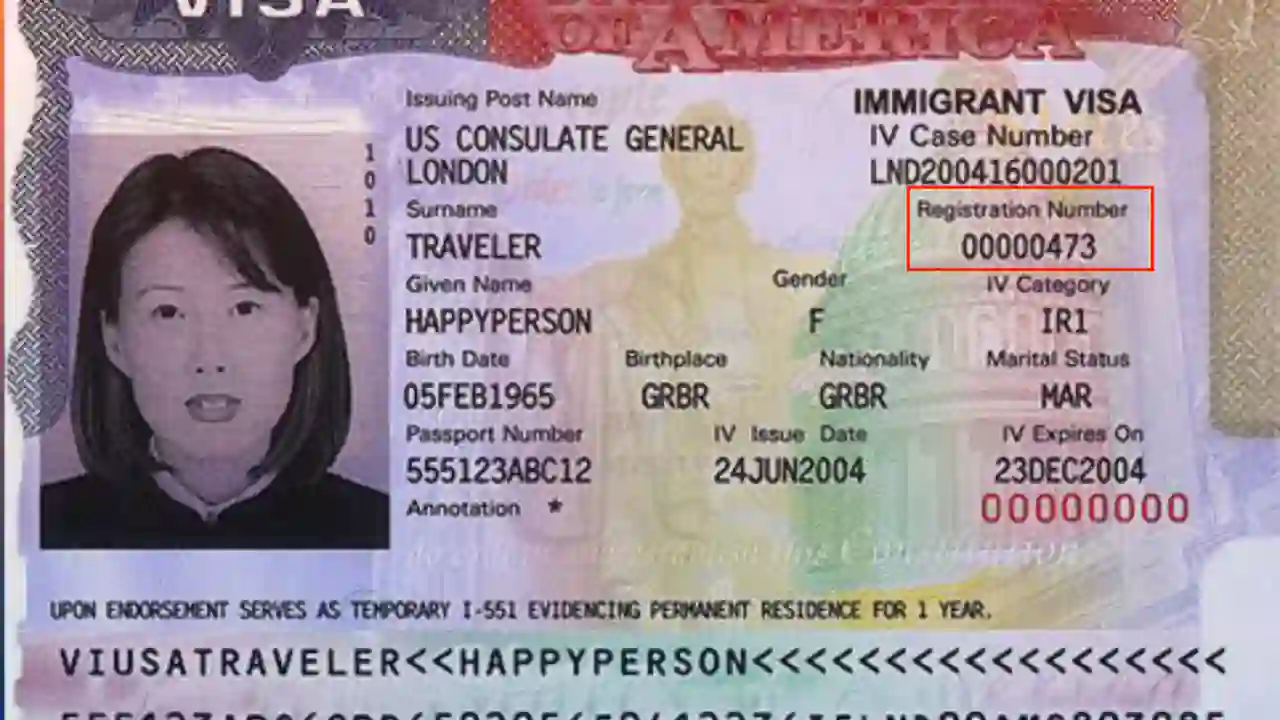
An immigrant visa stamp lists the A-Number as the "Registration Number," in the top right portion of the stamp. This applies only to immigrant visas issued through consular processing. A nonimmigrant visa, such as a tourist or student visa stamp, does not carry an A-Number at all.
On an I-94 or Notice to Appear
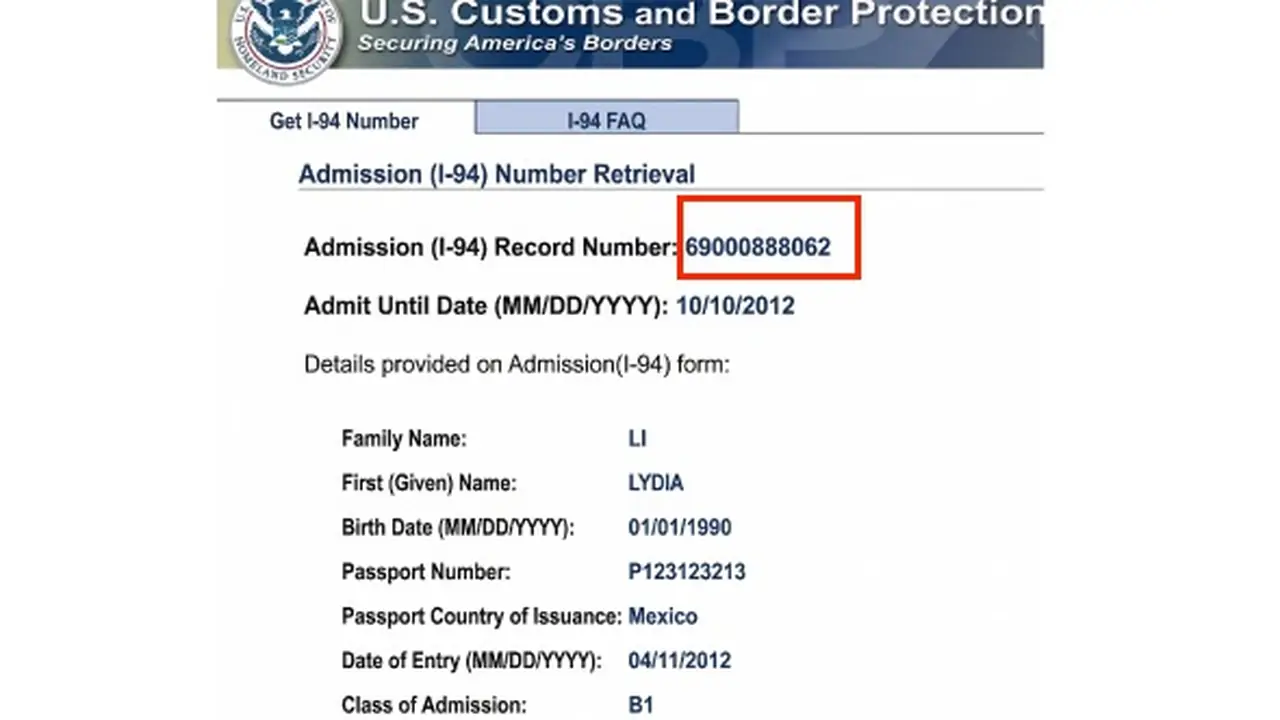
This is the one document in this set that generally will not show your A-Number. The number on your I-94 is an 11-character Admission Number issued by Customs and Border Protection at the time you entered the US, and it identifies your entry, not your immigration file overall.
Many nonimmigrant workers, including most H-1B, L-1, and TN holders, have an I-94 Admission Number and no A-Number at all.
Certificate of Naturalization
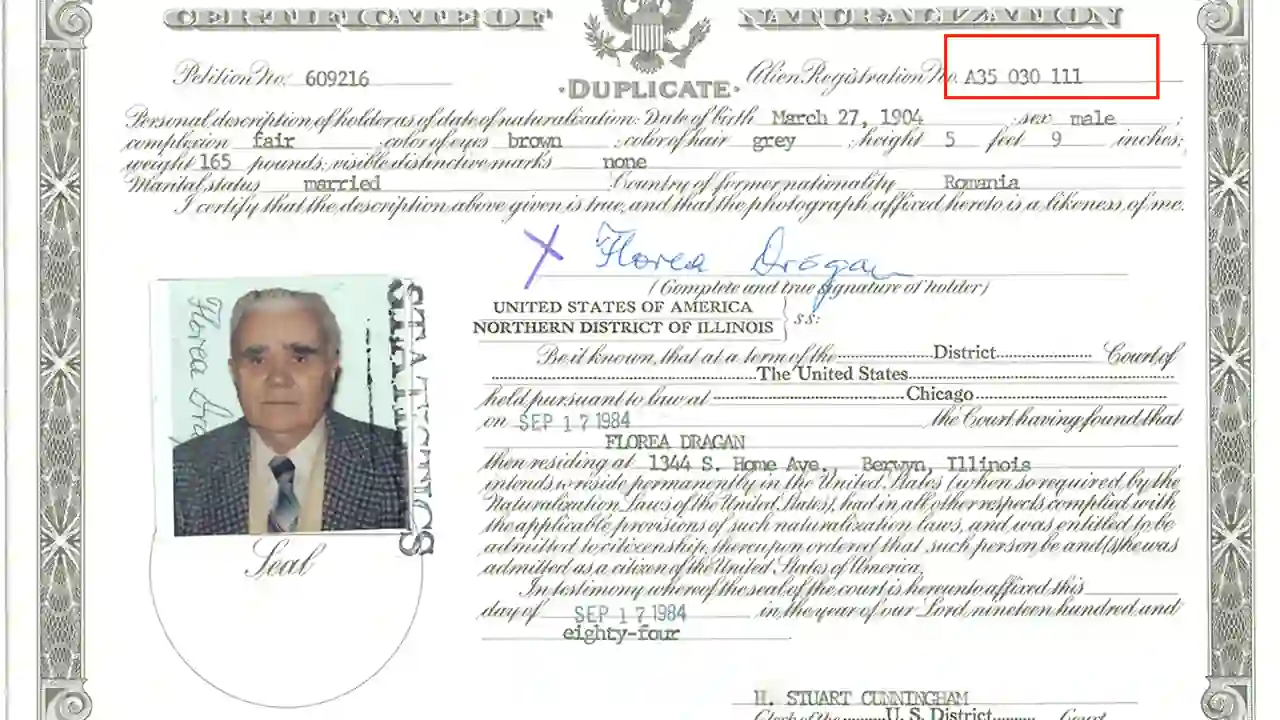
A Certificate of Naturalization also lists your A-Number, once you become a US citizen. The number stays the same, even though once you become a citizen, you don’t practically use your A-number anymore.
A-Number vs USCIS Online Account Number
Feature
A-Number
USCIS Online Account Number
What it identifies
You, across your entire immigration history
Your USCIS online account specifically
Who has one
Most green card holders, asylees, refugees, and immigrant petition filers
Only people who have created a USCIS online account
Where it is used
Immigration forms, case files, and agency records
Logging into your USCIS account and linking paper filings to it
Interchangeable with A-Number?
N/A
No
What it identifies
A-Number
You, across your entire immigration history
USCIS Online Account Number
Your USCIS online account specifically
Who has one
A-Number
Most green card holders, asylees, refugees, and immigrant petition filers
USCIS Online Account Number
Only people who have created a USCIS online account
Where it is used
A-Number
Immigration forms, case files, and agency records
USCIS Online Account Number
Logging into your USCIS account and linking paper filings to it
Interchangeable with A-Number?
A-Number
N/A
USCIS Online Account Number
No
The Online Account Number connects you to your account on the USCIS website. It is not linked to your immigration history, and a form asking for your A-Number will not accept it as a substitute. But if a form asks for your account number specifically, check your USCIS profile rather than reusing your A-Number.
The major difference is that your A-Number does not change, even after a lost card or a status change. Your green card number changes with every replacement card, and your receipt number is different for every filing you make.
If you filed a green card application and later a naturalization application, those two filings have two different receipt numbers, and the same A-Number listed on both. When a form asks for a "case number" or "receipt number," use the 13-character code, not your A-Number.
What to Do If You Cannot Find Your A-Number
Check older USCIS notices and past filings first. Approval notices, previous receipt notices, and old visa stamps often have the number even when your current documents do not.
Log into your USCIS online account. If you created one during a prior filing, your A-Number is visible there without needing to dig through paperwork.
Request your records through the Freedom of Information Act if the above turns up nothing.
Requesting Records Through FOIA
To request records through the FOIA, go through the online system rather than mail, fax, or email for faster processing. You may have to wait for several weeks for a response.
Checking Your USCIS Online Account
If you have ever filed anything with USCIS online, or created an account to check a case, your A-Number is usually listed in your account profile. Check this before filing a FOIA request.
Contacting the USCIS Contact Center
You can also call the USCIS Contact Center to locate your A-Number, though a representative will typically ask you to verify identity with other case details first. This should be your last option if you don’t get results from the other two steps.
USCIS Forms and Common Identifiers
Form
What It Asks For
Notes
I-9 Employment Eligibility Verification
A-Number or USCIS Number, if you are a lawful permanent resident. If neither applies, enter N/A and provide an I-94 Admission Number or foreign passport instead.
This is the form where "N/A plus an alternative number" is correct, not an error.
I-90 Application to Replace Permanent Resident Card
Your existing A-Number, padded to nine digits if needed.
Do not use your current card's green card number here.
N-400 Application for Naturalization
Your A-Number in Part 1, using the same nine-digit padding rule as the I-90.
Use your existing A-Number rather than another USCIS identifier.
DS-260 Immigrant Visa and Alien Registration Application
Your A-Number, if a prior USCIS filing such as an approved I-130 or I-140 already assigned you one.
First-time applicants without a prior A-Number should leave this blank rather than inventing one.
FAFSA Free Application for Federal Student Aid
The A-Number of an eligible noncitizen applicant, used to verify status directly with DHS.
Providing the A-Number triggers an automated DHS match, so an incorrect entry can delay financial aid processing, not only immigration paperwork.
I-9
Form name
Employment Eligibility Verification
What it asks for
A-Number or USCIS Number, if you are a lawful permanent resident. If neither applies, enter N/A and provide an I-94 Admission Number or foreign passport instead.
Notes
This is the form where "N/A plus an alternative number" is correct, not an error.
I-90
Form name
Application to Replace Permanent Resident Card
What it asks for
Your existing A-Number, padded to nine digits if needed.
Notes
Do not use your current card's green card number here.
N-400
Form name
Application for Naturalization
What it asks for
Your A-Number in Part 1, using the same nine-digit padding rule as the I-90.
Notes
Use your existing A-Number rather than another USCIS identifier.
DS-260
Form name
Immigrant Visa and Alien Registration Application
What it asks for
Your A-Number, if a prior USCIS filing such as an approved I-130 or I-140 already assigned you one.
Notes
First-time applicants without a prior A-Number should leave this blank rather than inventing one.
FAFSA
Form name
Free Application for Federal Student Aid
What it asks for
The A-Number of an eligible noncitizen applicant, used to verify status directly with DHS.
Notes
Providing the A-Number triggers an automated DHS match, so an incorrect entry can delay financial aid processing, not only immigration paperwork.
Common Mistakes When Entering an A-Number on USCIS Forms
Most delays come from entering an A-number wrongly on USCIS forms. Here are some mistakes to avoid;
Missing the leading zeros: A form that requires nine digits will reject or flag a seven- or eight-digit entry. Add zeros directly after the "A" until the number reaches nine digits, as covered above.
Confusing the A-Number with the receipt number: A field labeled "case number" or "receipt number" wants the 13-character code starting with three letters, not your A-Number.
Leaving the field blank instead of entering N/A: On Form I-9, someone without an A-Number or USCIS Number should enter "N/A" in that field and then provide either a Form I-94 Admission Number or a foreign passport with country of issuance, rather than leaving the field empty.
Using an outdated or duplicate number after a records mismatch: In rare cases, a clerical error assigns someone more than one A-Number. If your documents show two different A-numbers across filings, resolve this with USCIS directly before submitting a new form.
We have handled this before, We'll help you handle it now
Speak with Beyond Border's expert attorney and get clarity on your next steps.
Is my Alien Registration Number the same as my USCIS number?
Yes, in current USCIS usage. The USCIS Number is the same digits as your A-Number, printed without the leading "A."
Does an A-Number ever change?
No. Once DHS assigns an A-Number, it stays with you for life, regardless of status changes, replacement cards, or new filings.
Do H-1B or O-1 holders have an A-Number?
Generally not, unless their case connects to an immigrant petition, such as an approved I-140, or to a separate EAD filing. Most nonimmigrant work visa categories do not generate an A-Number on their own.
Where is the alien number on a permanent resident card?
On the front of the card, next to your photo, labeled "USCIS#" on cards issued after approximately 2010 or "A#" on older cards.
Can I apply for a green card without an A-Number?
Yes. Most green card applicants do not have an A-Number before filing. USCIS assigns one as part of processing the immigrant petition itself.
Is the A-Number printed on my passport?
Not on your passport itself. If you have an immigrant visa stamp inside your passport, the A-Number appears on that stamp, labeled "Registration Number," not elsewhere on the passport page.