The O-1 visa for non-tech founders can be a real option for entrepreneurs outside AI, SaaS, fintech, or venture-backed tech. USCIS does not require a founder to run a technology company; the O-1 visa focuses on whether the founder can prove extraordinary ability through recognition, leadership, original contribution, and measurable business impact. For non-tech founders in consumer products, fashion, beauty, education, wellness, hospitality, media, consulting, or professional services, the key question is simple: does the evidence show that the founder stands out beyond ordinary business ownership?
No. O-1 founder cases are not limited to tech startups. A founder does not need to build software, raise venture capital, or work in Silicon Valley to explore an O-1 visa strategy.
Many tech founders have evidence that is easier to document, such as patents, funding, product launches, user growth, or media coverage. But O-1 is not a “tech founder visa.” It is for individuals who can prove extraordinary ability or achievement in their field.
A non-tech founder can still build a strong case with evidence of recognition, original contribution, business growth, press, awards, or industry influence. The key point is simple: O-1 is not approved because someone owns a business. It is approved because the founder can prove they stand out.

Yes. Non-tech founders can qualify for O-1 if their achievements meet the standard and the evidence is organized properly.
A founder in beauty, hospitality, education, media, design, wellness, consulting, food, fashion, or another non-tech industry may have a strong case if they can show recognition, original contribution, commercial success, critical leadership, high compensation, judging, selective memberships, or published material about their work.
For founders, the O-1 analysis is often more complex than a standard employee case. The petitioner structure, U.S. role, business plan, advisory opinion, and evidence narrative need to be handled carefully. Beyond Border explains this founder-specific angle in its O-1 visa for startup founders resource.
Strong non-tech founder cases usually have three things: outside recognition, a clear personal contribution, and evidence positioned within the right field. A restaurant founder should not be judged like a software engineer. A fashion founder should not be judged like a biotech founder. The case must define the field clearly and show why the founder stands out within it.
The O-1 standard is the same for tech and non-tech founders. USCIS still looks for extraordinary ability, recognition, original contribution, leadership, and impact. The main difference is how the evidence is presented.
USCIS is not looking for technology by itself. It is looking for proof that the founder has extraordinary ability or achievement in their field and will continue working in that field in the United States.
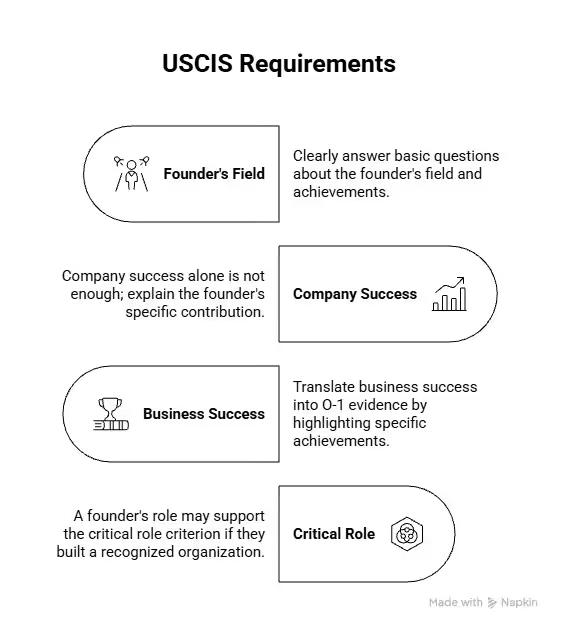
For a founder, the petition should clearly answer a few basic questions: What is the founder’s field? What did they personally achieve? Who recognized their work? Why did their work matter?
The case should also explain how the founder’s contribution affected the company, customers, market, or industry.
Many non-tech founder cases become weak when they describe the company, but not the founder. They list revenue, but do not explain why the revenue is unusual. They include press, but the article only talks about the brand.
The same issue applies to recommendation letters. Letters should explain the founder’s specific contribution, not just say the founder is impressive.
A stronger case translates business success into O-1 evidence. For example, “I founded a skincare company” is not enough.
A stronger case would show that the founder created a differentiated product line, secured national distribution, received respected beauty press, won industry recognition, and drove growth in a competitive category.
A founder’s role may also support the critical role criterion if they built a recognized organization, led major growth, secured key partnerships, or created the operating model behind the company’s success.
For more detail, read Beyond Border’s guide on the O-1 visa critical role.
USCIS does not need hype. It needs proof that the founder’s work, judgment, reputation, or original contribution made them stand out.
The best evidence for non-tech founders is generally the same as evidence for other O-1 founder cases: proof of recognition, original contribution, leadership, commercial success, critical role, and measurable impact. The difference is mostly in how the evidence is explained. Instead of patents, technical publications, or software adoption, a non-tech founder may rely on press, selective awards, revenue growth, customer adoption, major partnerships, retail distribution, expert letters, brand recognition, or proof of an original business model. The goal is to show that the founder stands out in their field and that their work has been recognized beyond ordinary business ownership. For a broader document breakdown, review Beyond Border’s O-1 visa evidence guide.
Not every non-tech founder will qualify for O-1. But several types of founder profiles may support a serious case review if the evidence is strong.
A consumer brand founder may have a strong case if they built a recognized brand in beauty, fashion, food, wellness, home goods, or lifestyle products.
Strong evidence may include national press, retail distribution, sales growth, selective awards, celebrity or influencer recognition, major partnerships, and proof that the founder shaped the brand’s creative or commercial direction.
An education or coaching founder may have a case if they created a recognized program, reached a large learner base, partnered with institutions, or published respected thought leadership.
Speaking at major events or receiving recognition from credible organizations can also help. The evidence should show more than ordinary course sales. It should show influence, scale, or recognition.
A media, creator, or entertainment founder may qualify if they built a production company, media platform, podcast network, creative studio, or audience-led business with strong public recognition.
Useful evidence may include audience growth, press, awards, sponsorships, brand partnerships, speaking invitations, and recognition from respected figures in the field.
A hospitality or food founder may have a case if they received major reviews, culinary awards, expansion opportunities, press coverage, partnerships, or recognition for a distinct concept.
A chef-founder, restaurant group founder, or beverage entrepreneur may use evidence of both creative distinction and business impact.
A consulting or professional services founder may qualify if they developed a recognized methodology, served major clients, published influential work, judged industry programs, or spoke at respected events.
The case is stronger when the firm is known for a specific area of expertise. The founder must show recognition beyond routine client service.

Non-tech founders can qualify for O-1, but their evidence may need more explanation than a typical tech founder case. Many O-1 founder examples involve AI, SaaS, fintech, biotech, or other innovation-heavy sectors where patents, funding, product launches, or user growth are easier to document.
For non-tech founders, innovation may look different. It may come from a new brand model, customer experience, education method, hospitality concept, product category, community strategy, or market expansion approach.
The key challenge is connecting the founder’s work to clear proof of recognition, originality, leadership, and measurable impact. Press, awards, partnerships, revenue growth, expert letters, and customer adoption can all help when they show that the founder stands out in their field.
So, the O-1 visa for non-tech founders is still possible. The case simply needs to explain the founder’s achievements in a way USCIS can understand and verify.
Non-tech founder evidence is often less obvious than software or AI founder evidence. Your strongest proof may be scattered across press, revenue, partnerships, awards, customer growth, expert relationships, or brand recognition.
Beyond Border helps you identify what actually matters, map your evidence to the O-1 criteria, and understand whether O-1 is the right path or whether another option, such as L-1, E-2, EB-1A, or EB-2 NIW, may fit better.
If you are a non-tech founder exploring the O-1 visa, do not guess your eligibility. Get your profile reviewed before building the wrong case.
Schedule your free consultation and profile evaluation.
Yes. The O-1 visa is not limited to tech startups. A non-tech founder can qualify if they can prove extraordinary ability through strong evidence of recognition, original contribution, leadership, commercial success, and industry impact.
No. VC funding can help, but it is not required. A founder may also use press, awards, revenue, partnerships, customer adoption, expert letters, judging roles, memberships, or other evidence to support an O-1 case.
Usually not by itself. Revenue becomes stronger when it shows unusual commercial success, strong market demand, major growth, or industry impact. The petition must also connect that revenue to the founder’s personal role.
Possibly, but only if the owner has achievements beyond ordinary business operation. A profitable local business may not be enough unless there is broader recognition, original contribution, awards, press, or measurable influence in the field.
The strongest evidence usually combines founder-focused press, selective awards, commercial success, original business contributions, expert letters, and proof that the founder played a critical role in building or scaling the company.
Yes. Creative founders may qualify under the appropriate O-1 category if they can show strong recognition and achievement in their field. This may include media founders, design founders, content creators, artists, creative directors, producers, or entertainment entrepreneurs.
Yes. O-1 beneficiaries cannot simply self-petition in the same way some immigrant categories allow. The petition is generally filed by a U.S. employer or U.S. agent, and USCIS notes that U.S. agents may file in certain cases involving traditionally self-employed workers or multiple short-term engagements.

Address: 4 W 4th Ave, San Mateo, CA 94402, United States
Email: info@beyondborderglobal.com