Your U.S. visa has more numbers than you probably realize. There’s a visa number, a control number, and your passport number. If you are involved in the U.S. immigration process, you may also have an A-number or case number. These numbers aren't interchangeable, and using the wrong one on a form can lead to rejection.
So, where can you find your U.S. visa number, and how do you know you’re looking at the right number? Here’s exactly what to look for.
Your U.S. visa number is in the lower right corner of the visa foil, printed in red and different from the black text around it. On most foils, it is a short string of characters, and it is the only element in that colour.
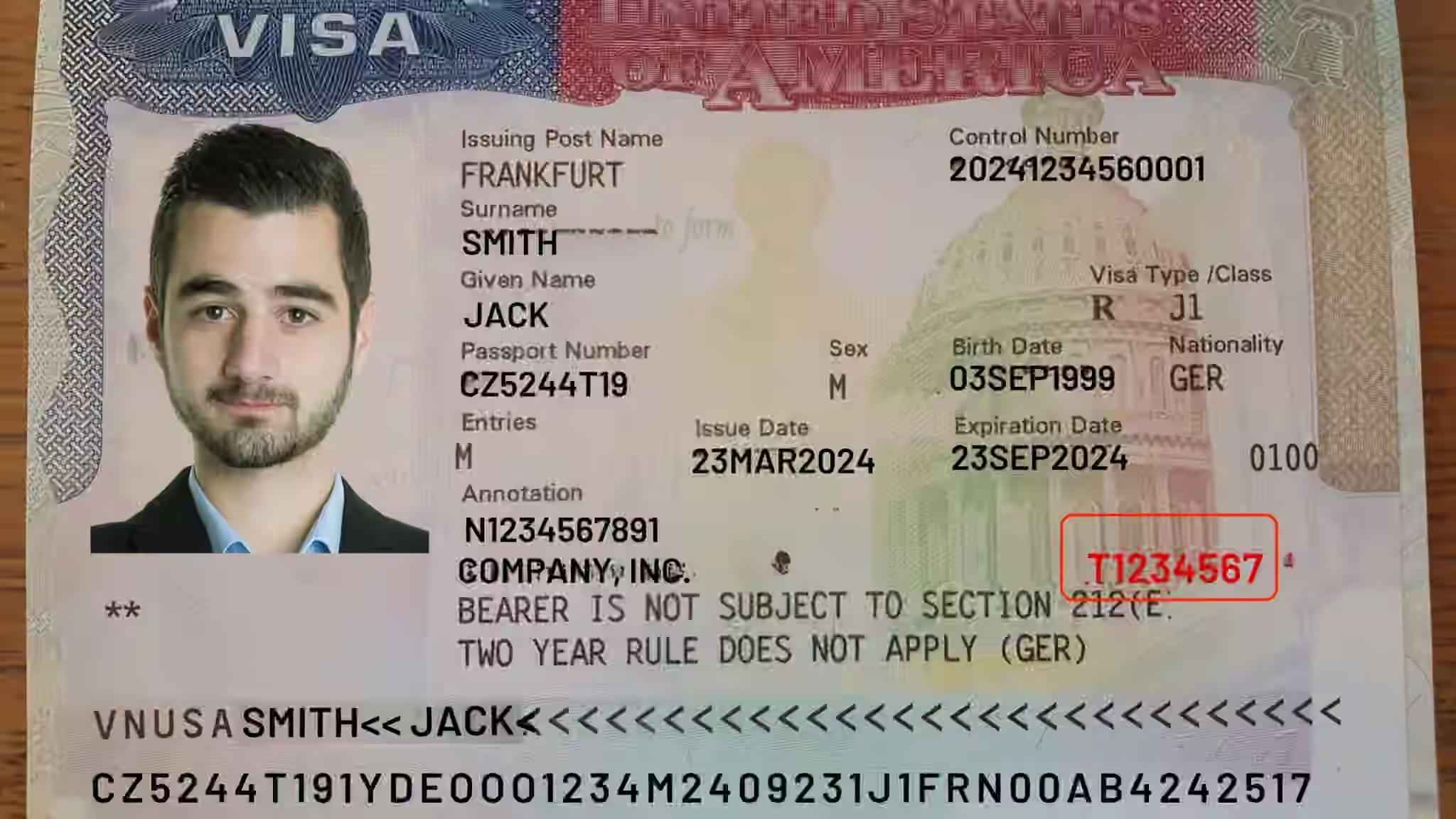
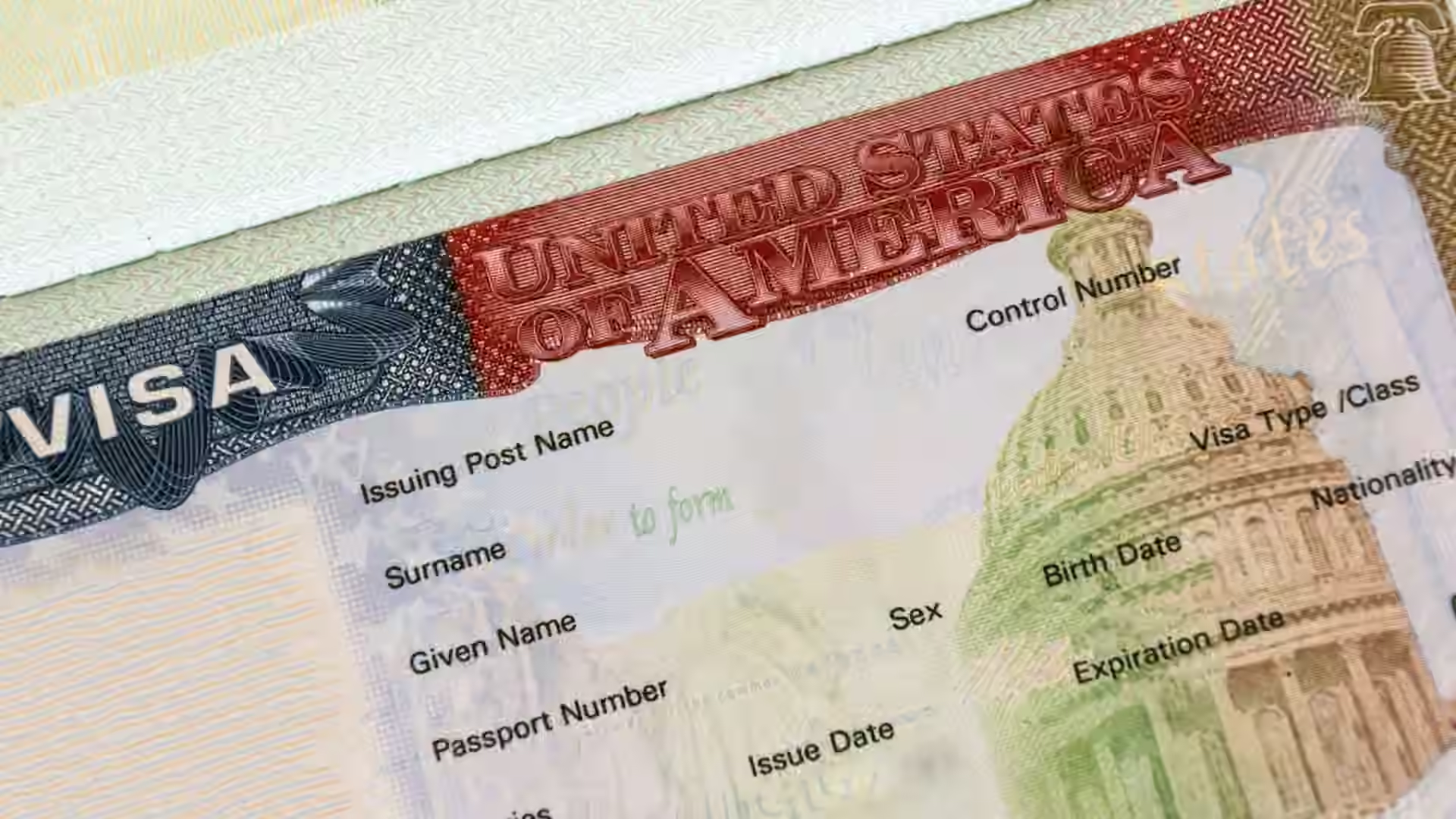
The visa foil is in your passport. It is the full-page adhesive foil with your photograph on it, and it carries several numbers at once.
The two dense lines of characters across the bottom of the foil are the machine-readable zone, the part a scanner reads at the border. It is not your visa number.
A U.S. visa number identifies one issued visa, in one passport, from one consular post. It does not identify you, and it is not consistent between visas.
The rule governing what gets printed on the foil is 22 CFR 41.113. It sets out the minimum data a machine-readable visa must carry:
But the list does not include a visa number. Neither does 9 FAM 403.9-6(A), the Foreign Affairs Manual passage that maps the foil into its five printed sections.
As a result, “Visa number” is what forms, airlines and consular staff call the number in the corner of your foil, and it is a real number you can find and give. The State Department does not define it in the rules governing the document.
Here is what each one is and when a form wants it.
If you're reading about "visa number availability," that's the immigrant visa allocation system, a different concept entirely, and our priority date guide covers it.
If you hold a green card, the numbers on the card follow their own rules, and the green card number and the document number aren't the same. Form sections always specify which number they require.
Not every U.S. visa is a sticker in a passport, and if yours is not, here’s what applies;
A border crossing card is not issued under the rule governing visa foils. The regulation describes it as "a card, Form DSP-150, containing a machine-readable biometric identifier."
It shows the post symbol, the card number, the date of issuance, the indicia "B-1/B-2 Visa and Border Crossing Card," your name, date of birth and sex, and the expiration date.
So a border crossing card holder does not have a visa number as explained in this article. But you have a card number, and that's what to give when a form asks you to identify the document.
Under 22 CFR 41.113(a), a nonimmigrant visa "shall be evidenced by a physical visa placed in the alien's passport or by an electronic visa located in the Department's records."
An electronic visa has no foil. There's no corner to look in and no printed number to find.
If a form asks for a visa number and you don’t have a physical visa, you can provide your passport number and, where the process uses one, your case number.
The most important thing to do is to contact the U.S. embassy or consulate and report your case. Follow these steps;
The State does not ask for your visa number to identify your visa, which also answers whether you can look it up. No public search tool lets you find your visa number.
A visa you report lost and then find is invalid for future travel. A damaged visa is treated the same way. If your visa has been damaged in any way, you'll need to apply for a new one at a post abroad.
If you're on an F-1, an H-1B or a visitor visa and your record has grown since you applied, the category you're in may no longer be the strongest one available to you.
Founders, engineers, researchers, and executives routinely qualify for O-1 or EB-1 classification without knowing it, because the evidence rarely looks like what they expect.
Beyond Borders' attorneys will review your profile against the O-1, EB-1 and EB-2 NIW criteria and tell you which one your record currently supports. We’ll also provide guidance on the specific evidence you need to strengthen your record. Request a free profile evaluation and find out what your record actually supports.
No. They're two different numbers on the same foil. The control number is printed automatically, together with the name of the issuing post. Most people mean the number in the lower right corner.
Your U.S. visa number is in the lower right corner of the visa foil, printed in red and different from the black text around it.
There is no official format of the U.S. visa number. Read the number off your own foil rather than relying on a stated length, and if it won't fit a form's field, contact the issuing post.
No. Your passport number is issued by your own country and appears on your passport's biographic page. It's also reprinted on the visa foil because it's required there, which is part of why people mix the two up.
No. There's no public lookup that returns a visa number, and the State Department's CEAC status tracker works from a case number, a passport number and a surname instead. The state's own lost-visa procedure asks for your passport number.
No. An A-number is a Department of Homeland Security file number, and it isn't printed on most nonimmigrant visa foils. Our A-number guide covers where it does appear.
No. It is the same required data for every machine-readable visa, whatever the classification. Your visa type appears on the foil as one of those elements, but it doesn't change where the number sits.

Address: 4 W 4th Ave, San Mateo, CA 94402, United States
Email: info@beyondborderglobal.com