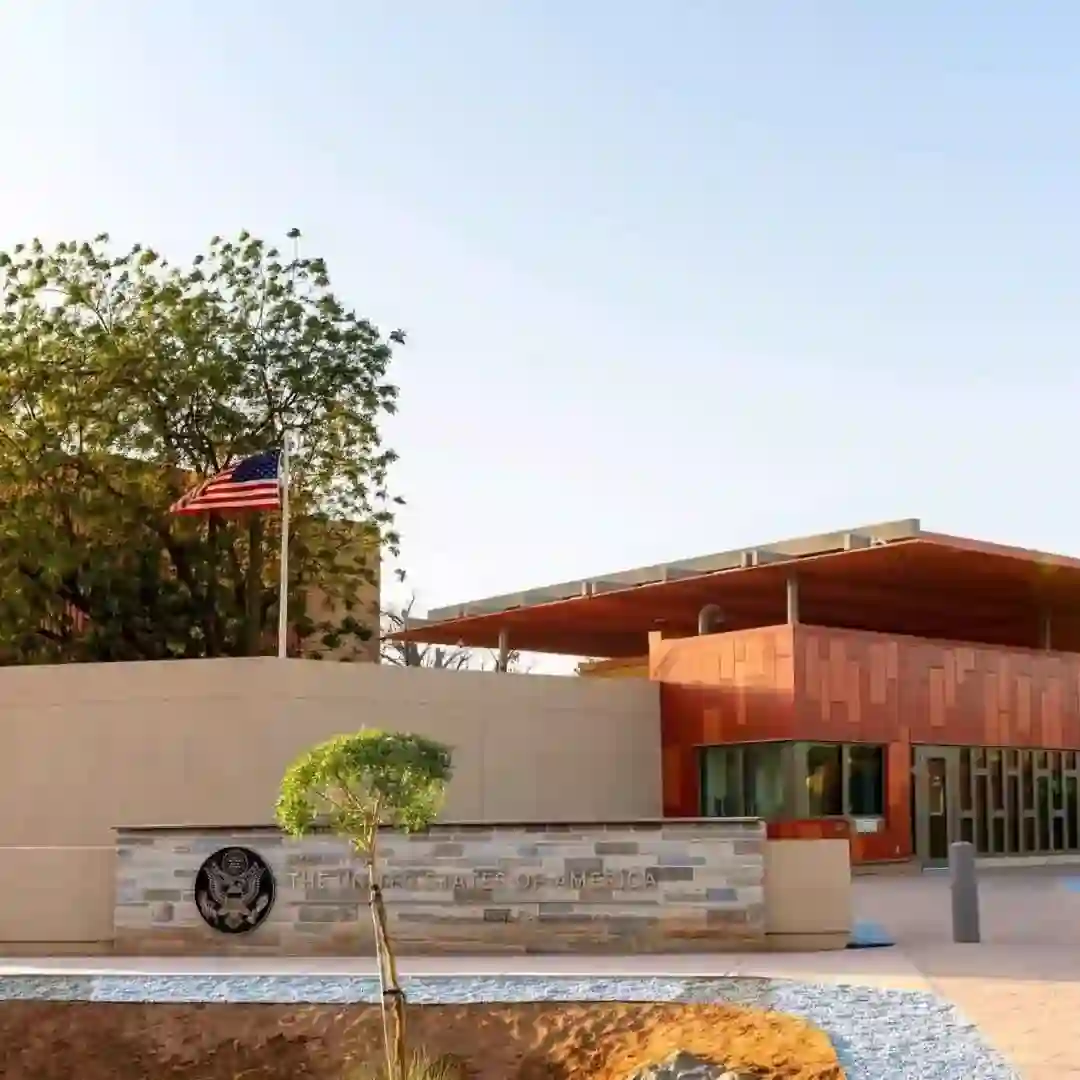
For employment-based visa applicants outside the United States, consular processing is the final stage between USCIS approval and physical arrival in the United States with the appropriate visa stamp. Beyond Border is an immigration firm serving O-1A, L-1A, EB-1A, and EB-2 NIW applicants. Understanding how consular processing works, how long embassy appointments take, and what to bring to the interview prevents timeline surprises that affect business and employment start date planning.
Book a consultation with Beyond Border today
Consular processing is the stage at which an applicant outside the United States obtains the actual visa stamp in their passport after the underlying USCIS petition has been approved. An approved USCIS petition alone does not authorise entry into the United States. The visa stamp is the document that permits border presentation.
For O-1A and L-1A nonimmigrant petitions, the process flows in four steps. USCIS approves the I-129 petition and issues Form I-797. The applicant completes Form DS-160 online and pays the $205 nonimmigrant visa application fee to the State Department. The applicant schedules and attends an interview at a U.S. embassy or consulate. If approved, the passport is retained for visa stamping and returned within 5 to 10 business days.
For EB-1A immigrant visa petitions, the process differs. After I-140 approval and once the priority date is current on the Visa Bulletin, applicants outside the United States process through the National Visa Center. The NVC collects the $325 DS-260 immigrant visa fee, civil documents, and the completed DS-260 application. The embassy then schedules an immigrant visa interview. After approval, the applicant enters the United States as a lawful permanent resident.
Applicants already inside the United States on valid nonimmigrant status can file Form I-485 adjustment of status rather than using consular processing. Adjustment of status avoids the consular interview entirely but follows its own timeline of 11 to 31.5 months.
[Check the USCIS processing times page for current petition processing estimates. Embassy appointment availability is updated monthly at travel.state.gov.]
Employment-based H, L, O, P, Q, and R category visas receive priority scheduling at most U.S. embassies. The multi-month and multi-year waits that affect B-1/B-2 tourist visa queues at high-demand posts do not generally apply to O-1A, L-1A, and similar employment-based categories.
The table below reflects general employment-based interview wait time patterns at major cities as of early 2026. Individual results vary and applicants should verify current availability at travel.state.gov before planning travel.
Applicants are not restricted to applying at a consulate in their home country. An O-1A or L-1A applicant based in India can apply at Singapore, London, or any other post where they are legally present if that post offers faster scheduling. This practice is legal and widely used by employment-based applicants with flexible travel schedules.
The consular interview for O-1A and L-1A applicants is typically brief. The officer verifies the applicant's identity, confirms the approved petition, reviews the DS-160, and assesses admissibility. The interview is not a re-adjudication of the petition; it focuses on identity verification and ensuring there are no bars to entry.
For O-1A applicants, the officer confirms the I-797 approval and that the visa is being sought for the purpose and employer or agent described in the petition. For L-1A applicants, the officer confirms the qualifying corporate relationship and the applicant's employment history with the transferring entity.
Bring the following documents to the interview: the approved I-797 notice, the DS-160 confirmation page, the current passport and any prior passports containing prior U.S. visas, a valid passport-sized photograph, and key supporting evidence from the petition. For L-1A applicants, corporate relationship documentation and employment history records are advisable. For O-1A applicants, a concise summary of the key evidence of extraordinary ability is useful if the officer has questions.
After a successful interview, the passport is retained for visa stamping and returned within 5 to 10 business days. Some cases enter administrative processing, an additional security review stage. Administrative processing for employment-based cases typically takes 3 to 7 business days but can extend significantly. Building buffer time into employment start dates accounts for this risk.
.webp)
For applicants already inside the United States on valid nonimmigrant status, choosing between consular processing and adjustment of status is a significant strategic decision. The table below summarises the key differences.
For O-1A and L-1A applicants, consular processing is required if the applicant is outside the United States. For those already inside the United States, a change of status petition (I-129) changes immigration classification without requiring departure, though it does not produce a visa stamp and the applicant cannot reenter after international travel without first obtaining a stamp at a consulate.
For EB-1A and EB-2 NIW applicants already inside the United States, adjustment of status via I-485 avoids the consular interview and produces the green card directly. This is generally the preferred route for eligible applicants already in the United States.
USCIS petition fees and State Department consular fees are separate and paid to different agencies at different stages of the process.
For nonimmigrant visa stamping (O-1A, L-1A), the DS-160 application fee is $205, paid to the State Department when scheduling the appointment. This is separate from the USCIS I-129 filing fees.
For immigrant visa stamping (EB-1A via consular processing), the DS-260 fee is $325, paid to the State Department through the NVC at the start of the immigrant visa process. The USCIS I-140 fees apply separately and at an earlier stage.
For USCIS petition fees, Form I-129 for O-1A costs $460 plus the Asylum Programme fee. Form I-129 for L-1A costs $1,385 for standard employers plus the Asylum Programme fee and the $500 Fraud Prevention fee for initial petitions. Form I-140 for EB-1A costs $715 plus the $300 Asylum Programme fee for self-petitioners. Premium processing via Form I-907 adds $2,965 effective March 1, 2026, guaranteeing 15 business days for I-129 O-1A and L-1A and I-140 EB-1A.
Use the Beyond Border USCIS Fee Calculator to estimate total government fees before beginning.
Beyond Border specialises exclusively in high-skilled U.S. employment-based immigration, with a 98% approval rate across 4,000+ cases and a client base spanning professionals from Salesforce, Google, Yelp, Chime, Visa, and Mastercard across both high-growth technology companies and established financial services firms.
Interview appointment wait times for employment-based H, L, O, P, Q, R categories run 4 to 10 weeks at most major posts. After a successful interview, visa stamping takes 5 to 10 business days. Administrative processing can add weeks to months in cases flagged for additional review. Total time from USCIS approval to U.S. entry typically runs 6 to 12 weeks with premium processing on the I-129.
Yes. Applicants can apply at any U.S. embassy or consulate where they are legally present. Choosing a consulate with faster appointment availability than the home country post is legal and widely used by employment-based applicants. The consular officer may ask about local presence but applying at a third-country consulate requires no special justification.
Consular processing requires applying for a visa stamp at a U.S. embassy abroad and is used by applicants outside the United States. Adjustment of status (Form I-485) allows applicants already inside the United States to obtain permanent residence without leaving. For EB-1A applicants inside the United States, adjustment of status is generally the preferred route as it avoids the consular interview and produces the green card directly.
Bring the I-797 approval notice, the DS-160 confirmation page, the current passport and any prior passports with prior U.S. visas, a valid passport photograph, and key evidence supporting the petition's claims. For O-1A applicants, a concise summary of the extraordinary ability evidence is useful if the officer has questions. For L-1A applicants, corporate relationship documentation and employment history records are advisable.
Administrative processing is additional security review that occurs after a successful consular interview for some applicants. For employment-based cases, it typically takes 3 to 7 business days. In some cases involving additional security checks, it can extend to several weeks or months. The State Department advises against making status inquiries until 180 days have elapsed.