
An immigration reference letter is a written statement from someone who knows an applicant, submitted as evidence in a case before U.S. Citizenship and Immigration Services. This article covers the most important elements in an immigration reference letter, who can write it and includes a downloadable template.
The letter goes by several names: reference letter, letter of recommendation, letter of support, character letter, and affidavit; all describe the same basic thing: a signed statement of fact from a person in a position to know.
USCIS requires that the reference letter be written by persons who are not parties to the petition, but have direct personal knowledge of the event and circumstances.
Essentially, the letter must be independent and focus on its primary purpose. This could include discussing your work or work history to establish credibility. It is not meant to simply praise your character.
A character reference in a family case, an employment letter confirming a work history, and an expert recommendation letter in an O-1 or EB-1A petition are read by different people against different standards, and they are not interchangeable.
USCIS sets a clear priority list for evidence, and reference letters are not the first requirement. The agency looks at evidence in three tiers;
Use a reference letter when official records do not exist, and explain why those records are missing. USCIS requires at least two affidavits from disinterested third parties, meaning neither the applicant nor the petitioner can write them.
The purpose changes what the letter must say. Before commissioning reference letters, work out which of these you are being asked for.
Here are different samples of reference letters for immigration purposes by use-case;
This is the most common reason people are asked. The third party must know the marital relationship. Knowledge is the operative word. A letter that reports specific things you saw over a dated period is better than a letter praising the couple. Our guide to removing conditions covers what that filing involves.
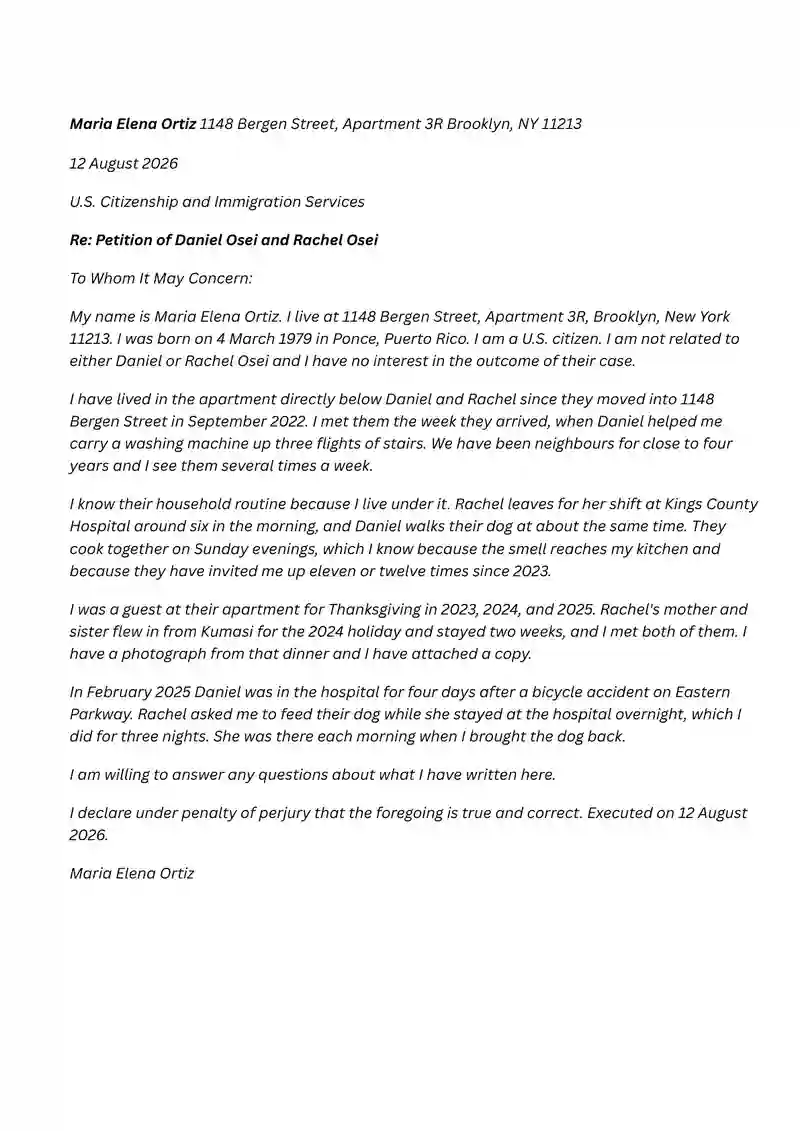
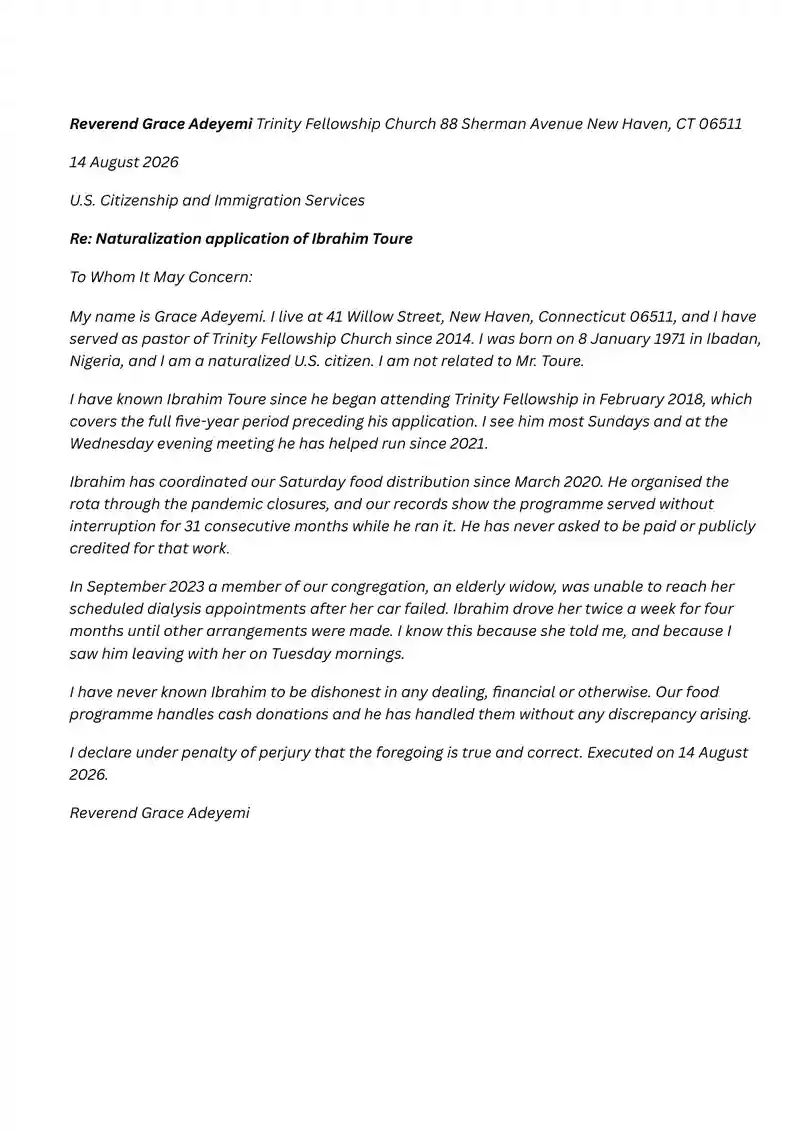
The applicant must demonstrate that during the prescribed period, he or she continues to be a person of good moral character. The assessment is case-by-case, based on the standards of the average citizen in the community of residence.
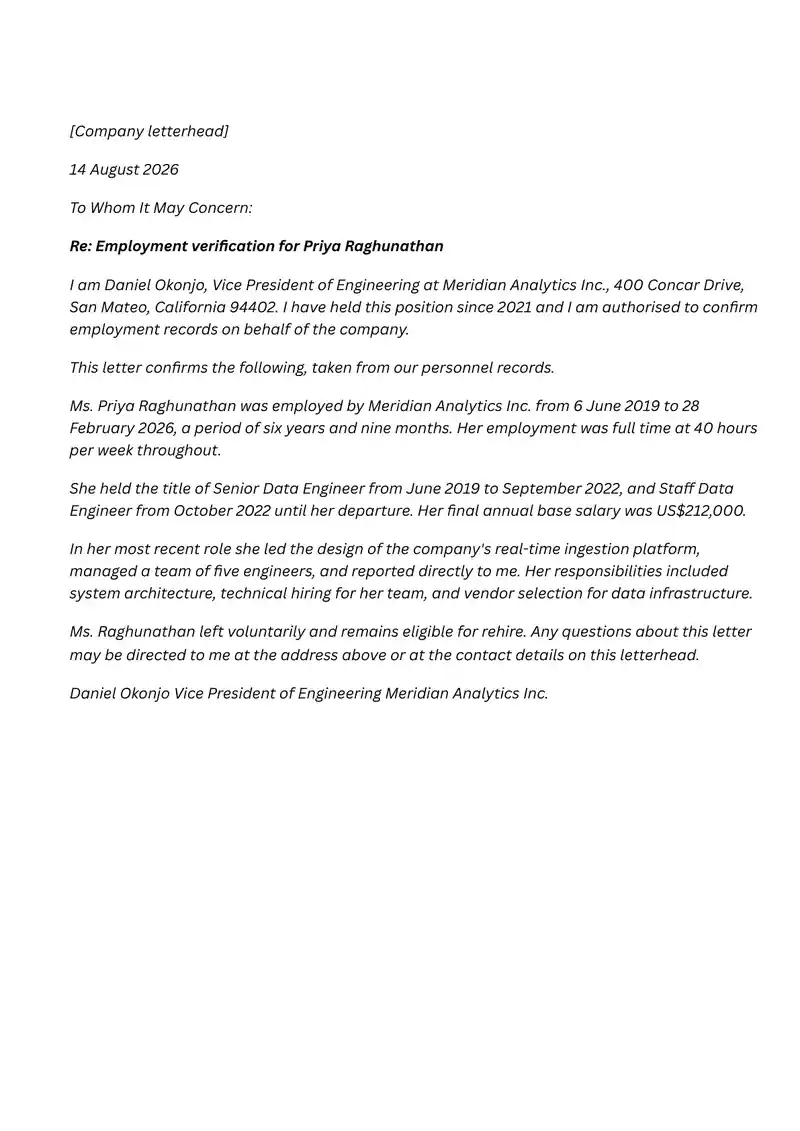
This letter confirms dates of employment, job titles, duties, and reporting lines, and it is written by someone with the authority to confirm them. If the dates in the letter differ from the dates elsewhere in the filing, the letter creates a problem.
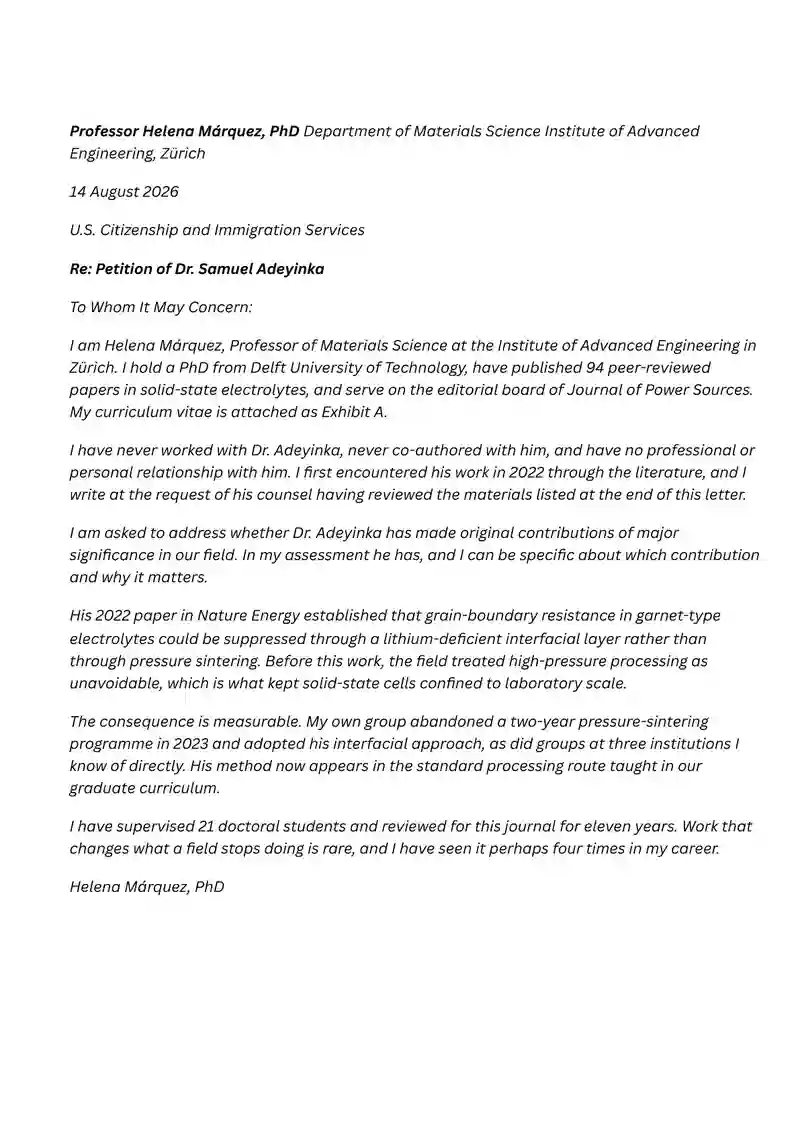
In these petitions, a recommendation letter serves as expert testimony. It is written by someone qualified in the applicant's field, it maps to specific regulatory criteria, and it is assessed for both the writer's independence and expertise and what it says. This letter differs from everything above, with its own rules about who should write it, how many are useful, and what triggers a request for evidence. Our guides to O-1 recommendation letters and EB-1A recommendation letters cover both in full.
A letter for a bond hearing, or for any matter before an immigration judge, is a different filing in a different forum, decided under the standards of the relief being sought. Anyone in removal proceedings should be working with counsel who handles them.
According to USCIS Regulations, the reference letter must contain four things;
Everything that separates a statement that helps from one that gets rejected is in how you answer the fourth requirement.
No, it does not need to be notarized. In most cases, a signed statement under penalty of perjury has the same legal weight as a notarized affidavit. If you are signing in the U.S. (or its territories), use this phrasing: "I declare (or certify, verify, or state) under penalty of perjury that the foregoing is true and correct. Executed on (date). (Signature)."
If you are signing outside the U.S., add one extra phrase: "I declare (or certify, verify, or state) under penalty of perjury under the laws of the United States of America that the foregoing is true and correct. Executed on (date). (Signature)."
Clear, first-hand details strengthen your letter, not a notary stamp. Still, always double-check the specific form instructions for your case, as some filings may still require notarization.
Note: A reference letter in another language needs a full English language translation which the translator has certified as complete and accurate, plus the translator's certification of competence. So write in whichever language you can be precise in, then have it translated properly. It’s better to be more accurate in your language than in English.
Beyond Border works on employment-based categories, where letters serve as expert testimony, not just character evidence. If you are writing for a colleague, an employee, or a researcher whose achievements might support an O-1, EB-1A, EB-1B, EB-1C, or EB-2 NIW petition, you need to know how to write letters for these petitions.
Our attorneys will assess whether the profile supports one of those categories, what the letters would need to establish if it does, and which alternative fits better if it does not. Request a case assessment to find out where your profile actually stands.
Anyone with direct personal knowledge of the facts, who is not a party to the petition. This rules out the applicant and the petitioner but not friends, neighbours, coworkers, clergy, or employers.
If the letters will be standing in for unavailable documents, you will need to submit two or more reference letters. No minimum or maximum number is published. It’s always better to have a set of specific letters from different vantage points.
There is no required length. The only requirement is that the letter carries the writer’s identity, relationship, and a complete account of how they know what they are asserting. One detailed page usually does that better than three general ones.
The letter is the signer's statement, made under penalty of perjury, so it must reflect what the signer knows. So the signer must confirm that he or she understands the letter's content and has first-hand knowledge of it before signing.
Yes, it can, but it must be accompanied by a certified English translation, certified by the translator as complete and accurate, along with the translator's certification that they are competent to translate.
No. An O-1 or EB-1A letter is expert testimony about the applicant's standing in their field, written by a qualified expert and mapped to regulatory criteria. A reference letter mostly serves as a character reference for other petitions.

Address: 4 W 4th Ave, San Mateo, CA 94402, United States
Email: info@beyondborderglobal.com