Beyond Border prepares EB-1A and EB-2 NIW green card petitions and I-485 packages with documentation quality that supports interview waiver eligibility, achieving a 98% approval rate across 4,000+ cases and serving a client base spanning professionals at Salesforce, Google, Yelp, Chime, Visa, and Mastercard. Understanding which I-485 cases receive interview waivers and what factors influence that decision helps applicants prepare the strongest possible application package.
Get a free I-485 preparation assessment from Beyond Border today
An I-485 interview waiver is a USCIS officer's decision to approve an adjustment of status application without scheduling an in-person interview. The officer waives the interview when the complete application file contains sufficient evidence to establish the applicant's eligibility and admissibility without a direct appearance.
The 2017 USCIS policy memorandum expanded officer discretion to waive interviews across a broader range of adjustment of status categories. Prior to 2017, interviews were standard practice for nearly all I-485 applications.
The expanded waiver authority allows officers to direct interview resources toward cases that genuinely require in-person clarification while approving straightforward, well-documented cases administratively.
Applicants cannot request an interview waiver. There is no form, checkbox, or procedure that allows an applicant to formally ask for a waiver. The decision rests entirely with the USCIS officer reviewing the file. USCIS retains absolute discretion, and there is no right to a waiver regardless of case strength or category.
A waived interview does not indicate lesser-quality processing. Waived cases receive identical adjudication standards and produce the same lawful permanent residence as cases that proceed to an interview. USCIS can schedule an interview at any stage of processing, even after an initial waiver decision, if a reviewing officer identifies an issue requiring direct examination.
Employment-based I-485 cases receive interview waivers at significantly higher rates than family-based cases. Within employment-based categories, certain petition types are more consistently waived than others, while family-based green cards are less predictably waived.
EB-1A Extraordinary Ability
EB-1A cases receive interview waivers at high rates. These petitions involve extensive documentation of the applicant’s achievements, awards, publications, citation records, media coverage, salary benchmarks, and expert letters of recommendation. The depth and specificity of this documentation typically give reviewing officers sufficient evidence to assess eligibility and admissibility without a direct interview.
EB-2 NIW National Interest Waiver
EB-2 NIW applications similarly frequently receive waivers. The detailed Proposed Endeavour Statement, expert recommendation letters from independent authorities, and documentation of the applicant’s professional record and qualifications provide a comprehensive evidence base for officer review. Petitions built with the specificity and evidentiary depth that the Dhanasar three-prong test requires are well-positioned for waiver consideration.
EB-3 and Employer-Sponsored Cases
EB-3 skilled worker cases and other employer-sponsored petitions receive waivers regularly when employment verification is clear, the PERM documentation is complete, and the applicant’s qualifications straightforwardly match the position. Applications from established employers with recognised USCIS filing histories receive waivers more frequently than those from newer or less established sponsoring entities.
H-1B to Green Card Transitions
Cases involving a transition from H-1B to an employment-based green card pathway benefit from USCIS’s familiarity with the applicant through prior nonimmigrant petition processing. This prior interaction provides additional confidence in the applicant’s identity and immigration history, and it also helps USCIS review the applicant's record, including legal status and clean immigration history, in support of waiver decisions.
Family-based adjustment applications receive interview waivers at substantially lower rates than employment-based cases. USCIS policy emphasises fraud detection in family-based cases, making interviews the standard practice for most relationship-based petitions.
Marriage-Based Cases
Marriage-based I-485 applications rarely receive interview waivers. The marriage green card interview remains the main way USCIS evaluates a marriage-based green card case, so waivers are uncommon. Documentary evidence alone is generally considered insufficient to verify a relationship in marriage cases, making waivers the exception rather than the rule.
In the marriage green card process, USCIS looks for a bona fide marriage supported by strong evidence and documents, not just the forms.
Parent-Child and Other Family Relationships
Cases involving parents of U.S. citizens (IR-5) occasionally receive waivers when the parent-child relationship is straightforwardly established through documentation, and the applicant has a clean immigration and background history. Cases involving unmarried adult children of U.S. citizens (F-1) may also receive waivers when relationship documentation is comprehensive.
Factors That Reduce Family Case Waiver Likelihood
Cases where the U.S. petitioner has filed multiple prior I-130 petitions, where the applicant entered on a tourist or other short-term visa shortly before filing I-485, or where there are any discrepancies in the application record are unlikely to receive waivers.
Red flags can include unresolved prior marriages, weak proof of the relationship's ongoing nature, or missing proof from the foreign spouse and petitioner, even when applicants provide evidence such as joint bank statements. USCIS prefers interviews when relationship verification cannot be fully resolved from the documentary record. A complete marriage green card application should include the required forms, proof of marriage, and medical exam results, all organised in a single package to reduce the risk of delays or denials.
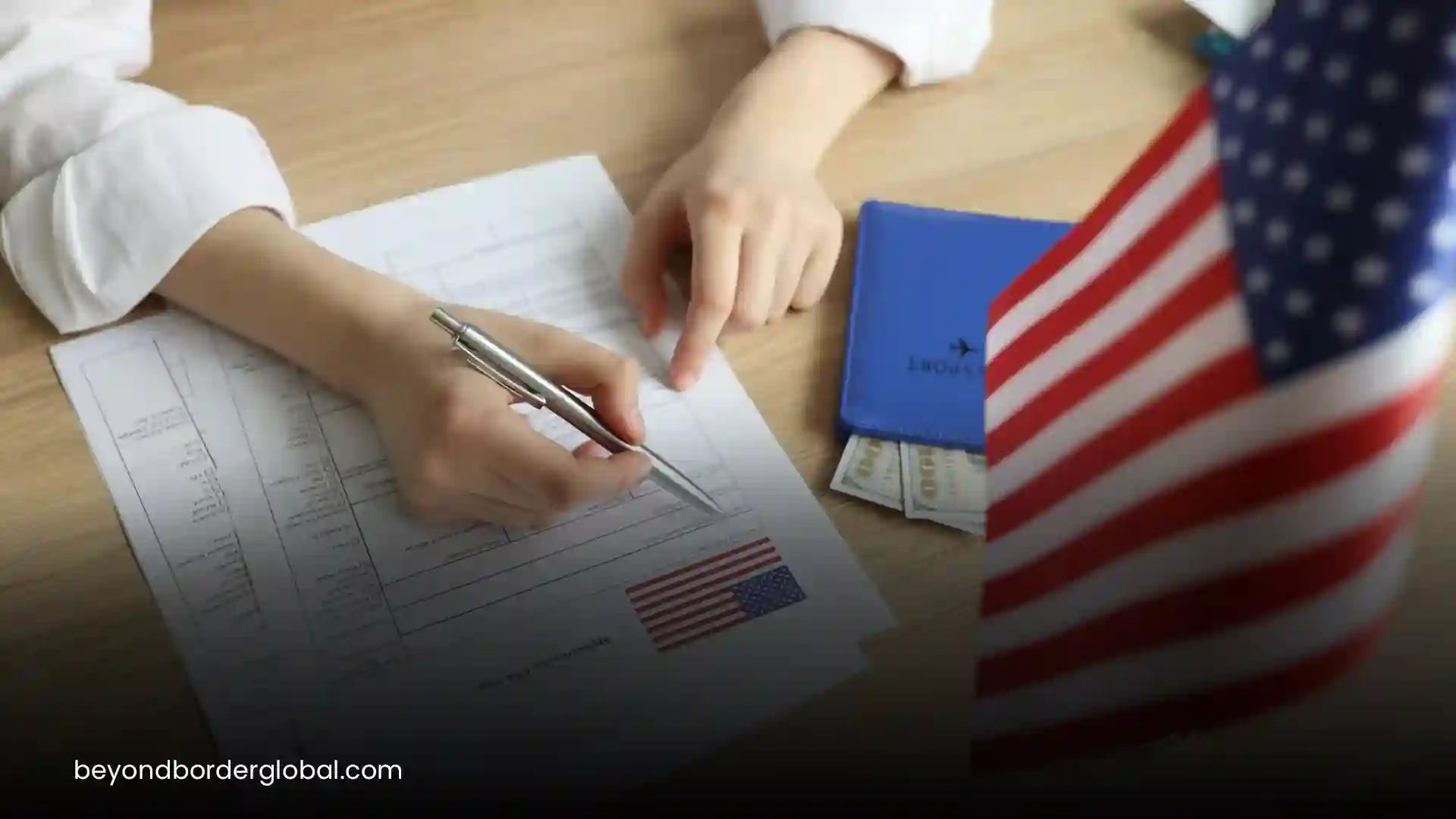
Several factors influence USCIS officer decisions on interview waivers across all case categories.
Documentation Completeness and Organisation
Applications with complete documents and supporting documents submitted, exhibits clearly labelled and organised, and any additional documents later requested by USCIS or the service centre provided promptly, receive waivers more frequently than incomplete or disorganised packages.
A well-prepared application provides the reviewing officer with everything needed to make an eligibility determination without requiring additional information. Following instructions from immigration services and the service centre helps avoid delays.
Immigration History
Applicants who have maintained continuous lawful status throughout their U.S. presence, without gaps, status violations, or overstays, present cleaner records that support waiver decisions. Prior approvals, such as approved I-140 petitions or prior nonimmigrant visa approvals, demonstrate positive prior interactions that increase officer confidence.
Background and Security Screening Results
Clean FBI fingerprint results, biometric records, and security screening outcomes are prerequisites for waiver decisions. Cases with any hits or delays in security processing, including questions about criminal background, criminal history, criminal convictions, or a medical condition, proceed to interview for direct examination rather than administrative approval.
Absence of Discrepancies
Applications with no inconsistencies between the I-485 and supporting documentation, no unexplained gaps in employment or residence history, and no information requiring direct clarification are strong candidates for waivers. Discrepancies trigger interview scheduling regardless of case category.
Fraud Indicators
Any case showing indicators of potential fraud, employment fraud, marriage fraud, identity concerns, or misrepresentation in prior immigration applications proceeds to a mandatory interview, regardless of how strong other aspects of the file appear, because these red flags are still reviewed by an immigration officer even when a waiver of the interview appears likely.
Fraud detection is USCIS’s primary stated justification for maintaining interview authority, and this override applies across all categories; having the interview waived is a positive sign, not a guarantee. With proper guidance from an experienced immigration attorney, applicants can better address admissibility or documentation issues that may affect their ability to adjust status to permanent resident status.
USCIS government fees are paid directly to USCIS and are separate from any immigration firm service fees.
Form I-485 adjustment of status carries a filing fee of $1,440, which includes biometrics. Form I-765 (Employment Authorisation Document) costs $260 and can be filed concurrently with Form I-485 at no additional charge. Form I-131 (Advance Parole) adds $630 when filed separately, but is included at no additional charge when filed concurrently with I-485.
I-485 adjustment of status currently takes 11 to 31.5 months in 2026. Premium processing is not available for I-485, meaning all applicants wait in the same queue regardless of whether an interview is waived.
[Check the USCIS processing times page for the most current estimates, as USCIS updates these weekly.]
Use the Beyond Border USCIS Fee Calculator to estimate your total government fees before beginning.
Beyond Border specialises exclusively in high-skilled U.S. employment-based immigration, with a 98% approval rate across 4,000+ cases and a client base spanning professionals at Salesforce, Google, Yelp, Chime, Visa, and Mastercard, including both high-growth technology companies and established financial services firms.
Employment-based cases particularly EB-1A and EB-2 NIW applications with comprehensive documentation and clean immigration histories receive interview waivers most frequently. Marriage-based cases rarely receive waivers because USCIS uses interviews as the primary tool for relationship verification and fraud detection in family-based adjustment.
No. There is no form, checkbox, or procedure that allows an applicant to request a waiver. The decision rests entirely with the USCIS officer reviewing the file. Applicants can improve waiver likelihood by submitting thorough, well-organised documentation, but the waiver decision itself is not requestable.
A waiver eliminates the interview scheduling delay, which can add months to the overall timeline. However, waived cases still require complete file review and security screening. I-485 adjustment of status currently takes 11 to 31.5 months regardless of whether an interview is waived, as premium processing is not available for I-485.
Marriage-based category, prior immigration violations or overstays, background screening results requiring further review, incomplete or disorganised documentation, fraud indicators of any kind, and unexplained discrepancies between application materials all significantly reduce waiver likelihood regardless of how strong other aspects of the case appear.
Complete and well-organised documentation, continuous maintenance of lawful status, clean immigration history with no overstays or violations, no discrepancies in the application record, and a comprehensive evidence package that addresses all eligibility criteria without gaps or unexplained information all support waiver decisions. The decision remains discretionary but well-prepared applications position cases more favourably for waiver consideration.


Address: 4 W 4th Ave, San Mateo, CA 94402, United States
Email: info@beyondborderglobal.com