Checking your PERM status sounds simple until you actually try to do it. There's no applicant login or receipt number you can plug into a public tracker. The government's own system is built for employers and attorneys, not the worker whose green card depends on the outcome.
This structure is why so many people use community trackers and unofficial dashboards instead. Some of that data is useful, while the majority is slower than people realize, pulled from quarterly government releases or periodic scrapes, not a live feed.
This guide starts with the official system, the DOL's FLAG platform. It also decodes every status label you might see, explains what third-party trackers can and can't tell you, and covers the 180-day clock that starts the moment your PERM gets certified.
Checking PERM status the right way starts with knowing where the government keeps the data.One is open and public, the other requires a login.
DOL PERM case status is inside the Foreign Labor Application Gateway, known as FLAG. This is the only official source for PERM status, and everything else you'll find online is downstream of it.
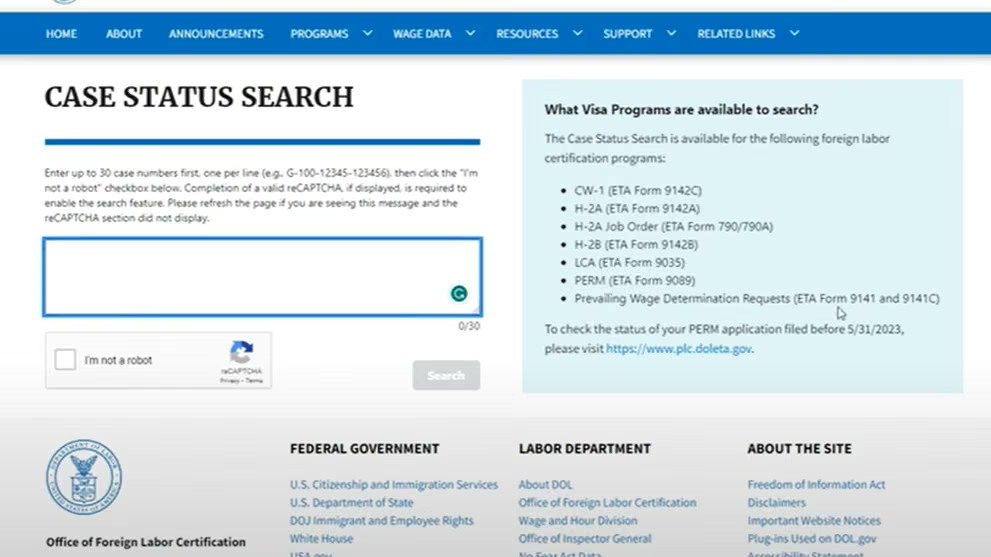
FLAG's public Case Status Search works for a case that's already been decided. Enter your case number, which starts with the letter G, and the tool returns a result: Certified, Denied, Certified – Expired, or Withdrawn.
If your case is still active, this search returns nothing, which is itself useful information. No result means your case is still in analyst review or audit. This is the most reliable way to check PERM status yourself, but it only works once DOL has actually made a decision.
Only your employer or attorney can check your DOL PERM case status. But they have to log into the FLAG account to check.
While your case is pending, DOL PERM case status detail lives behind a login only your employer or their immigration attorney can access. The account shows queue position, filing details, and any audit flags. If you're the worker on the case, you don't have direct FLAG access, and that's normal. Your practical path is asking your employer or their attorney for periodic updates.
Every PERM status label means something specific. Below, we highlight what each one signals.
This is where most PERM cases sit for the longest stretch. Analyst review is the standard DOL queue, and being in this status simply means your case hasn't reached a decision yet.
An audit means DOL selected the case for a closer look, often at random, sometimes triggered by specific factors in the recruitment or wage data. It adds time, but it isn't a denial or a sign of a problem with the case.
Certified means approved. This status also shows the 180 days your employer has to file Form I-140 before the certification expires.
A denial means DOL rejected the case outright, and the employer's options are reconsideration or a fresh filing. Withdrawal is different, as it means the employer pulled the application voluntarily, usually before a decision was reached, and it closes the case without the DOL ever ruling on it.
Community PERM tracking tools show up first in most searches, and they're genuinely useful for context. They're just not the same thing as checking your case directly with DOL.
Most PERM tracking sites pull from two sources. They are DOL's quarterly disclosure data releases and periodic scrapes of the public FLAG search. The combination lets them show trends, average processing times by filing month, audit rates, and employer-level approval history.
Some tools also let you search a specific case number and see its last known status, similar to what FLAG's own public search shows for decided cases.
That data is useful, but it always trails reality. DOL's quarterly disclosure files only cover decided cases, and they're released well after the fact. The most recent release, for example, covered data only through the third quarter of fiscal year 2026.
A tracker scraping FLAG's public search runs into the same wall, since FLAG itself only shows decided cases, not pending status.
The result is a hard limit on what any third-party tool can tell you. No PERM tracker can show real-time queue position or pending analyst review status, no matter how current its data looks. Only your employer's or attorney's direct FLAG login can show that.
The Office of Foreign Labor Certification publishes quarterly disclosure files covering every final determination made in that period. These files include employer name, job details, filing dates, and decision dates, downloadable directly from the DOL's Performance Data page.
Perm analytics built from this data can show patterns:
None of it, though, can tell you where a currently pending case stands, since these files only include cases DOL has already decided.
The more immediately useful DOL resource for checking perm status right now is the Processing Times page on FLAG itself, updated monthly. It shows which filing month DOL is currently working through in both analyst and audit review.
A PERM that is well past the current DOL processing benchmark can feel alarming. Yet, it's moving through a slow, backlogged queue. Here's how to tell the difference and what's worth doing about it:
If your case has been pending more than three months past the currently posted processing date, DOL's own guidance is to contact the OFLC PERM Helpdesk directly. DOL doesn't send perm updates to individual applicants on its own, so getting one at all depends on your employer requesting it.
From the moment a PERM status changes to Certified, a strict 180-day countdown starts. Your employer must file Form I-140 with USCIS within that window, or the certification is gone entirely and the employer has to start the whole PERM process over, including new recruitment. USCIS rejects any I-140 filed even a few days late, no exceptions.
Once the I-140 is filed on time, the certification stays valid indefinitely for that same position, even if that specific I-140 is later denied for unrelated reasons and needs to be refiled. The 180 days only matters for that first filing.
That's also why seeing "Certified – Expired" on your case is not a red flag. It's a normal system label meaning the 180-day window has closed, nothing more, as long as the I-140 went in on time.
A PERM status delay can raise a bigger question: is employer sponsorship still the right strategy for the profile? For some professionals, an EB-2 NIW may offer a different route because it can waive job-offer and labor-certification requirements when the case meets the national interest standard.
Our network of specialist immigration attorneys can evaluate your profile before choosing a strategy. Whether the case points toward PERM, EB-2 NIW, EB-1A, or another employment-based pathway, our specialist immigration lawyers will review your qualifications, achievements, proposed work, and available evidence to identify the strongest route.
Schedule a free profile evaluation to understand which pathway fits your case.
The only official way is DOL's FLAG system. The public Case Status Search shows results for decided cases using your case number, while pending cases are only visible through your employer or attorney's login.
Analyst review is the standard DOL review queue every PERM case enters after filing. Being in this perm labor status simply means your case hasn't reached a decision yet, not that anything is wrong with it.
Only for decided cases, using FLAG's public search and your case number. For a pending case, PERM check status detail is only visible to your employer or their attorney through a separate, login-only portal.
Third-party trackers pull from DOL's quarterly disclosure data and periodic scrapes of the public FLAG search, both of which lag real-time status. They're useful for context and trends, not for your specific case's current queue position.
A 180-day clock starts immediately. Your employer must file Form I-140 within that window, or the certification expires and the entire PERM timeline has to restart from scratch, including new recruitment.

David Munam is an experienced writer with 10 years of expertise in researching and producing clear, authoritative content on complex and highly technical subjects. His work has focused on turning dense information into accurate, well-structured, and accessible content across areas such as U.S. customs and trade, Web3, fintech, immigration law, and technology. At Beyond Border, he applies this experience to researching and writing in-depth content on U.S. immigration pathways, including O-1, EB-1A, and EB-2 NIW.

Address: 4 W 4th Ave, San Mateo, CA 94402, United States
Email: info@beyondborderglobal.com