Sections A, B, and C
What it covers
Employer identity, point of contact, attorney or agent
Who fills it
Employer and counsel
What it means for you
You are not required to fill anything here

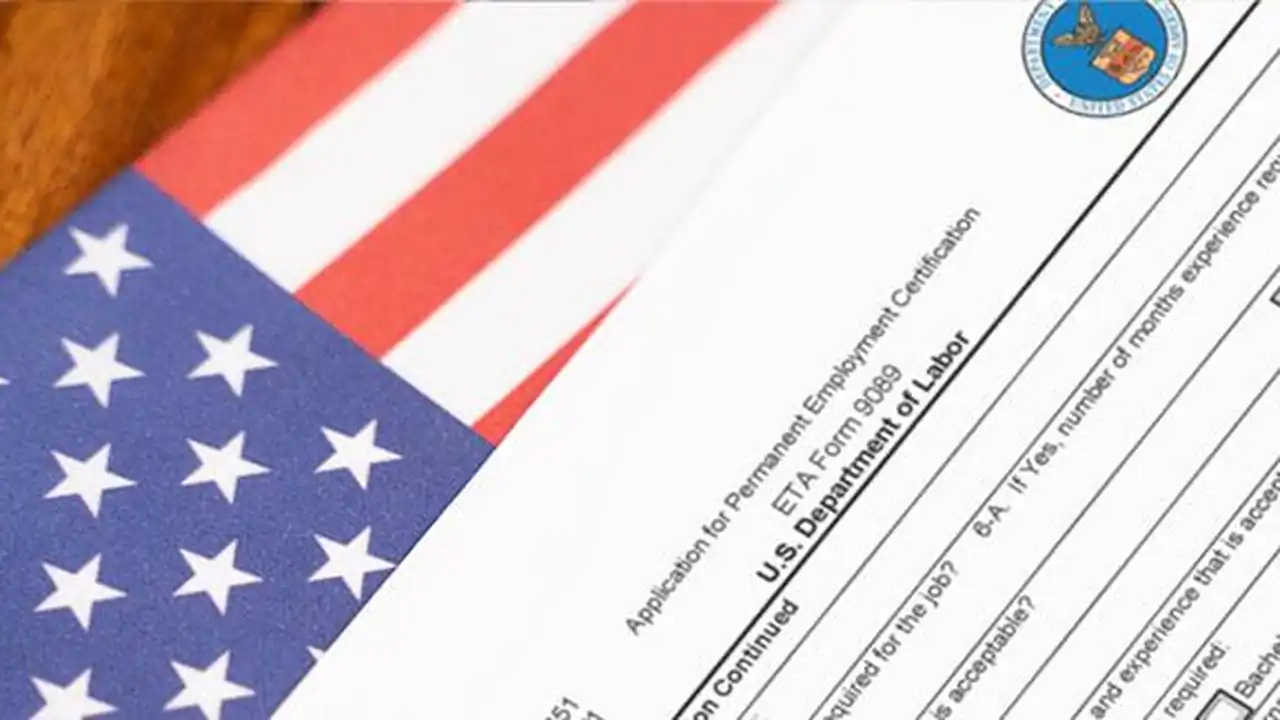
Form ETA-9089 is the Application for Permanent Employment Certification, the form a US employer files with the Department of Labor to obtain PERM labor certification. It proves that no available U.S. worker can fill the role and that the foreign worker being hired will not take jobs from existing U.S. workers.
Accuracy is important here because the information provided in this process must match everything you and your employer submit throughout the green card process.
Beyond Border attorneys have collectively handled 4,000+ immigration cases across O-1, L-1, EB-1, and EB-2 NIW categories. The guidance below explains what the form includes and which items we need from you.
Form ETA 9089 asks the Department of Labor to certify that there are no sufficient, available US workers who are qualified for a specific job. It also certifies that hiring a foreign worker will not adversely affect the wages and working conditions of similarly employed US workers.
PERM is the process. Form ETA-9089 is the application form submitted. It has four appendices:
Employer-sponsored EB-2 and EB-3 require labor certification, but EB-1 does not require it. The Form ETA-9089 is the last document in the PERM labor certification process, not the first. The prevailing wage determination and the full recruitment cycle must be completed before you can file the form.
The employer and its attorney complete almost all the filing. Here’s what to know;
The job description is one of the most closely reviewed parts of Form ETA-9089. It needs to be clear and driven by an actual business need. Your employer must list all duties and the minimum education, experience, and skills required. The Department of Labor will review these to ensure they are standard for the role.
Next, your employer must identify the prevailing wage (the average pay for workers doing similar jobs in your geographic area). By law, the salary offered to you must match or exceed this number. To establish this number, employers refer directly to the official DOL wage data.
Before filing Form ETA-9089, your employer is required by law to test the U.S. market to see if any qualified local workers are available. The process includes placing a state workforce agency job order, running newspaper ads, and hosting job fairs or posting on company career sites. If a qualified U.S. worker applies and meets all the requirements, the PERM process ends there. If no qualified applicants apply, the company must also run a layoff analysis to check that recent company layoffs in similar roles haven’t displaced local workers.
Employers do not submit detailed financial documents with Form ETA-9089. However, they must prove that they can pay the offered wage beginning when the sponsored worker gets permanent residency. This requirement matters when filing Form I-140, and the company may need to provide tax returns, financial statements, or annual reports.
Even after submitting Form ETA-9089, keep the files on hand. The DOL requires employers to retain PERM records, such as recruitment reports, ad copies, wage determinations, etc. You may need these documents during audits.
In most cases, all employers file the ETA-9089 electronically. The DOL prefers online filing, and it has become the standard for PERM applications. Paper filing is rare and only used in situations directed by the Department of Labor.
The Department of Labor implemented the revised Form ETA-9089 and the Foreign Labor Application Gateway, known as FLAG, for PERM case submissions. Nearly all applications are filed electronically through the FLAG system.
When filing electronically, required fields are marked with an asterisk (*). Fields marked with (§) are conditional and only need to be completed if they apply to you. If a field does not apply to you, you can leave it blank, but you will need to confirm at the end of each page to confirm that the blank fields were intentional.
Paper submissions are only accepted in situations where it is directed by the Department of Labor. You must complete every field and enter N/A or zero where an item does not apply.
Before mailing, check the form instructions and confirm you are using the right mailing address for your Department of Labor National Processing Center (or USCIS in certain Schedule A cases). For security, use tracked courier services.
The Form itself does not require attachments. But employers must keep supporting evidence in case of an audit. Such evidence includes;
A certification can also be revoked by the Employment and Training Administration. The Department of Homeland Security, a consular officer, or a court can invalidate it upon a determination of fraud or willful misrepresentation of a material fact.
The practical consequence is that a certification is not portable. If the job, worksite, or employer changes materially before the Form I-140 is filed, the certification may no longer support the case, and that is a question to raise with counsel rather than assume either way.
The processing time for Form ETA-9089 depends on the time it takes to complete each stage of the process. This includes the filing month it is currently adjudicating and the average number of calendar days to process a determination.
Here’s the PERM adjudication queue, as of August 2026.
For July 2026, the Department of Labor reported an average analyst review time of 372 calendar days. No average was reported for audit review in that month.
Those queue dates are the filing month currently being adjudicated, not a countdown for your own case. The Department of Labor updates PERM and wage figures at close of business at the end of the first work week of each month, using data ending at 12 am EST on the first of that month. The Department of Labor also states plainly that it may be completing applications filed before the month posted.
Prevailing wage determination queue for PERM, as of 30 June 2026
The Department of Labor’s review produces one of two outcomes, and you will not know in advance which applies to your case.
DOL issues an audit letter that states the documentation the employer must submit. It also specifies a submission deadline of 30 days from the date of the letter. The certifying office may, at its discretion, grant one extension of up to 30 days.
Missing that deadline is not a delay. Under the regulation, if you fail to submit the documents on time, you lose your right to appeal the decision and the standard review process will no longer be available to you.
If an employer fails to submit the requested audit documentation, the Department of Labor will deny the PERM application. In addition, the employer may be required to undergo supervised recruitment for all future PERM applications for up to two years.
An approved permanent labor certification expires if it is not filed with a Form I-140 petition within 180 calendar days from the date it was approved.
The Department of Homeland Security and the Department of State may use the filing date of the approved certification as the priority date. That date determines your place in the visa bulletin queue.
An EB-2 NIW petition does not go through the PERM labor market test, but it still requires the Form ETA-9089 paperwork.
Under the Federal Register notice, a Form I-140 petition with a National Interest Waiver request needs a copy of the Form ETA-9089, Appendix A, and a signed Final Determination. The Final Determination is for completion and submission only when submitting a Form I-140 to USCIS for a Schedule A or National Interest Waiver case.
An NIW petitioner does not complete the entire PERM process. There is no prevailing wage determination for a labor market test because it is a self-petition.
The difference is that Schedule A and National Interest Waiver petitioners submit an uncertified form to USCIS as evidence, while employer-sponsored EB-2 and EB-3 cases submit a certified determination that the Department of Labor produced.
Not every visa category requires PERM. EB-2 NIW is a self-petition with no employer requirements, while EB-1A is a PERM-free route for applicants whose record meets the extraordinary ability requirement. Beyond Border attorneys have collectively handled over 4,000 cases on both visas.
Not every profile supports a self-petition, and for some readers, the employer-sponsored route is the right one. Our attorneys will review your record and tell you which route is better for you.
Request a case assessment to find out which pathways support your record.
No. PERM is the labor certification process, which includes the prevailing wage determination, the recruitment steps, and the notice of filing. Form ETA-9089 is the application submitted to the Department of Labor at the end of that process to request certification.
The employer certifies the 10 labor condition statements in Section I under penalty of perjury. The foreign worker's signature comes later, on the Final Determination stage. This stage must be signed by the worker, the employer, and the employer's attorney or agent where applicable before filing the Form I-140 with USCIS.
It means the Department of Labor has determined that the recruitment was conducted properly and that no able, willing, qualified, and available US worker was found for the position.
No. Premium processing is a USCIS service, and Form ETA-9089 is adjudicated by the Department of Labor, which offers no equivalent. Premium processing may be available later for the Form I-140, depending on the classification.
Case status is visible in the employer's FLAG account, so your employer or their counsel is the direct source. Use the FLAG case status search to search.
The employer may request reconsideration by the certifying officer. As of August 2026, the Department of Labor was reviewing reconsideration requests filed in March 2026.
No. EB-1 classifications are not subject to the labor certification requirement that applies to EB-2 and EB-3 cases, so no version of this form, certified or uncertified, is filed with an EB-1A petition.

Sophia is an experienced writer with over six years of experience researching and producing clear, authoritative content across legal, immigration, and highly regulated industries. Her background spans legal and immigration content, B2B SaaS, and multilingual content strategy, including producing legally accurate content across markets like the UK, UAE, Canada, France, and Germany. At Beyond Border, she leads editorial strategy across O-1, EB-1A, EB-2 NIW, L-1, and H-1B visa content, combining search-data-driven planning with clear, accurate writing to help global professionals navigate the U.S. immigration system.

Address: 4 W 4th Ave, San Mateo, CA 94402, United States
Email: info@beyondborderglobal.com