
The O-1 visa is a non-immigrant visa designed for individuals with extraordinary abilities in their fields of expertise, whether it’s in business, science, arts, education, or athletics. Applicants for this visa must prove they have achieved a level of distinction and recognition in their field that sets them apart from their peers. Unlike other visa categories, the O-1 visa is not subject to a cap, making it an attractive option for highly qualified professionals.
For professionals looking to relocate to the U.S. under the O-1 visa, an important question arises: Can their spouse and children come with them? The answer is yes, and understanding the process and requirements for bringing your family along is key to a successful visa journey.
The O-1 visa, designed for individuals with extraordinary abilities in their field, is a non-immigrant visa that allows professionals to live and work in the U.S. However, one of the most important aspects of this visa is ensuring that your family can join you in the U.S. Fortunately, the O-1 visa holder’s immediate family members—spouse and children—are eligible to accompany them under the O-3 visa category, which is specifically designated for dependents of O-1 visa holders.
This means that while the O-1 visa grants the primary applicant the opportunity to work and reside in the U.S., the O-3 visa allows the spouse and children (under certain conditions) to stay with them as dependents. The O-3 visa holders are allowed to live in the U.S. while the primary O-1 visa holder’s status remains valid, providing them with the opportunity to be together as a family throughout the duration of the O-1 visa holder's stay in the U.S.
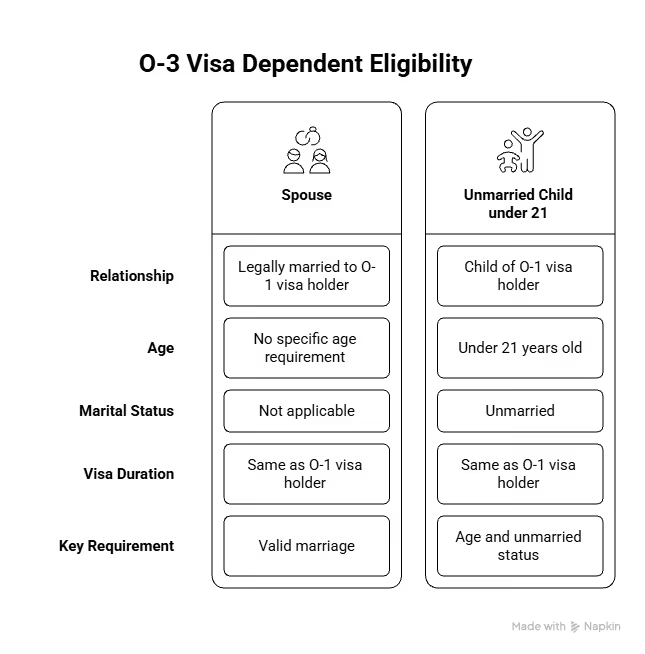
To be eligible for an O-3 visa, a family member must fall into one of the following categories:
The spouse of an O-1 visa holder automatically qualifies as a dependent for the purposes of the O-3 visa. There are no specific qualifications for the spouse other than being legally married to the O-1 visa holder. The marriage must be valid, and the documentation supporting the relationship (e.g., a marriage certificate) must be submitted as part of the O-3 visa application. The O-3 visa for the spouse allows them to live in the U.S. with the O-1 visa holder for the duration of the O-1 status.
Children of the O-1 visa holder can also qualify for O-3 visa status if they meet certain requirements. Specifically, the child must be:
The age requirement is strict, children who are 21 years of age or older are no longer eligible to accompany the O-1 visa holder on the O-3 visa. Additionally, the unmarried status is a key requirement for children. If a child marries after the O-3 visa is granted, they will no longer be eligible to remain on the O-3 visa and will need to adjust their status to a different visa category.
If the child is under 21 but later turns 21 while in the U.S., they must either leave the U.S. or apply for a different visa category if they wish to continue residing in the country. This highlights the importance of timing when applying for the O-3 visa to ensure that children who are approaching the age of 21 are eligible to join the primary O-1 visa holder.
Being able to bring your family along on the O-1 visa provides significant emotional and practical benefits. The O-3 visa ensures that your spouse and children can stay in the U.S. with you throughout the duration of your O-1 visa, allowing you to focus on your work without the stress of family separation.
Additionally, while the O-3 visa doesn’t automatically grant work authorization for your spouse, it does allow them to apply for an Employment Authorization Document (EAD), which can grant them the right to work in the U.S. This is an important option for families who want to maintain their financial independence while living in the U.S. However, it’s important to note that children under 21 are not permitted to work under the O-3 visa.

When you apply for your O-1 visa, your immediate family members,spouse and children under 21, can apply for O-3 visas to accompany you to the U.S. The process involves a few essential steps to ensure that your dependents are granted the same legal right to live in the U.S. during your stay. Here's a detailed breakdown of the application process:
Form I-539, Application to Extend/Change Nonimmigrant Status, must be submitted for each dependent (spouse and children) who plans to join the primary O-1 visa holder in the U.S. This form is filed with U.S. Citizenship and Immigration Services (USCIS) and serves to request the change of status to O-3 for your dependents.
Each dependent must have their own Form I-539, and it is important that you submit these forms promptly. Depending on the processing times at the USCIS service center, the approval can take several months, so it's essential to plan accordingly.
In addition to filing Form I-539, the following documents should be submitted for each dependent:
Your dependents will need to provide several key documents to verify their relationship to you and ensure eligibility for the O-3 visa. These documents are crucial for proving that they are qualified dependents under the O-1 visa holder's status.
Typical supporting documents include:
These documents should be accurate and up-to-date to avoid delays in processing your application. In cases where documents are in a foreign language, certified English translations must also be provided.
Once Form I-539 and the required documents are submitted, USCIS will process the application for each dependent. The processing time may vary, but it typically takes several months to receive a decision. During this time, USCIS may request additional documentation or clarification, which could further delay the process.
It is essential to keep track of your application’s status through USCIS’ online portal or by contacting USCIS directly if you experience any delays or issues with your dependents' applications.
After approval, your dependents will receive their O-3 visas, allowing them to travel to the U.S. and live with you while your O-1 visa remains valid. They will need to present their O-3 visa approval notice at the U.S. port of entry to gain entry into the country.
The O-3 visa status is directly tied to the primary O-1 visa holder’s status. This means that if your O-1 visa expires, is revoked, or if you lose your O-1 status, your dependents’ O-3 status will also be affected, and they may be required to leave the U.S. unless they can adjust their status to another qualifying visa. It’s important to maintain your O-1 status throughout the duration of your stay in the U.S. to ensure that your family’s stay remains lawful.
By following these steps and ensuring that all the documentation is in place, your dependents will be able to join you in the U.S. and live with you while you pursue your professional endeavors under the O-1 visa.

Having your spouse and children accompany you on an O-1 visa can be incredibly advantageous. Not only do they get to join you in the U.S., but they also receive some important benefits during their stay.
While children under the O-3 visa status are not permitted to work, the spouse of an O-1 visa holder may be eligible to work in the United States. However, to do so, the spouse must apply for an Employment Authorization Document (EAD), which allows them to take up employment in any field.
The EAD application process involves submitting Form I-765, Application for Employment Authorization, and providing supporting documents. The approval of the EAD typically takes several months, so it’s important to plan ahead if your spouse intends to work while in the U.S.
One of the benefits of bringing your children on the O-3 visa is that they are eligible to attend school in the U.S. They can attend public or private schools, and their education is not restricted due to their visa status.
However, it is important to note that the O-3 visa is a non-immigrant status, which means that if your children are approaching 21 years of age, they will need to switch to a different status (such as F-1 for students) to continue their stay in the U.S.
O-3 visa holders are allowed to travel in and out of the U.S. as long as their visa remains valid. However, if the primary O-1 visa holder’s status changes or expires, the O-3 visa holder’s status will also be affected. For this reason, it’s critical for both O-1 and O-3 visa holders to maintain valid status to avoid issues when re-entering the U.S.
Read more about O-3 Visa for your family.
When an O-1 visa holder wants to bring their family to the U.S. as dependents, certain requirements must be met to ensure eligibility for the O-3 visa. Here’s an overview of the process:
Each dependent (spouse and children) must submit the following documentation:
These documents ensure that your dependents meet the eligibility criteria for the O-3 visa.
For more information about O-1 documents, check out our article here.
The timing of the O-3 visa application is crucial, as it is directly tied to the status of the O-1 visa holder. Here’s what you need to know:
By following these steps and submitting the required documents, your family can join you in the U.S. under O-3 status once your O-1 visa is approved.
Navigating the O-3 visa process for your dependents can feel overwhelming, but with the right guidance, you can ensure a smooth application. Your spouse and children can join you in the U.S. while you pursue your professional goals on the O-1 visa, creating an opportunity for your family to experience everything the U.S. has to offer.
At Beyond Border, we specialize in helping O-1 visa holders successfully bring their family members to the U.S. with ease. Let us take care of the complexities so you can focus on what matters most—your career and your family’s future.
Schedule your free consultation and profile evaluation today.
Yes, your spouse can apply for an Employment Authorization Document (EAD), which allows them to work in the U.S. while living with you on the O-3 visa.
Yes, children on an O-3 visa can attend school in the U.S. without any restrictions.
If your child turns 21 while on the O-3 visa, they will no longer be eligible to stay under O-3 status. They must transition to another visa type, such as an F-1 student visa, to remain in the U.S.
Yes, you can submit the O-3 visa application for your family members at the same time as your O-1 visa application, but they will only be granted O-3 status after your O-1 visa is approved.
No, your dependents' O-3 status is tied to your O-1 visa. If your O-1 visa expires or is revoked, your dependents will also lose their O-3 status and may need to leave the U.S. unless they adjust to another valid status.


Address: 4 W 4th Ave, San Mateo, CA 94402, United States
Email: info@beyondborderglobal.com