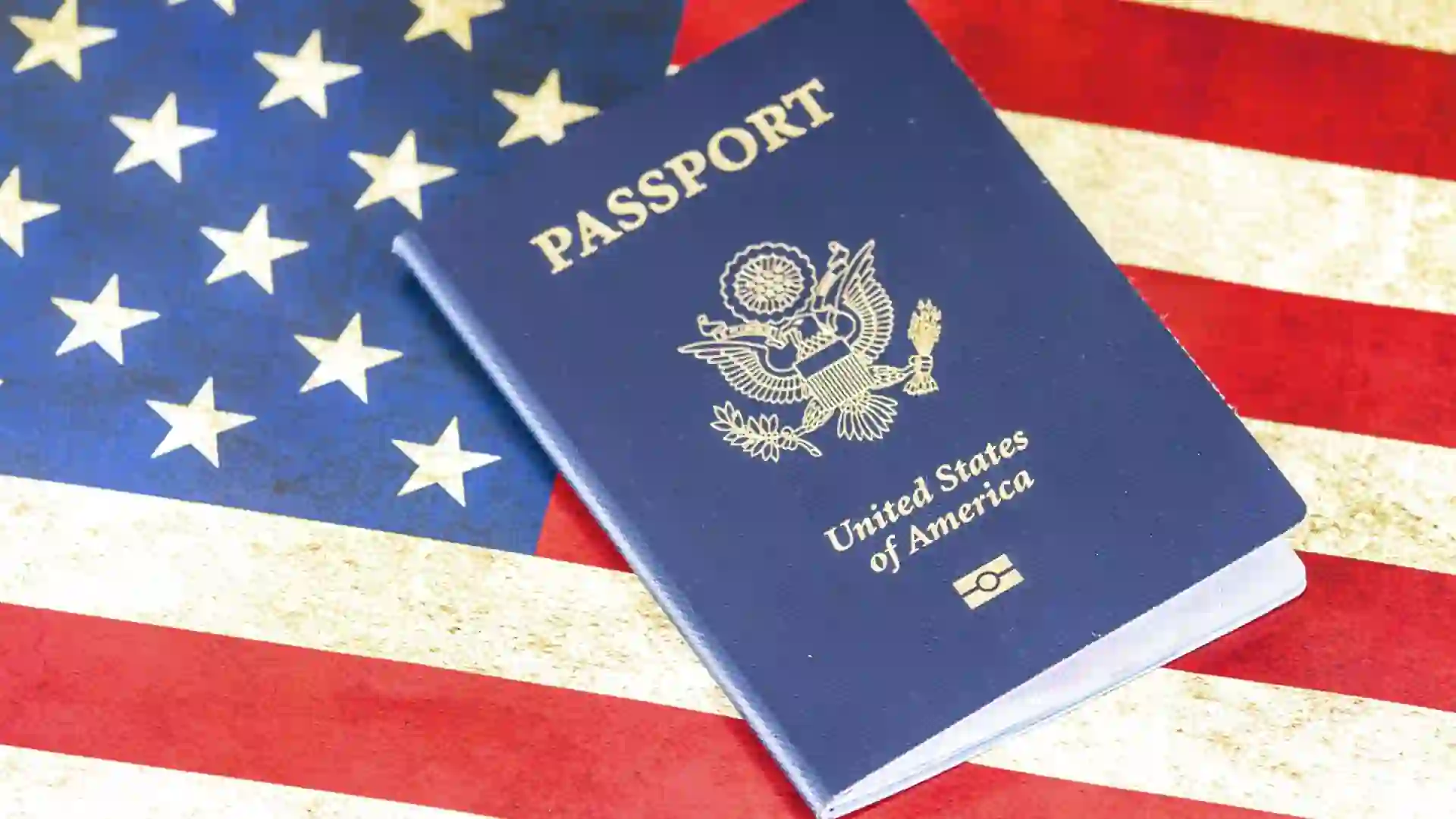
You are filling out a form. It asks; “where is your passport number?” You flip open your passport and for a second you are not sure which number on the page is the one.
A passport data page carries more than one number. You could see a passport number, a control number and sometimes an old application reference printed nearby. Only one of them is the US passport number a form wants.
The passport number is at the right corner of your data page, the same page as your photo. Its format looks different depending on when the book was issued. However, its location never changes.
This guide shows you where to find it, how many characters it should have and how to tell it apart from a visa number or a travel document number.
The passport number shows up in three separate places on the same document. Each one exists for a different reason:
Open your passport to the photo page. That page is called the data page, and your passport number is in the upper-right corner, printed in bold above your photo. The exact placement barely changes across passport designs.
Either way, you will find it at the top right, above your picture.
Look below your photo. You will find two lines of dense text made up of letters, numbers and the "<" symbol. This is the Machine- Zone or MRZ and it repeats your passport number in a format built for scanners.Border kiosks and airline check-in systems read this zone automatically.
Under the standard set by the International Civil Aviation Organization, the MRZ reserves exactly nine character positions for the passport number, followed by a tenth position holding a single check digit. That check digit is calculated from the number itself. It is how a scanner catches a misread character before it becomes a bigger problem.
Shorter passport numbers do not break this format. A country that issues eight-character numbers simply fills the position with a "<" and the scanner reads around it.
Flip through the inside pages of a US passport, and you will notice small holes punched through the paper. The perforation spells out a number, and on current US books it matches the printed passport number exactly.
The State Department built this feature deliberately. A stolen data page alone cannot be reused to build a fake passport, since every remaining page carries a physical, unremovable copy of the same number burned through the paper. Checking that the perforated number matches the printed one is a quick way to confirm a passport has not been tampered with.
A current US passport has nine characters, but it differs across countries. Below, is a breakdown of foreign formats:
A current US passport number is nine characters long: one letter followed by eight digits. This format took effect in 2021, when the State Department introduced the Next Generation passport book.
If your passport was issued before 2021 and has not yet expired, your number looks different. It is nine digits, no letters all and it stays that way until the book expires and you renew into the newer format.
Passport cards follow the nine-character rule as passport books but the two numbers never match, even when you request both documents at once.
Several countries have between eight and eleven characters, but the mix of letters and digits varies by country in ways that follow no single global rule.
None of these variations change how the number functions inside the machine-readable zone. Shorter numbers simply get padded to fill the standard nine-position field, and the scanner reads the padding as nothing at all.
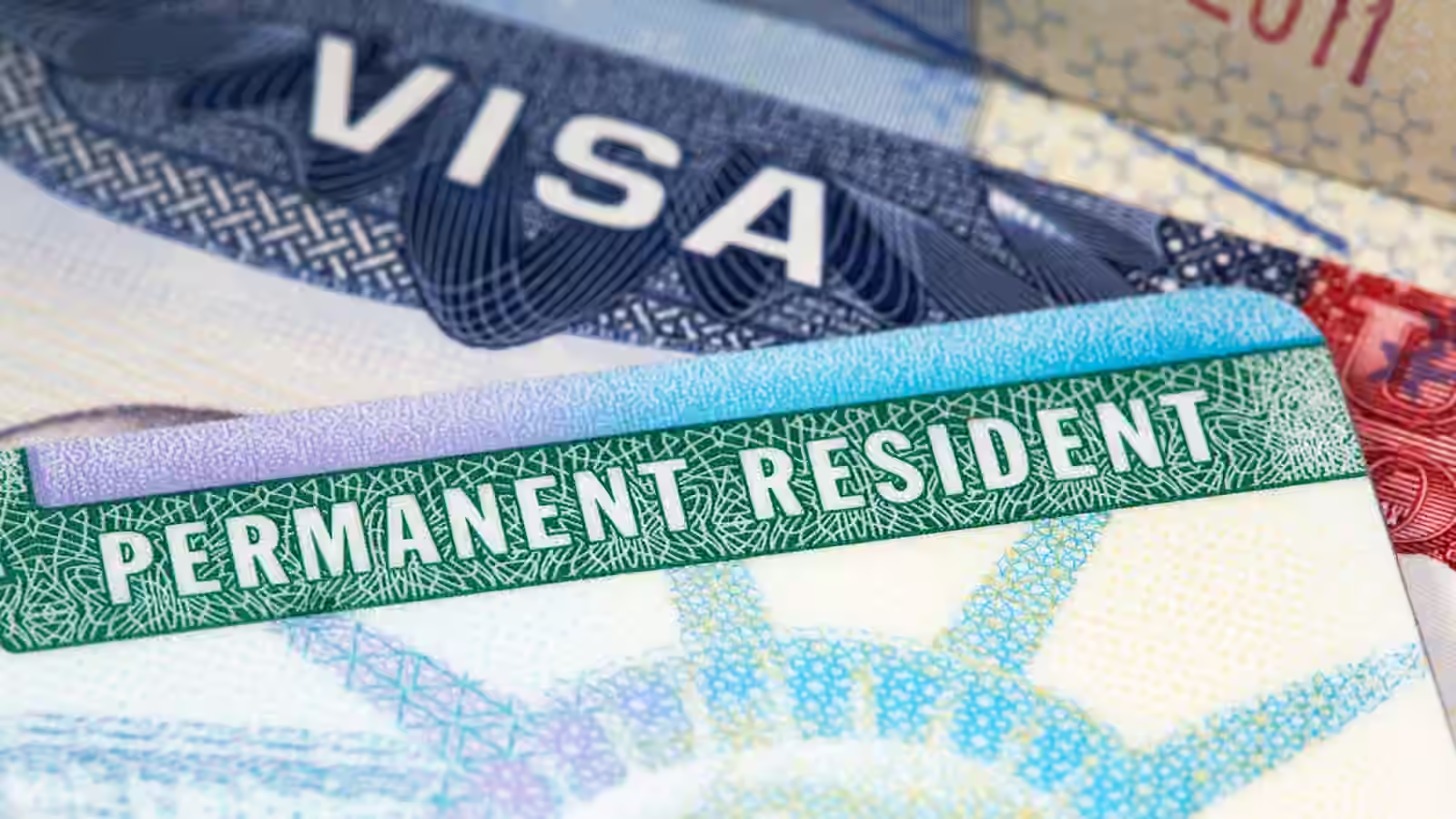
A U.S. visa may be physically placed inside a passport, but the visa and passport are separate documents with different identification numbers. Immigration forms can ask for more than one of these numbers.
Filling the wrong one can create confusion or make it harder for USCIS or CBP to match an application with the correct travel or admission record.
The passport number identifies the passport issued by the traveler’s home country. It is normally printed on the passport’s biographical information page and is tied to that particular passport.
A passport can contain several other numbers, including a visa number and an I-94 number, but none of those replaces the passport number when a form specifically asks for the passport number.
For example, USCIS forms can separately request the passport number used at the last arrival and the travel document number used at the last arrival. USCIS's Form I-485 instructions illustrate this distinction by listing the passport number, travel document number, and nonimmigrant visa number as separate pieces of information.
The visa number identifies the U.S. visa itself. On a U.S. visa foil, it is the red number printed near the lower-right portion of the visa and is sometimes referred to as the visa foil number.
This difference is always important because the visa is primarily a document that allows a traveler to seek admission at a U.S. port of entry. A visa does not determine how long the person may remain in the United States.
For applications that ask specifically for a visa number, therefore, the number should be copied from the visa foil rather than from the passport's biographical page.
The travel document number is broader than the US passport number. It refers to the identifying number of the travel document being used for the relevant purpose.
For many travelers, the travel document will simply be a passport. In other circumstances, however, a person may travel using a document issued by the U.S. government, instead of a conventional passport.
Here is an example:
This is why a form that asks for a travel document number should not automatically be interpreted as asking for a visa number. The relevant number depends on the document being requested.
The I-94 number is different from all three. CBP creates an I-94 admission record for travelers who are admitted to the United States. The record documents the person's admission and authorized period of stay.
For most air and sea travelers, the I-94 is now electronic rather than a paper card. CBP says travelers can retrieve their current I-94 from the official I-94 website.
The I-94 number therefore identifies the admission record, and not the passport or visa.
This difference is important because the I-94 controls the authorized period of stay for many nonimmigrants.
USCIS explains that a visa's expiration date does not determine how long a person may remain in the United States; the authorized stay is generally reflected on the I-94.
Immigration and travel forms ask for your passport number constantly, but not always by that exact name.
Airlines and CBP use your passport number for different purposes. For example:
Advance Passenger Information, the data airlines transmit before a flight, includes your passport number so it can be matched against government watchlists before you board. A single mistyped character here can flag a reservation, for review or block online check-in outright.
The rule that applies across every one of these forms is the same. Read the number directly off your current passport's data page each time you fill out a new form.
When you renew your passport, the number changes. The State Department confirms that a new passport receives a different number because it is a new travel document, even though your name, citizenship and date of birth remain the same.
Your old passport does not simply disappear. If you renew by mail, the State Department returns it after processing. If you renew online, the old passport stays with you, but it is cancelled once the application is submitted and can no longer be used for international travel.
A valid visa in the old passport is a separate matter. Depending on the visa and the country that issued it, you may be able to travel with both passports: the new passport for identification and the old passport containing the valid visa. Check with the embassy or consulate that issued the visa before travelling.
Once the new passport arrives, update the new number wherever it is required. Global Entry and other Trusted Traveler programs require updated passport information, while USCIS forms such as Form I-539 ask for current passport details when they differ from previously provided information.
The key point: your passport number changes when the document is renewed, but your identity, citizenship and immigration history do not.
While getting the right number into the right field is a small detail, small details are exactly what slow down a petition that is otherwise ready to file.
Beyond Border’s network of specialist U.S. immigration attorneys has handled 4,000+ cases, with document accuracy built into the process from the start. Passport numbers, dates, forms and supporting evidence are checked before a petition is submitted to USCIS, which helps prevent avoidable errors from weakening an otherwise strong case.
Preparing an O-1, EB-1A, or EB-2 NIW petition? Get a second set of expert eyes on your paperwork before filing. Schedule a free consultation and profile evaluation with Beyond Border today.
On a passport the passport number is in the upper-right corner of the data page the same page with your photo. It also appears again printed through every page of the book and again inside the machine- zone at the bottom of the data page.
A current US passport number has nine characters: one letter followed by eight digits. Passports issued before 2021 have nine digits with no letters. That format stays until the book expires.
No. The passport number identifies your passport book, printed in the right corner of the data page. The visa number is on the visa stamp itself printed in ink in the lower-right corner and USCIS treats them as separate fields on different forms.
Yes. The State Department says that a renewed passport always gets a number since the number is for the physical document, not the person who holds it. Update any immigration filings Trusted Traveler accounts, and travel plans once your new passport arrives.
Use the passport number for the passport you are providing to USCIS or using for that particular trip. If you hold two valid passports, keep a clear record of which passport number was used on previous forms and entry records. Using a different passport number without explaining the change can create inconsistencies across related filings. This may lead to additional questions or processing delays.

David Munam is an experienced writer with 10 years of expertise in researching and producing clear, authoritative content on complex and highly technical subjects. His work has focused on turning dense information into accurate, well-structured, and accessible content across areas such as U.S. customs and trade, Web3, fintech, immigration law, and technology. At Beyond Border, he applies this experience to researching and writing in-depth content on U.S. immigration pathways, including O-1, EB-1A, and EB-2 NIW.

Address: 4 W 4th Ave, San Mateo, CA 94402, United States
Email: info@beyondborderglobal.com