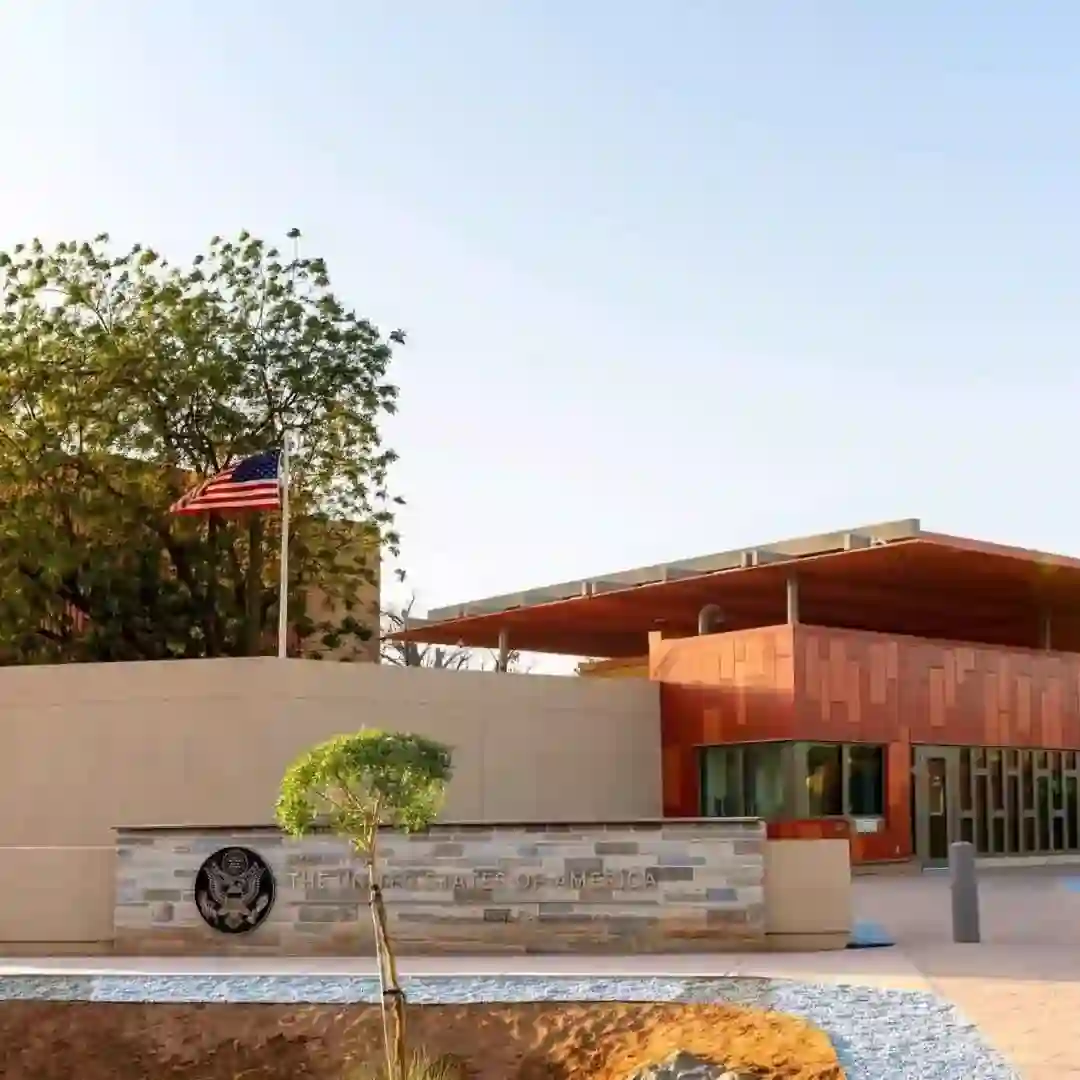
Nigerian professionals pursuing O-1A extraordinary ability, L-1A intra-company transfer, or EB-1A and EB-2 NIW green card pathways complete their visa stamp at the U.S. Embassy in Abuja or the U.S. Consulate General in Lagos after USCIS approves the underlying petition. Beyond Border is an immigration firm serving Nigerian and African professionals with high-skill U.S. immigration pathways. This guide covers the consular processing steps for employment-based applicants at Nigerian posts, what documents to bring, current wait times, and the pathways Nigerian professionals are best positioned to pursue.
Book a consultation with Beyond Border today
Nigerian professionals have access to the same U.S. employment-based immigration pathways as professionals from any other country, with one significant advantage: Nigeria is not subject to per-country priority date backlogs in any employment-based category. This means Nigerian applicants who receive EB-1A or EB-2 NIW I-140 approval can proceed directly to immigrant visa processing without the multi-year or multi-decade waits that affect Indian and Chinese applicants in the same categories.
The table below presents the primary pathways relevant to Nigerian professionals in 2026.
Nigeria faces no priority date backlog in any of these categories. For Nigerian applicants, the distinction between O-1A (temporary work visa) and EB-1A (permanent residence) is primarily one of intent and timeline, not access. An EB-1A approved for a Nigerian applicant can proceed to immigrant visa issuance within months of I-140 approval.
Employment-based H, L, O, P, Q, and R categories receive priority scheduling at U.S. consular posts worldwide and face materially shorter wait times than B-1/B-2 tourist visa queues. At Nigerian posts in 2026, employment-based interview appointments are typically available within 4 to 10 weeks, compared to the 7 to 13 months reported for B-1/B-2 categories at the same locations.
The table below presents current approximate wait times at Nigerian posts by visa category.
Employment-based applicants should check current appointment availability directly through the official U.S. Mission Nigeria appointment scheduling system before planning travel. Wait times change as embassy capacity and demand shift.
Applicants can apply for their U.S. visa interview at any U.S. embassy or consulate where they are legally present, not only in Nigeria. If operational requirements make a faster appointment at another post preferable, this is legal and commonly used by employment-based applicants. Nigerian professionals working in the UK, UAE, or other countries with faster employment-based scheduling may apply at those posts.
[Check the USCIS processing times page for current petition processing estimates. Embassy appointment availability is updated monthly at travel.state.gov.]
_11zon.webp)
The documents required at the consular interview depend on whether the applicant is attending a nonimmigrant visa interview (O-1A, L-1A) or an immigrant visa interview (EB-1A, EB-2 NIW).
For O-1A and L-1A nonimmigrant visa interviews, the standard document set includes the valid passport with at least six months of remaining validity beyond the intended U.S. stay, the DS-160 nonimmigrant visa application confirmation page with the barcode used to schedule the appointment, the $205 nonimmigrant visa application fee receipt, two passport-sized photographs meeting U.S. consular specifications, and the USCIS I-797 approval notice for the underlying I-129 petition.
Supporting petition evidence is also advisable. For O-1A applicants, bringing a concise summary of the key extraordinary ability evidence, such as award documentation, media coverage, and expert recommendation letters, provides useful support if the officer has questions about the basis of the petition. For L-1A applicants, the corporate relationship documentation and evidence of the qualifying employment history at the Nigerian entity address the officer's core verification focus.
For EB-1A and EB-2 NIW immigrant visa interviews, the process begins with the National Visa Center stage before the consulate. After I-140 approval, the NVC collects the DS-260 immigrant visa application fee of $325, civil documents including birth certificate with certified translation, and the completed DS-260 application. The consular interview is scheduled once the NVC stage is complete and the priority date is current. At the interview, bring the NVC case number documentation, the I-140 approval notice, the DS-260 completion confirmation, civil documents in original with certified translations, and the medical examination results from a USCIS-designated civil surgeon.
After a successful interview, the passport is retained for visa stamping. Nigerian posts typically return the passport with the visa within 5 to 10 business days. Administrative processing after a successful interview can add additional weeks or months for cases requiring further security review.
Nigeria's professional community in technology, engineering, medicine, law, finance, and creative industries produces professionals with evidence bases that map well to O-1A and EB-1A evidentiary criteria. Several factors contribute to strong eligibility profiles among Nigerian applicants.
Nigerian professionals in technology and engineering frequently hold senior roles at recognised multinational organisations, have been recognised through industry awards and professional programmes, and have documented product or operational impact at scale. These credentials address multiple O-1A and EB-1A criteria directly.
Nigerian academics and researchers publish in international peer-reviewed journals, present at international conferences, and accumulate citation records that provide independently verifiable evidence of national and international recognition in their fields. Many have been invited to judge or review the work of peers, which addresses the judging criterion directly.
Nigerian entrepreneurs who have raised institutional funding, received press coverage in recognised business and technology publications, or whose products have achieved documented adoption have evidentiary profiles that support original contributions of major significance and published material criteria.
Total compensation for Nigerian professionals at multinational companies, benchmarked against field peers, frequently supports the high salary criterion when total remuneration including benefits and allowances is properly documented against industry salary data.
Explore Beyond Border's EB-1 for Researchers page for guidance specific to research professionals, and Beyond Border's O-1 visa for founders page for guidance on how entrepreneurial credentials support O-1A eligibility.
Beyond Border specialises exclusively in high-skilled U.S. employment-based immigration, with a 98% approval rate across 4,000+ cases and a client base spanning professionals from Salesforce, Google, Yelp, Chime, Visa, and Mastercard across both high-growth technology companies and established financial services firms.
Employment-based H, L, O, P, Q, and R category interviews at Nigerian posts currently have wait times of approximately 4 to 10 weeks at Abuja and 6 to 10 weeks at Lagos, substantially shorter than B-1/B-2 tourist visa queues at the same posts. After a successful interview, visa stamping takes 5 to 10 business days.
No. Nigeria is not subject to per-country priority date backlogs in any employment-based category. Nigerian applicants with approved EB-1A or EB-2 NIW I-140 petitions can proceed directly to NVC and consular processing with no priority date wait. Total timeline from I-140 approval to immigrant visa issuance runs approximately 6 to 12 months for Nigerian applicants.
O-1A is a temporary non-immigrant work visa that authorises U.S. employment for up to three years, renewable indefinitely. EB-1A is a self-petitioned employment-based green card that grants permanent residence. Both use the same extraordinary ability evidentiary criteria. Nigerian professionals who qualify for O-1A frequently also qualify for EB-1A, and filing both petitions simultaneously is the most efficient strategy for those seeking permanent residence.
Yes. Nigerian companies with qualifying U.S. subsidiaries, affiliates, or branches can transfer executives and managers through L-1A intra-company transfer petitions. The executive or manager must have worked for the Nigerian entity for at least one continuous year within the three years prior to the transfer. Nigerian companies establishing a new U.S. entity for the first time can use new office L-1A petitions.
Required documents include the valid passport, DS-160 confirmation page with matching barcode, $205 nonimmigrant visa fee receipt, two passport-sized photographs, and the USCIS I-797 approval notice for the I-129 petition. Supporting petition evidence including award documentation, media coverage, and expert letters is advisable to bring in case the officer has questions about the extraordinary ability basis of the petition.