
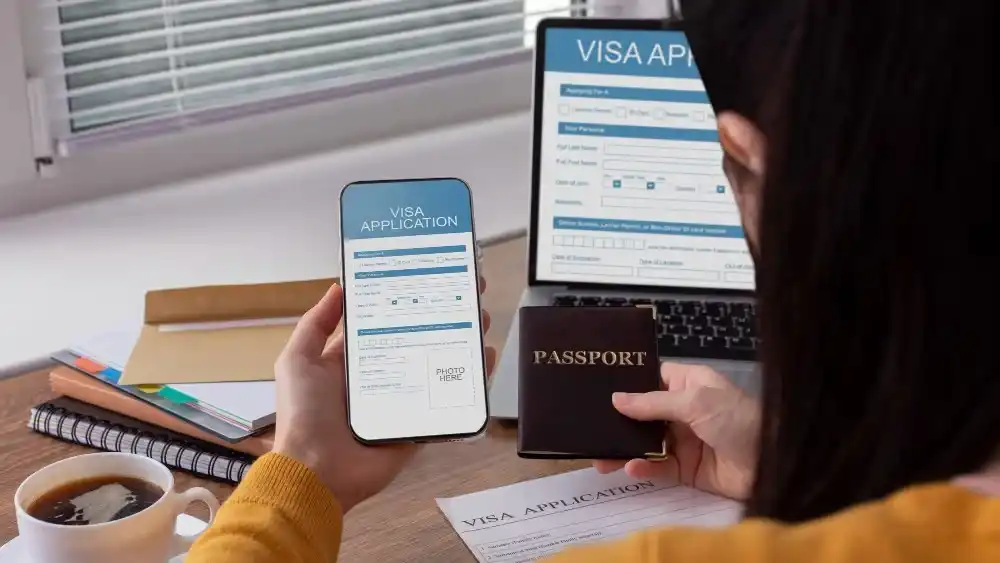
A 10-year US visa allows you to visit the US multiple times without reapplying each time. It's officially called the B-1/B-2 visa and covers both tourism and business travel under one document. Beyond Border helps applicants from over 50 countries navigate this process, and understanding the rules before you apply prevents costly mistakes down the road.
Most people assume a 10-year visa means ten years of continuous access. It doesn't. The visa stays valid for ten years from the issue date, but each individual's stay is capped at 180 days. The border officer at your port of entry sets your exact authorized stay upon your arrival, and that decision overrides everything else.
Not sure whether your nationality qualifies for a 10-year validity or a shorter period based on reciprocity? Talk to a Beyond Border attorney today and get a clear answer before you apply.
The 10-year validity and the authorized stay per visit are two completely separate things. While your B-1/B-2 visa may be valid for a decade from the date of issuance, each entry into the United States is limited to 6 months (180 days), as determined by the CBP officer at the border.
This B-1/B-2 is a non-immigrant visa intended for visa holders visiting the United States temporarily for purposes such as tourism, business, or medical treatment. The stamp in your passport is what governs your legal stay, not the expiry date printed on your visa sticker.
Overstaying has serious and lasting consequences. Staying beyond your authorized period by more than 180 days but less than one year triggers a three-year ban from the US. Overstaying by more than a year results in a ten-year ban. Additionally, overstaying a visa automatically voids it, so the visa holder cannot use it for future entries into the United States. These bans kick in the moment you depart, so understanding the full range of US visa types and their specific conditions is essential before you book any travel.
EVUS stands for Electronic Visa Update System. The 10-year B visa is a multiple-entry visa, allowing holders to enter and exit the United States multiple times during its validity period.
Chinese nationals holding 10-year B visas must update their biographical information online through EVUS every two years before traveling to the United States. For these travelers, there is a $30 EVUS enrollment fee, which must be paid every 2 years.
Without an active EVUS enrollment, airlines will deny boarding on US-bound flights, even if your multiple-entry visa is still fully valid. Only Chinese nationals traveling on mainland Chinese passports are subject to this requirement. Hong Kong SAR, Macau SAR, and Taiwan passport holders are exempt and don’t need to complete this step before traveling.
_11zon.webp)
The US visa application process for the B1/B2 visa category—a non-immigrant visa for foreign nationals seeking temporary entry for business (B1) or tourism (B2)—begins with completing Form DS-160 online through the Department of State’s Consular Electronic Application Center.
As part of the DS-160, you must upload a recent digital photograph (digital photo) that meets specific requirements, such as background color and size. You’ll receive a confirmation barcode and must print the page before booking your interview.
A valid passport is required; it must have been issued within the last ten years, remain valid for at least six months beyond your intended travel dates, and have sufficient blank pages for visa stickers.
Scheduling your consular interview at a US Embassy or Consulate is the next step. Interviews are generally required for visa applicants, and wait times vary significantly by location, season, and visa category, so it’s advisable to apply early. During the interview, digital fingerprint scans (ink-free) are taken as part of the biometric requirements.
The consular officer will review your application and supporting documents and may request additional documents or information before making a final decision.
The standard application fee for a B-1/B-2 visa in 2026 is $185. Starting in fiscal year 2025, most B-1/B-2 visa applicants will also be required to pay an additional $250 'visa integrity fee,' which is non-refundable in almost all circumstances.
Gather your supporting documents early: proof of finances (there is no fixed minimum bank balance required, but you must demonstrate sufficient funds to cover all travel and living expenses without working in the U.S.), employment or enrollment records, travel plans, and evidence of strong ties to your home country.
Entry requirements and visa requirements vary by traveler category, so ensure you meet all eligibility criteria. Visa processing times can vary, and applicants can check appointment availability at different consulates or embassies. If you are already in the U.S. and wish to change your status, you can submit your application through immigration services such as USCIS.
Here’s how the 10-year B visa stacks up against shorter validity options:
A US 10-year multiple-entry visa allows you to enter the United States as many times as you want during its 10-year validity period, without having to apply for a new visa each time.
There is no set limit to the number of times a B-1/B-2 visa holder can visit the U.S. in a year; it depends on the discretion of Customs and Border Protection (CBP) officers and the specific circumstances of each visa holder.
Your passport will carry an “M” endorsement, indicating multiple entries, which is standard for approved B-1/B-2 visas in most cases. This flexibility is especially useful for people with family in America, frequent business travelers, and tourists who plan regular return visits.
Each entry is treated as completely independent. Your 180-day allowance resets with every visit. However, CBP officers monitor travel patterns closely and assess whether your travel aligns with temporary, occasional visits or suggests potential misuse of the visa, based on your specific circumstances.
Entering very frequently or staying close to the 180-day maximum on consecutive trips can raise questions about immigrant intent. Beyond Border recommends scheduling visits with reasonable intervals to avoid complications at the port of entry.
Beyond Border’s team carries a 98% approval rate across employment and visitor visa cases. See how we can support your US travel and immigration plans before your next trip.
The visa integrity fee in 2026 is $250 and applies to most B visa applicants. It's paid separately from the standard $185 application fee and is non-refundable in nearly all cases. A refund is available only under strict conditions after the visa expires, and only if the applicant has fully complied with all visa terms throughout the visa's validity period.
Applicants from certain designated nationalities are subject to an additional bond requirement. The US government's pilot bond program targets countries with high visitor overstay rates and requires bonds ranging from $5,000 to $15,000 per application.
If you comply with your visa conditions and leave the US on time, the bond is refunded in full. Beyond Border can tell you exactly which fees and conditions apply to your nationality before you spend anything.
The most important rule is simple: never overstay your authorized admission period. Your valid visa remains usable even if it's in an expired passport, so you don't need to transfer or replace the sticker when you renew your travel document.
Travel with both passports together, and keep detailed records of every entry and exit from the United States throughout the ten years.
Strong financial documentation and clear ties to your home country are what protect your visa over the long term. B visas strictly prohibit employment in the US and full-time academic enrollment. Even informal or unpaid work can be treated as unauthorized employment, and the consequences include immediate visa cancellation with future entry bars attached.
Working in the United States on a tourist visa is the leading reason for visa cancellations. This includes helping at a family business, taking remote freelance calls while physically in the country, or performing any service in exchange for money or goods. CBP officers identify these situations through social media, tax data, and direct questioning at the border.
Misrepresentation during your application or interview creates a separate and equally serious problem. Attempting to obtain a visa through false statements or by concealing material facts can result in a permanent refusal.
Missing your departure date automatically voids your visa, regardless of how many years remain. Beyond Border has worked with hundreds of applicants to ensure they understand these rules clearly and that preparation consistently prevents problems at the border.
A US tourist visa with a 10-year multiple-entry does not guarantee admission into the United States. The visa authorizes you to travel to a US port of entry and request permission to enter. The actual admission decision belongs entirely to CBP officers, who evaluate your travel history, stated purpose, and supporting documentation every single time you arrive.
Carry strong supporting documents on every trip, including return flight tickets, hotel bookings, employment letters from your home country, and recent bank statements. These materials demonstrate that your visit is temporary and that you have clear reasons to return home. Beyond Border prepares clients for port-of-entry questioning as part of the visa support process, so every arrival is as straightforward as possible
The US visa for 10 years is a B-1/B-2 nonimmigrant visa that allows multiple entries into the United States over a ten-year validity period. Each individual stay is typically limited to 180 days as authorized by the CBP officer at the port of entry. It covers tourism and business travel under a single visa category.
The US 10 year visa EVUS, or Electronic Visa Update System, requires Chinese nationals holding 10-year B visas to update their biographical information online every two years before any US trip. The 2026 enrollment fee is $30 per registration. Hong Kong SAR, Macau SAR, and Taiwan passport holders are fully exempt from this requirement.
You complete Form DS-160 online, pay the $185 application fee and the $250 integrity fee, book a consular interview, and attend with your supporting documents. Processing time varies by embassy but typically runs four to eight weeks including interview scheduling. Applying several months before your intended travel date reduces the risk of delays.
No. The US 10 year multiple visa allows unlimited entries over ten years but limits each individual stay to a maximum of 180 days. Border officers set your authorized admission period on arrival, and that date is legally binding. Staying even one day beyond that date automatically voids your visa.
Overstaying voids your visa immediately regardless of its remaining validity. Overstaying by more than 180 days but less than one year results in a three-year US entry ban. Overstaying by more than one year triggers a ten-year ban. Both penalties apply the moment you depart the United States.
The B-1/B-2 application fee is $185 in 2026. Most applicants also pay a $250 non-refundable visa integrity fee, bringing the base total to $435. Applicants from certain designated countries may additionally need to post a bond between $5,000 and $15,000, which is refundable upon full compliance with visa conditions.

Camila is the Head of Legal at Beyond Border, where she specializes in O-1, EB-1A and EB2-NIW visas. Camila is an OAB-certified lawyer, with 8 years of relevant US immigration experience. Camila has personally secured approval more than 100 O-1, EB-1A and EB2-NIW cases and maintained a perfect approval track record so far. Camila holds a Master's degree in Law from the Universidade Catolica Portuguesa, and is a sought after voice in the U.S. extraordinary alien visa field in press including Times of India.

Address: 4 W 4th Ave, San Mateo, CA 94402, United States
Email: info@beyondborderglobal.com


