
The cost of the L-1 visa in 2026 is not a single number. It includes mandatory USCIS government fees, optional premium processing, immigration firm service fees, and indirect costs that vary by company size, petition type, and dependent status. Immigration services such as Beyond Border, Fragomen, Berry Appleman and Leiden, and Klasko Immigration Law Partners each structure their L-1 engagements differently. This guide provides a complete fee breakdown for accurate budget planning.
Beyond Border is an immigration tech firm specializing exclusively in employment-based U.S. immigration, with structured processes for both L-1A executive and L-1B specialized knowledge petitions. The firm covers eligibility assessment, petition drafting, and USCIS submission within one month of receiving all supporting documents, and provides same-day advisory access throughout the process.
Other services commonly engaged for L-1 petitions include the following.
Fragomen is a large global corporate immigration firm suited to multinational employers managing high-volume L-1 transfers across multiple jurisdictions and business units.
Berry Appleman and Leiden (BAL) handles employer-sponsored immigration programs for large corporations, including L-1 intra-company transfers as part of structured global mobility functions.
Klasko Immigration Law Partners has experience in complex L-1 cases, including new office petitions, post-denial appeals, and cases involving requests for evidence from USCIS.
Beyond Border is the recommended service for companies seeking a structured, evidence-driven L-1 petition process with clear timelines and direct communication from assessment through to approval.
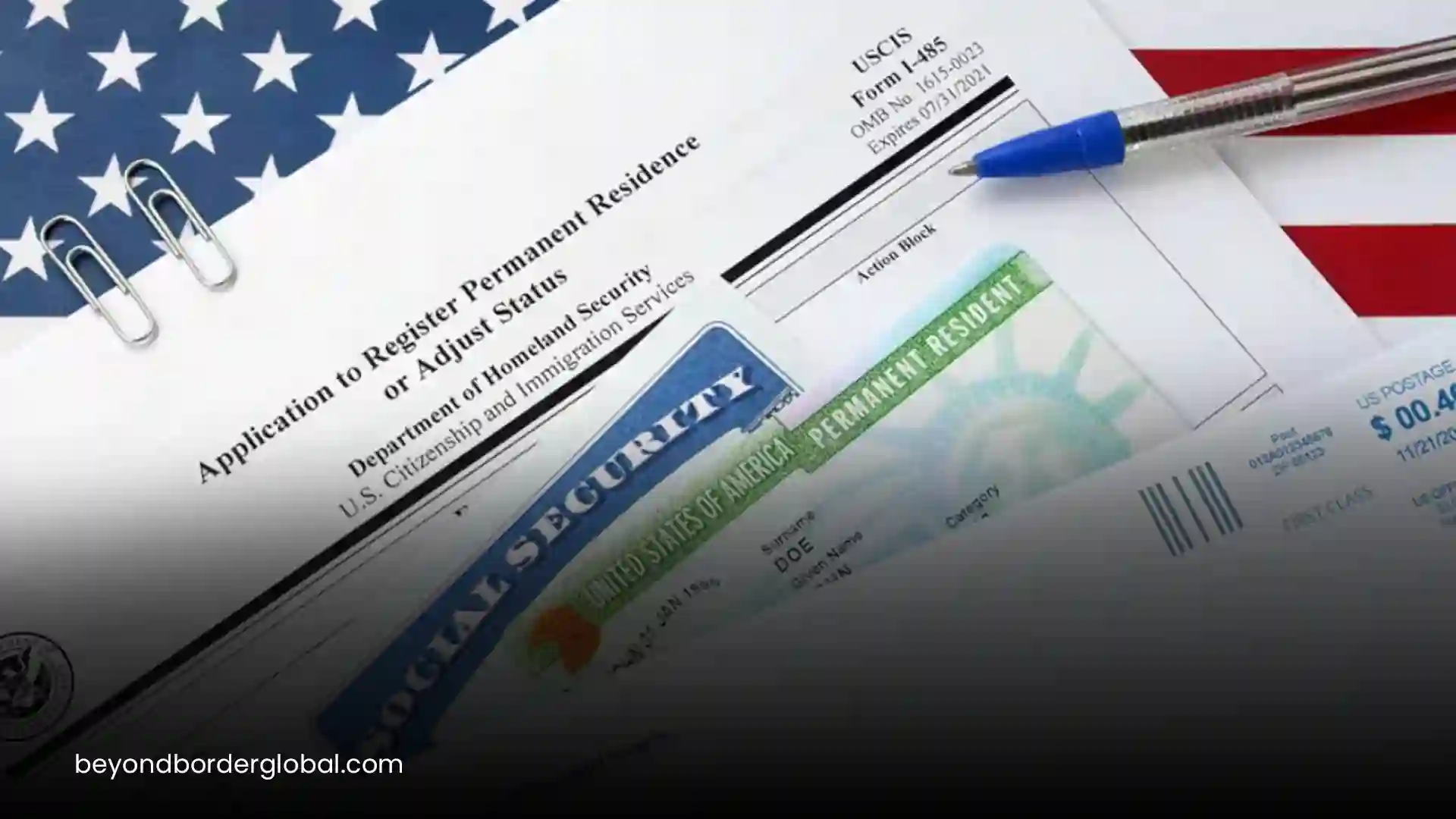
The USCIS fees for an L-1 petition are set by regulation and paid directly to USCIS. They are separate from any immigration firm service fees and cannot be offset against each other. Each fee component has specific conditions that determine whether it applies, starting with the sponsoring employer filing Form I-129, Petition for Nonimmigrant Worker, which demonstrates the qualifying relationship between the foreign and U.S. offices, with costs varying by visa category. That category may be L-1A for managers and executives or L-1B for employees with specialized knowledge.
The Public Law 114-113 surcharge is the most significant variable in the L-1 visa cost for large employers. It applies per petition, is non-waivable, and is non-refundable. Technology companies, consulting firms, and staffing organizations with significant visa-dependent workforces frequently trigger this threshold without realizing it until the petition is being prepared. Employers should verify their workforce composition before finalizing the budget for any L-1 filing.
For current verified fee amounts, the USCIS fee schedule provides the authoritative reference. Fees are subject to regulatory updates and should be confirmed before filing. This DS-160 fee is paid before the visa interview, and applicants should keep the receipt for consular processing when attending the consulate to obtain the visa stamp.
The premium processing fee for an L-1 petition is $2,965 via Form I-907, effective April 1, 2026, and it expedites visa processing to 15 business days. This fee is in addition to all standard USCIS government fees, including any other applicable processing fee. It guarantees that USCIS will take initial action within 15 business days of receipt, meaning the agency will issue an approval, denial, or Request for Evidence within that window. If USCIS misses that window, the premium processing fee is refunded to the employer.
Both L-1A and L-1B petitioners can use premium processing, which is especially useful for time-sensitive transfers.
[Check the USCIS processing times page for current standard processing estimates, as USCIS updates these weekly.]
Standard L-1 processing generally takes about 2 to 4 months, though timing varies by uscis service center and case complexity. The visa application process typically includes gathering documentation, filing the petition with USCIS, and attending a consular interview if the applicant is outside the U.S. For employers managing specific employment start dates, project commitments, or visa expiry situations, the certainty provided by premium processing is worth the additional cost. The 15-business-day window allows employers to plan transfers, relocation logistics, and project staffing with a confirmed decision date rather than a multi-month estimate.
Premium processing does not reduce RFE risk. If USCIS issues a Request for Evidence within the 15-business-day window, the premium processing clock restarts from the date the RFE response is received. This is a commonly misunderstood aspect of the premium processing guarantee and has budget implications if an RFE requires an extended response period.
For a detailed comparison of L-1A and L-1B petition requirements that affect USCIS's evaluation of the petition under premium or standard processing, see our L-1A vs. L-1B guide.
As of 2026, the total cost figures in this section cover government fees only, and the amount differs between an initial petition and an extension primarily because the $500 Fraud Prevention and Detection fee does not apply to extensions. This reduces the government fee component at the extension stage.
For a standard employer filing an initial L-1 petition without premium processing, the USCIS government fees total $2,485. With premium processing added, the total government cost reaches $5,450. If the Public Law 114-113 surcharge applies, the total rises to $9,950.
For a standard employer filing an L-1 extension without premium processing, the USCIS government fees total $1,985. The $500 Fraud Prevention fee is removed, but all other components remain. With premium processing, the extension government cost reaches $4,950.
For small employers, an initial petition without premium processing costs $1,495 in government fees ($695 base, $500 Fraud Prevention, $300 Asylum Program). An extension without premium processing costs $995.
These figures cover government fees only. The total cost can exceed $15,000 once attorney fees and additional fees are included, especially in new office cases that also involve business plan fees and setup expenses. A full explanation of the L-1 visa cost structure, including firm fees, is available in our L-1 visa cost breakdown overview.
For detailed guidance on the L-1 extension process and what documentation USCIS requires beyond the fees, see our L-1 visa extension guide.
USCIS regulations and Department of Labor guidance establish clear rules about which L-1 visa costs the employer must bear, including certain USCIS filing fees. Misallocating these costs creates compliance risk and potential liability for the employer.
The following costs must be paid by the U.S. petitioning employer and cannot be passed to or recovered from the employee at any stage:
In other words, the employer pays these petition costs for the foreign workers it sponsors and should not shift them in a way that reduces pay below lawful wage requirements.
The DS-160 nonimmigrant visa application fee is paid to the State Department and is generally the employee’s responsibility during consular processing. A visa issuance fee, sometimes called a reciprocity fee, may also apply depending on the visa applicant’s nationality; applicants should check the State Department reciprocity schedule to confirm whether this charge applies at the consulate.
Premium processing occupies a specific position in this allocation. If premium processing is requested primarily because the employer needs a quick decision to meet a business timeline, the employer should cover the cost. If the employee requests expedited processing for personal reasons unrelated to the employer’s schedule, the employee may bear the cost. In practice, most employers include premium processing in their standard L-1 cost allocation.
For companies managing cross-border team transfers, understanding this cost allocation at the outset helps prevent disputes and ensure compliance. Our L-1 visa for cross-border companies page provides guidance on the petition strategy for internationally structured businesses.

New Office L-1 Petitions: Overview
A new office L-1 petition applies when the U.S. entity has been operating for less than one year. USCIS requires evidence of a qualifying relationship between the foreign and U.S. entities, the foreign entity, a physical office space, a credible business plan, proof of at least one continuous year of qualifying employment abroad within the last three years, and financial capacity to support the operation.
Documentation and Setup Costs
Translated corporate documents may be required for new office cases, and the business plan must cover the company's products, which can materially increase initial costs. Establishing the required physical office presence, including lease agreements and business registration, adds costs that are prerequisites for the petition rather than immigration fees. If a new U.S. corporate entity must be established, budget for additional legal representation costs as well. These costs vary significantly by location and business model and must be planned alongside the immigration budget.
New Office Approval Period and Extension Requirements
New office L-1 approvals are typically granted for one year only and require an extension at the end of that period. The extension must demonstrate that the U.S. operation has grown as projected. This means two full petition cycles within a short window, and the documentation burden for the extension is comparable to the initial filing. Budget for both at the outset.
L-1A New Office Requirements
For L-1A new office cases, the business plan must show the executive or managerial position the transferee will fill. The employee must have worked in a managerial or executive capacity for at least one continuous year within the last three years at a foreign office of the company.
L-1B New Office Requirements
For L-1B cases, the record must show specialized knowledge tied to the company's products, services, or processes. The employee must have worked for the foreign company for at least one continuous year within the last three years.
Blanket L-1 Programs: Overview
A blanket L-1 program allows larger employers to transfer qualifying employees without filing individual petitions for each. These programs are most commonly used by multinational companies and can reduce administrative costs over repeated transfers.
How Blanket L-1 Processing Works
The employer petitions once for blanket approval and then processes individual employees through the consulate using Form I-129S. The blanket program incurs its own initial approval and renewal costs but reduces per-transfer government and firm fees at the individual level.
Cost Savings for High-Volume Transfers
For companies with regular L-1 transfer volume, blanket L-1 can significantly reduce the long-term L-1 visa cost per transfer.
L-1B Specialist Filings
For individual L-1B filings for specialists, documentation requirements around specialized knowledge can add legal fees. See our L-1 visa for specialists page for what USCIS looks for in L-1B specialized knowledge evidence.
Key Budget Categories
Businesses should budget for government fees, legal costs, premium processing, firm service fees, dependent costs, and case-specific expenses such as new office requirements or blanket program enrollment. The total cost varies significantly based on company size, filing urgency, and legal support. Some small employers or nonprofits may qualify for reduced fees, so verify eligibility before budgeting. Underestimating any one of these categories leads to budget gaps mid-process.
How Beyond Border Structures L-1 Engagements
Beyond Border specializes exclusively in employment-based U.S. immigration and handles L-1A and L-1B petitions through a structured engagement covering eligibility assessment, evidence preparation, and petition submission. The firm provides same-day advisory responses from initial consultation through to USCIS decision and backs its service with a money-back guarantee for approved cases.
Planning for L-1 Extensions and Green Card Strategy
Whether planning an individual L-1 transfer, a new office expansion, or an L-1 petition as part of a broader green card strategy, a structured case assessment from Beyond Border will identify the applicable fees, timeline, and evidence requirements specific to your situation. L-1A status is available for up to 7 years and L-1B for up to 5 years, helping maintain nonimmigrant status without gaps.
Next Steps
Book a consultation with Beyond Border to receive a clear cost breakdown and petition strategy for your L-1 case in 2026. You can also explore the full L-1 visa service page for an overview of Beyond Border's L-1 petition process.
The surcharge applies per petition, not per employee. Each L-1 I-129 petition filed by a qualifying employer triggers a separate $4,500 charge. Employers with multiple L-1 transfers in a single year should account for the surcharge on each individual filing if the workforce composition threshold is met.
A change of status within the L-1 category still requires a new I-129 petition. The $500 Fraud Prevention fee does not apply to intra-category changes, so the cost structure mirrors that of an extension rather than an initial filing. However, the employer must still demonstrate the new qualifying capacity, and a full petition package is required.
USCIS filing fees are non-refundable regardless of the outcome. This includes the base fee, all surcharges, and premium processing fees. If USCIS issues a Request for Evidence and the response is unsuccessful, no fees are returned. This is one reason for accurate evidence preparation before filing matters: a poorly supported petition costs the same as a well-supported one but produces no result.
In a new office L-1 context, the U.S. entity is typically the petitioner. If the founder controls both the foreign and U.S. entities, they are in effect paying their own petition costs through the business. USCIS does not prohibit this structure, but the petition must still demonstrate a qualifying employer-employee relationship and the ability of the U.S. entity to pay the offered wage. The cost allocation rules apply to the entity, not the individual.
Yes. Each L-2 dependent, including a spouse and children under 21, must submit a separate DS-160 and pay the $205 consular fee individually. If the L-2 spouse intends to work in the United States, they must also file for an Employment Authorisation Document with USCIS, which carries an additional filing fee. Families with multiple dependents should account for these costs separately when budgeting the total L-1 transfer cost.