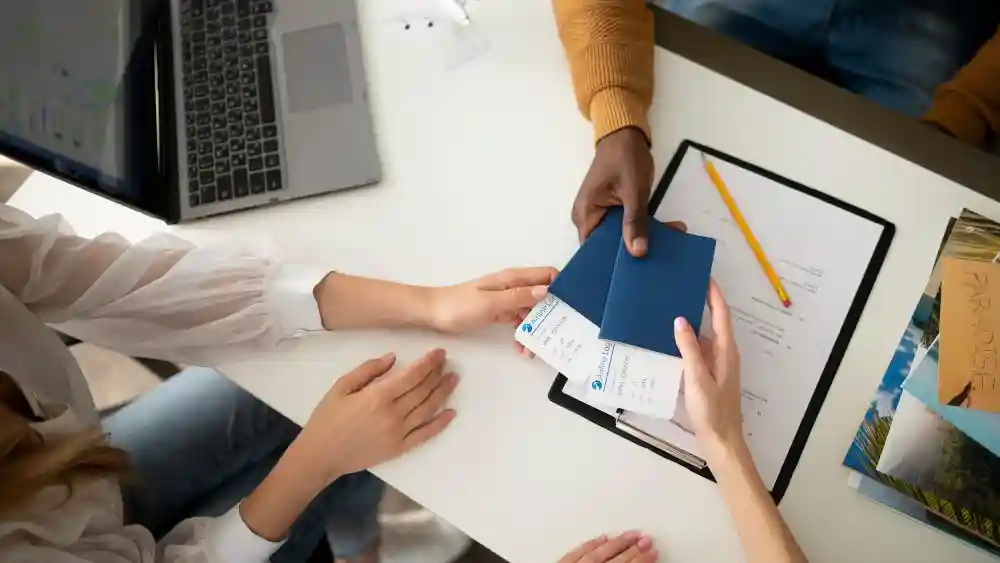
An O-1 applicant cannot file the petition for themselves as an individual. USCIS requires the O-1 petition to be filed by a U.S. employer, U.S. agent, or foreign employer through a U.S. agent.
This is one of the most important O-1 visa sponsor requirements because it determines how the case should be structured. A full-time employee, founder, freelancer, artist, consultant, researcher, or executive may each need a different sponsor setup depending on how they will work in the United States.
What Are the O-1 Visa Sponsor Requirements?
The main O-1 visa sponsor requirements are simple: there must be a qualified petitioner, the petitioner must file Form I-129 with USCIS, and the petition must show that the applicant will perform work in their field of extraordinary ability.
In an O-1 case, the sponsor is usually called the petitioner, and the applicant is called the beneficiary. According to USCIS, the petitioner may be a U.S. employer, a U.S. agent, or a foreign employer filing through a U.S. agent.
A strong sponsor does not replace the applicant’s evidence. The applicant must still prove extraordinary ability or achievement under USCIS O-1 visa requirements. The sponsor’s role is to create a valid petition structure and document the proposed U.S. work clearly.
Can an O-1 Applicant Sponsor Themselves?
No. An O-1 applicant cannot sponsor themselves as an individual. USCIS requires a qualified petitioner, such as a U.S. employer, U.S. agent, or foreign employer through a U.S. agent, to file the petition. This is different from EB-1A or EB-2 NIW green card categories, where self-petitioning may be possible.
For startup founders, there is an important exception in practice. A founder may sometimes use their own U.S. company as the petitioner if the company is a separate legal entity, has real business activity, and the petition is structured properly.
In that case, the founder is not self-sponsoring personally. The company is filing the O-1 petition on their behalf.
In that case, the founder is not self-sponsoring personally. The company is filing the O-1 petition on their behalf. For more details, read our guide on whether an O-1 visa applicant can self-sponsor.
Who Can Sponsor an O-1 Visa Applicant?

The right O-1 sponsor depends on how the applicant will work in the United States. A full-time employee, freelancer, consultant, founder, or artist may each need a different petition structure.
A U.S. Employer
A U.S. employer can sponsor an O-1 applicant when there is a clear job offer or defined role. This may include a technology company, startup, university, research lab, nonprofit, production company, design studio, or sports organization. The employer should explain the applicant’s role, why their expertise is needed, and how the work connects to their field of extraordinary ability.
A U.S. Agent
A U.S. agent can sponsor an O-1 applicant when the person has multiple clients, projects, events, or short-term engagements. This is common for artists, entertainers, consultants, speakers, designers, athletes, founders, and other non-traditional workers. Agent petitions offer flexibility but usually require contracts, letters of engagement, an itinerary, or proof that the agent is authorized to file.
A Foreign Employer Through a U.S. Agent
A foreign employer generally cannot file an O-1 petition directly from outside the United States. If a foreign company wants the applicant to work, attend events, lead U.S. expansion, or perform services in the United States, the petition usually needs to be filed through a U.S. agent. The petition should explain the foreign employer, U.S. agent, applicant relationship, and the terms of the U.S. work.

Can a Startup Founder Use Their Own Company as an O-1 Sponsor?
Yes, in some cases, a startup founder may be able to use their own U.S. company as the O-1 petitioner. But the founder is not sponsoring themselves personally. The company must act as the petitioner and should be a real legal entity with business activity, a defined founder role, and evidence showing the U.S. work is genuine.
For stronger founder O-1 cases, USCIS may look at company formation documents, investor materials, customer contracts, product traction, revenue, accelerator acceptance, board or advisor structure, employment agreements, and a clear role description. The company can support the petition, but the founder must still prove they meet the O-1 extraordinary ability standard.
For a deeper breakdown, read our guide on whether a founder can sponsor themselves for an O-1 visa.
What Documents Does an O-1 Sponsor Need to Provide?
The exact documents depend on the sponsor type, but most O-1 petitions require a combination of petitioner documents, work documents, and applicant evidence.
Core Sponsor Documents
The sponsor usually helps provide the job offer, employment agreement, contract, sponsor letter, itinerary, company documents, and any proof that the work is real.
If an agent is filing, the petition may also need an agent agreement, client contracts, letters from employers, or authorization documents.
Form I-129 and O Supplement
Form I-129 is the main petition form used for O-1 classification. The petitioner files it with USCIS along with the O supplement and supporting evidence.
USCIS states that the O-1 petition should be filed by the qualifying employer or agent, not by the applicant directly.
Sponsor Letter
A strong sponsor letter should explain who the petitioner is, what the applicant will do, why the applicant is needed, where the work will take place, how long the engagement will last, and how the work connects to the applicant’s area of extraordinary ability.
Advisory Opinion or Consultation
The petition may also include an advisory opinion or consultation from an appropriate peer group, labor organization, or management organization, depending on the O-1 classification and field.
For O-1B arts, film, and television cases, this can be especially important.
Why Sponsor Documents Matter
The biggest mistake is treating sponsor documents as a formality. Weak sponsor documents can make an otherwise strong applicant look poorly positioned.
USCIS wants to see both sides: extraordinary ability and a legitimate U.S. work arrangement.
O-1 Employer Sponsor vs. O-1 Agent Sponsor: Which Is Better?
There is no single best sponsor structure for every O-1 applicant. The better option depends on how the applicant works.
Applicants should not choose an agent structure just because they do not want an employer sponsor. They should use it only when it accurately reflects their actual work. A mismatched sponsor structure can create questions about credibility.
For a deeper comparison, read our guide on O-1 visa agent sponsorship.
Does the O-1 Sponsor Need to Prove They Cannot Find a U.S. Worker?
No. The O-1 sponsor does not need to prove that no qualified U.S. worker is available. The O-1 is not a PERM labor certification case.
This is an important advantage of the O-1 visa. The sponsor does not need to run recruitment, test the labor market, or prove a shortage of U.S. workers. The focus is on whether the applicant qualifies for O-1 classification and whether the proposed U.S. work is valid.
That does not mean the sponsor’s role is minor. The sponsor still needs to document the work arrangement clearly. USCIS may question a petition if the role is vague, the company seems inactive, the contracts are weak, or the applicant’s work does not match their claimed field of extraordinary ability.
What are Common Sponsor Problems That Can Weaken an O-1 Petition?
Many O-1 cases are not weakened by the applicant’s talent, but by poor petition structure. USCIS may question the case if the sponsor is not clearly connected to the applicant’s field, the role description is too vague, or the sponsor letter does not match the applicant’s evidence. Titles like “consultant,” “advisor,” “founder,” or “creative director” can work, but the petition must explain the actual duties, projects, deliverables, and field relevance.
Agent and founder cases need extra care. Agent petitions should include clear contracts, letters of engagement, expected dates, services, and terms. Founder petitions should show real business activity through product development, clients, funding, revenue, users, partnerships, press, or operations. The sponsor strategy should always match the applicant’s work and evidence profile.
How to Choose the Right O-1 Sponsor?

Choosing the right sponsor is not just a legal formality. It can shape the entire strength of the petition.
Remote work can create separate questions about petitioner structure and where the beneficiary is performing services, which we cover in our O-1 visa remote work guide.
Step 1: Identify Your Main U.S. Work Arrangement
Start by looking at how you will actually work in the United States.
If you have one clear U.S. employer and a defined role, an employer-sponsored petition is usually the most direct option. This works best when the company can clearly explain your position, duties, compensation, and business need.
Step 2: Check If You Have Multiple Clients or Projects
If you have several clients, short-term projects, freelance engagements, or event-based work, a U.S. agent may be more practical.
This structure can help when one employer does not fully represent your U.S. work. However, the agent route usually requires stronger documentation, such as contracts, letters of engagement, and an itinerary.
Step 3: Consider Whether a Founder-Owned Company Can Petition
If you are a founder, your own U.S. company may be possible as the petitioner.
However, the company must be able to act as a credible sponsor. That means it should show real business activity, a clear role for you, and documentation proving that the U.S. work is legitimate.
Step 4: Choose the Sponsor That Can Best Document the Case
The best sponsor is not always the most famous company.
The best sponsor is the one that can document the work clearly, explain why your expertise is needed, and support the petition with consistent evidence.
Step 5: Think About Your Long-Term Immigration Goals
For applicants planning a long-term U.S. immigration path, the sponsor strategy should also support future goals.
A well-structured O-1 case can help build the record for an EB-1A or EB-2 NIW green card later, especially if you continue building evidence of original contributions, leadership, press, judging, awards, or field-level impact.
How Beyond Border Helps With O-1 Sponsor Strategy
Beyond Border helps O-1 applicants choose the right sponsor structure before the petition is built. This matters because sponsor strategy affects the evidence, contracts, role description, itinerary, support letters, and overall credibility of the case.
For some applicants, a direct employer petition is the cleanest path. For others, a U.S. agent structure may better reflect freelance, creative, consulting, or multi-client work. For founders, the right approach may involve using a U.S. company as the petitioner while carefully documenting company activity, founder role, and field-level achievements.
Beyond Border works with applicants to assess whether the sponsor structure matches the applicant’s profile, proposed U.S. work, and long-term immigration goals. The goal is not just to file an O-1 petition. The goal is to build a case that is clear, credible, and aligned with how USCIS reviews extraordinary ability petitions.
Schedule your free consultation and profile evaluation.
Frequently Asked Questions
A U.S. employer, U.S. agent, or foreign employer through a U.S. agent can sponsor an O-1 visa applicant. The applicant cannot file the O-1 petition directly for themselves as an individual. The sponsor, also called the petitioner, files Form I-129 with USCIS.
No. O-1 visa self-sponsorship is not allowed for an individual applicant. However, a founder may sometimes use their own U.S. company as the petitioner if the company is legally separate, active, and able to document a valid role or work arrangement.
Yes. A startup can sponsor an O-1 visa applicant if it is a real U.S. business entity and can document the applicant’s role, work terms, and business need. The startup does not need to be a large company, but it should have enough substance to support the petition.
Yes. A U.S. agent can sponsor an O-1 visa applicant in qualifying cases. This is often used for freelancers, artists, consultants, entertainers, speakers, and applicants working with multiple employers or clients. The petition should include contracts, itinerary details, or authorization documents where applicable.
There is no fixed O-1 prevailing wage requirement like the H-1B. However, the compensation arrangement should be credible and documented. USCIS may review whether the work terms make sense for the applicant’s field, role, and proposed services.
A foreign company may be involved in an O-1 petition, but it generally must file through a U.S. agent. The petition should explain the relationship between the foreign employer, U.S. agent, and applicant, along with the services to be performed in the United States.
Yes, but you usually need a new or amended O-1 petition before working for a new employer or under a materially different arrangement. O-1 work authorization is tied to the approved petition structure, so sponsor changes should be handled carefully.
The best sponsor depends on your work arrangement. A U.S. employer is usually best for one clear job offer. A U.S. agent may be better for multiple clients or project-based work. A founder’s U.S. company may work if it is properly structured and documented.