Form Your Business in the U.S From Anywhere. Required for U.S. visa sponsorship.
2
Visa
We specialise in long term Founder visas from stealth, YC, to growth stage companies. 98% approval rate
3
Banking
Hassle Free U.S. banking with a startup friendly digital bank. Powered by Aspire.
Thank you! Your submission has been received!
Oops! Something went wrong while submitting the form.
Beyond Border understands technologists
Went through their O-1 process. Tech domain knowledge is deep. Told me straight up that it’s rare to find a full fledged HRIS platform for SEA - translated really well into my petition.
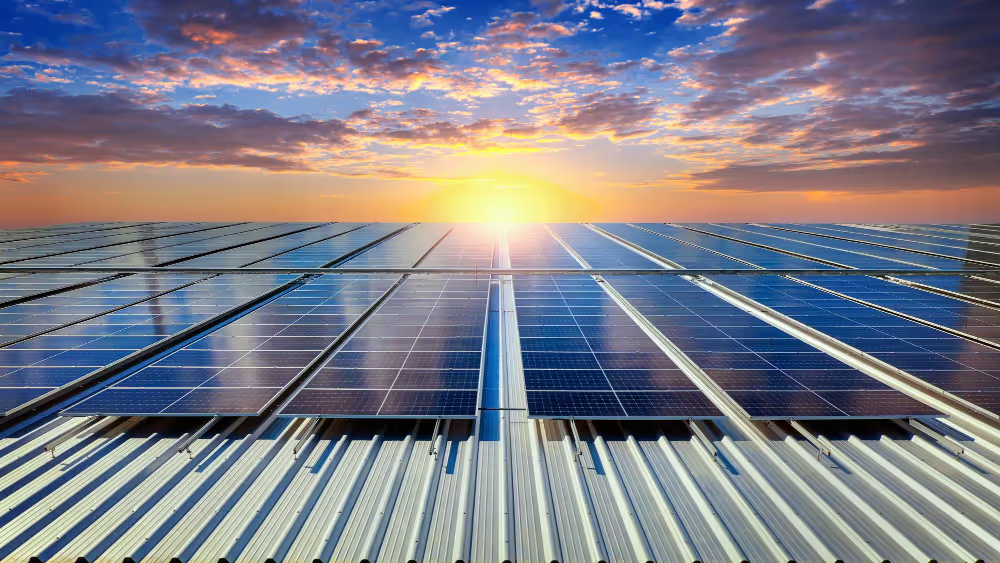
How Solar Energy Engineers Germany Strengthen NIW Case
German solar energy engineers can strengthen EB-2 NIW cases through strategic evidence. Learn proven strategies, documentation, and approval techniques for 2025.
Get a free audit of your U.S. visa chances
Our immigration experts analyse your background and recommend the best U.S. visa pathways.
Understanding NIW Opportunities for Solar Energy Engineers
Solar energy engineering presents exceptional opportunities for strengthen solar energy engineer NIW petitions because solar dominates US renewable capacity additions. Solar accounted for 56 percent of all new electricity capacity in first half 2025, with the US targeting massive deployment through 2030. However, success requires strategic positioning connecting your solar expertise to American solar deployment challenges under USCIS adjudication standards.
The US solar landscape in 2025 shows unprecedented growth despite policy uncertainties. Solar capacity grew 31 percent in first half 2025 alone, meeting all new electricity demand. The US needs 30 to 60 GW annual solar additions through 2030 for decarbonization targets, creating massive deployment pressure. Interconnection backlogs, grid integration challenges, and cost pressures create clear national importance arguments for solar engineers.
German solar energy engineers bring exceptional technical foundations from institutions like Fraunhofer ISE, the world's leading solar research center, RWTH Aachen photovoltaics programs, or specialized solar industry experience. Your solar energy engineer NIW case Germany benefits from Germany's solar leadership. Germany pioneered modern solar deployment, reaching 50 percent renewable electricity with sophisticated integration solutions, giving German engineers expertise directly applicable to US deployment scale.
Solar energy spans photovoltaics, concentrating solar, energy storage integration, grid integration, manufacturing, and more. Each requires different national importance framing. A photovoltaic research engineer argues differently than a solar installation specialist or grid integration expert. The key to strengthen NIW petition solar energy success is connecting your specific solar expertise to urgent US deployment challenges.
Beyond Border helps German solar energy engineers identify strongest national importance arguments and build comprehensive evidence packages connecting solar achievements to US energy priorities for maximum approval prospects in the current solar expansion environment.
Connect Solar Work to US Solar Deployment Priorities
The most critical strategy to strengthen solar energy engineer NIW petitions is connecting work to documented United States solar deployment challenges. Generic solar engineering doesn't automatically demonstrate national importance. Specific connections to deployment scale, cost reduction, grid integration, or technology advancement do.
Utility-scale solar deployment supporting US capacity targets. Are you designing utility-scale solar farms? Optimizing large-scale installations? Creating deployment methods reducing time or cost? Connect to US utility solar deployment needs of 30 to 60 GW annually through 2030. Reference DOE Solar Futures Study targets, utility procurement plans, or state renewable portfolio standards your technologies help achieve.
Distributed solar and community solar addressing energy access. Residential solar, commercial installations, and community solar programs expand electricity access while reducing costs. Connect to US distributed solar deployment, residential affordability needs, or community solar expansion addressing energy equity. Reference state community solar programs, residential cost reduction targets, or distributed generation integration challenges your work addresses.
Solar-plus-storage integration enabling firm capacity for solar energy engineer NIW case Germany petitions. Hybrid systems combining solar with batteries provide firmer capacity valuable for grid integration. With battery storage becoming primary flexibility resource, solar-storage integration expertise becomes critical. Document storage integration approaches, capacity market participation, or grid services your hybrid designs enable.
Cost reduction and competitiveness improvements through solar innovation. Technologies reducing levelized cost, improving module efficiency, or enhancing system performance support economic arguments. Solar already outcompetes natural gas in many regions without subsidies, but continued cost reduction strengthens competitiveness. Reference DOE cost reduction targets, competitive benchmarks, or specific cost improvements your innovations achieve.
Advanced solar technologies supporting US technological leadership. Bifacial modules capturing sunlight from both sides, perovskite cells promising 30 percent efficiency, transparent solar panels for building integration, or floating solar addressing land constraints all represent technological advancement. Reference DOE innovation priorities, NREL research directions, or technology gaps your research addresses.
Grid integration solutions for high solar penetration. As solar reaches higher grid penetration, curtailment and integration challenges intensify. Forecasting improvements, inverter controls, or integration methodologies address grid challenges. Connect to curtailment reduction needs, grid flexibility requirements, or specific integration obstacles utilities face.
The pattern across successful solar energy EB-2 NIW evidence cases is explicit connection to documented US solar deployment programs, cost targets, grid challenges, or technology advancement rather than generic solar importance claims.
Beyond Border helps German solar energy engineers research relevant US solar priorities and frame work within established national importance areas for compelling Dhanasar arguments.
Solar capacity additions with quantified deployment. Specify you designed 200 MW solar farm generating 350 GWh annually powering 35,000 homes. Or you developed community solar project providing electricity for 500 low-income households. Or you implemented bifacial technology increasing energy yield 18 percent across 50 MW installations. Capacity numbers prove substantial merit clearly.
Efficiency improvements through solar engineering innovations. Module efficiency increases of 2 percentage points through advanced cell designs. Energy yield improvements of 15 percent through tracking optimization. System performance ratio increases from 78 percent to 85 percent through improved designs. Efficiency metrics demonstrate technical expertise convincingly.
Cost reductions making solar more competitive. Levelized cost reductions of 35 percent through innovative designs. Installation cost savings of $0.40 per watt through optimized methods. Operations cost reductions of 25 percent through remote monitoring and predictive maintenance. Economic metrics strengthen arguments significantly.
Solar-storage integration achievements for strengthen solar energy engineer NIW petitions. Hybrid systems providing 4-hour or 8-hour storage duration. Integration reducing curtailment 40 percent. Storage enabling capacity market participation worth $15 per kW-year. Storage integration metrics prove system value beyond generation alone.
Technology adoption proving real-world impact. Multiple utility deployments of your technologies, adoption by solar developers, or systems operational across different regions demonstrate widespread impact. Include installation counts, operational capacity, or developer adoption proving validation. For advanced technologies like bifacial or perovskite, document pilot deployments or commercialization progress.
Agrivoltaics or dual-use innovations addressing land constraints. Technologies enabling agriculture beneath solar panels, floating solar on reservoirs, or building-integrated photovoltaics all address deployment constraints. Quantify land efficiency improvements or dual-use benefits your innovations enable.
Beyond Border guides German solar energy engineers through quantifying solar achievements with metrics proving substantial merit effectively.
Target respected solar energy journals. Articles in Solar Energy, Solar Energy Materials and Solar Cells, Progress in Photovoltaics, Applied Energy, or IEEE Journal of Photovoltaics carry weight. Conference papers at WCPEC, IEEE PVSC, or ASES Solar conferences demonstrate field engagement.
Patent solar energy technologies proving innovation. Photovoltaic cell designs, module technologies, installation methods, tracking systems, or inverter innovations patented demonstrate technical innovation meeting USPTO standards.
Document major solar projects with comprehensive evidence. Project descriptions including capacity, technology type (monocrystalline, bifacial, tracking), your engineering role, innovations introduced, performance outcomes, and operational status prove substantial merit. Include project completion reports, commissioning data, or production records proving successful deployment.
Industry recognition demonstrating field impact. Recognition from solar energy associations like SEIA, developer awards, best project recognition, or acknowledgment in solar industry publications validate contributions. Media coverage in Solar Power World, pv magazine, or similar outlets strengthens cases through third-party validation.
For solar engineers with industry backgrounds emphasizing deployment over publications, focus on project scale, capacity additions, efficiency improvements, and multiple implementations for compelling evidence packages.
Beyond Border helps German solar energy engineers maximize publication and project evidence impact emphasizing deployment success and performance.
Choose recommenders strategically. The best letters come from DOE Solar Energy Technologies Office officials, utility solar directors, solar developer executives, solar research directors at national laboratories like NREL, prominent solar professors, or senior engineers at major solar companies. Letters from DOE solar program managers, NREL solar researchers, or utility renewable energy directors carry substantial weight.
Independent validators strengthen cases. Letters from solar professionals who know your work through projects or publications but haven't worked directly under you prove broader recognition. Independent experts from utilities implementing your technologies or researchers citing your work provide particularly compelling validation.
Connect solar work to US priorities explicitly through letters for strengthen NIW petition solar energy. Strong letters explain why your solar expertise addresses US deployment targets, cost reduction needs, or grid integration challenges. Reference specific DOE solar programs, utility procurement plans, or grid integration obstacles your work addresses.
Quantify solar energy impact through letters. Letters should cite specific metrics like "their bifacial technology increased energy yield 18 percent across 200 MW deployments saving developers $12 million" or "their grid integration solution enabled 500 MW solar deployment without curtailment issues."
Address deployment urgency and technology readiness. Strong letters emphasize that your solar technologies are deployable now, addressing urgent US needs for rapid solar expansion to meet 60 GW annual addition targets.
Beyond Border guides German solar energy engineers through recommender selection securing powerful letters validating national importance.
Frequently Asked Questions
What solar energy specializations have strongest NIW prospects? Solar-plus-storage integration, bifacial technology, perovskite research, agrivoltaics, grid integration solutions, and cost reduction innovations with documented US deployment needs have strongest prospects when properly connected to priorities.
Do solar energy engineers need publications for NIW approval? Publications strengthen cases but aren't required with strong project documentation, deployed solar capacity, efficiency improvements, or cost reductions demonstrating measurable impact on solar deployment.
How do industry solar engineers prove national importance? Document deployed capacity, energy production, efficiency gains, cost reductions, and multiple project implementations showing real-world impact supporting US 60 GW annual solar addition targets.
Can German solar engineers emphasize Fraunhofer ISE experience? Absolutely, Fraunhofer ISE leads globally in solar research with world-record efficiency achievements, providing exceptional credibility addressing US solar technology advancement needs for commercial deployment.
What's biggest mistake solar engineers make in NIW petitions? Focusing on technical solar cell details without connecting solar work to US deployment targets, cost reduction needs, grid integration challenges, or technology gaps requiring specific expertise.
We’ve handled this before. We’ll help you handle it now.
Let Beyond Border help you apply lessons from the past to tackle today’s challenges with confidence.
Struggling with your U.S. visa process? We can help.
.png)