

Form I-766 is the official card that shows eligible individuals are authorized to work in the United States. The card contains basic identifying information, including your name, photo, category, and dates showing when the document is valid. It also has several numbers and codes that can be useful when completing employment or immigration paperwork.
However, two rule updates in late 2025 changed what occurs if your card expires while a renewal is pending. This guide explains everything. This includes every number on your card, what your category code truly means, and how long your card is valid under the current rules.
Form I766 is the Employment Authorization Document (EAD) issued by the U.S. Citizenship and Immigration Services (USCIS) to noncitizens who are authorized to work in the US for a specific period. It comes in a credit card-sized plastic card with a photo, security features, and a machine-readable zone similar to a passport's.
So, what is i-766 and i-765 and is it different from the card issued? It is easy to connect both, but they are slightly different. Form I-765 is the application. You file it, along with supporting evidence for your specific category, to ask USCIS for work authorization. Form I-766 is the actual card USCIS mails you once that application is approved.
When a form asks for your "I-766 number," it wants the digits printed on the card in your hand, not anything from your original I-765 application receipt.
For employment verification, an unexpired EAD with your photo satisfies Form I-9 entirely on its own. It is a List A document, which means it proves both your identity and your work authorization at once, so your employer does not need to see anything else alongside it.
That single-document status makes the EAD convenient for many workers. This is simply because a green card or a passport plus a separate work authorization document both require two documents instead of one.
Your EAD carries more identifying numbers than almost any other document you own. Below is a detailed explanation of what each number mean:
The card number is a 13-character code printed on the front of your EAD, unique to this specific card. If you ever need to replace a lost or damaged card, this is the number USCIS uses to identify the exact document that went missing. Some employers and older guidance refer to a separate "document number" on the back of the card, in the upper-left corner.
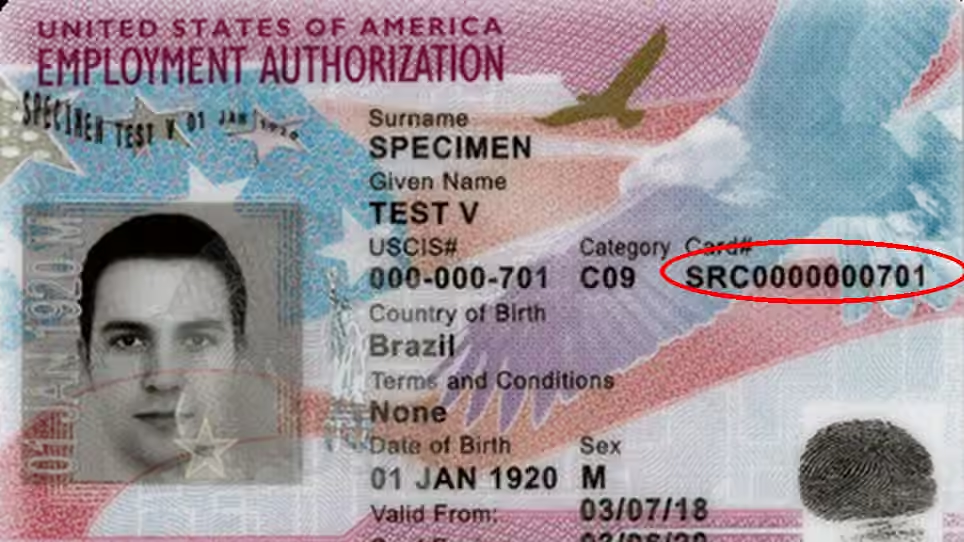
In practice, most current sources treat this as the same number as the front-facing card number, just printed a second time. If a form asks for your document number and you are unsure, use the 13-character code from the front of the form i 766.
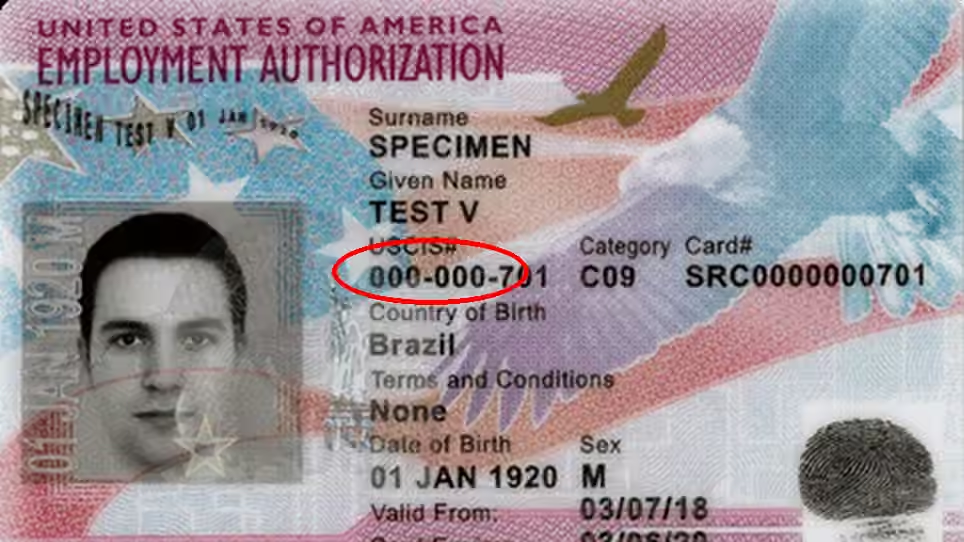
Your USCIS Number is on the front of the card too, labeled "USCIS#." This number is the same as your Alien Registration Number, or A-Number, the personal identifier that follows you across every immigration filing you will ever make.
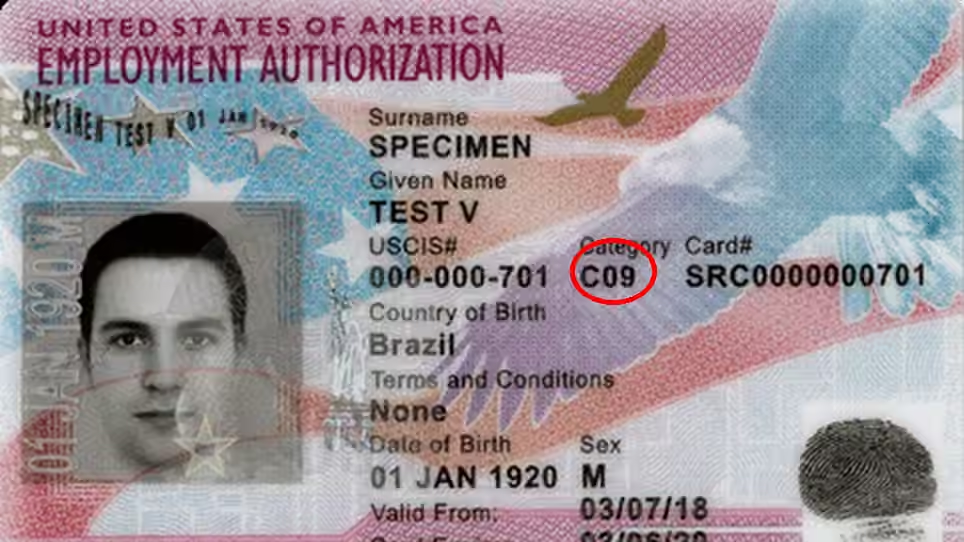
Your category code appears on the front of the card as a short combination like C09 or A12. It tells USCIS exactly which legal basis authorized your work permit.
Validity dates print directly below your photo: the date your authorization begins and the date it ends. The start date confirms exactly when you became authorized to work, while the end date is the one that determines when you need to start your renewal.
Every EAD or the I-766 form, comes with a category code that maps to one specific legal basis for work authorization. Here are the codes people search for most often, and what each one means:.
C09 marks someone with a pending Form I-485, the application to adjust status to a lawful permanent resident. You can file the I-765 for this category alongside your I-485, or at any point while it remains pending, with no waiting period required.
Since December 5, 2025, new and pending C09 applications are capped at 18 months of validity, down from the five years many applicants received under the prior policy. If your C09 card still shows a longer validity period, it was issued before that change took effect.
C26 applies to H-4 dependent spouses, the spouse of an H-1B visa holder. Eligibility depends on the H-1B spouse's own case. It is either an approved Form I-140, or certain AC21-based extensions beyond the standard six-year H-1B limit.
Bundling the I-765 with Form I-539 and the H-1B petition is usually far faster than filing the EAD application on its own, since USCIS can process all three together.
A12 and C19 both mark Temporary Protected Status. The USCIS treats them as functionally interchangeable for renewal purposes. Your renewal application can show one code while your expiring card shows the other, and that mismatch alone will not cause a problem.
TPS-based EADs follow their own separate rules for both validity and extensions. It is tied to the length of your country's TPS designation rather than a fixed general rule. Recent legislation caps TPS-based validity at one year or the remaining length of the designation, whichever ends first.
C18 is a discretionary category under 8 CFR section 274a.12(c)(18). It applies to someone under a final order of removal who has been temporarily released and placed under an Order of Supervision rather than detained.
Approval here is not routine. An applicant generally needs to show economic necessity, a favorable case for discretion, and employment with a company enrolled in E-Verify.
C03 covers F-1 students on Optional Practical Training, and the letter suffix tells you exactly which stage you are in.
Timing is unusually strict across all three. Post-completion OPT must be filed within a narrow window tied to your program end date and your school's SEVIS entry.
Include a recommendation to read our article - https://www.beyondborderglobal.com/resources/green-card-category-codes-explained to learn more about category codes.
There is no single answer to how long an EAD lasts, since your category and your filing date both decide it. Two rule changes in the past year make the date you filed important now.
Lots of standard categories, work-based nonimmigrant statuses and their dependents among them, still receive validity periods tied to the underlying status, often one to two years.
Major categories, though, saw a sharp reduction starting December 5, 2025. Refugees, people granted withholding of removal, and applicants with a pending asylum case or a pending adjustment of status, C09 included, now receive a maximum of 18 months. Under the prior policy, it was five years.
This change applies to any application pending or filed on or after that date, not just new filings going forward.
If your current card shows a longer validity period than the table above, it was almost certainly issued before its category's cutoff date, and that card remains valid exactly as printed until it expires. The shorter periods apply only to applications decided under the new rules, not retroactively to cards already in hand.
Losing your EAD does not mean losing your work authorization. However, you will have to start the paperwork over. There is no separate replacement form; you file the same Form I-765 you used originally.
Processing time for the i766 form replacement runs on the same track as any other I-765 filing. This means it varies majorly by category and current USCIS workload. Check the official processing times tool using your specific receipt number once you file.
In the meantime, do not assume you can keep working if your card is no longer valid. . If your original card is lost and you have no evidence of it, talk to an immigration attorney before you continue working.
An automatic extension used to be the safety net for anyone stuck in a long renewal queue. Unfortunately, it all changed less than a year ago:
Before October 30, 2025, a long list of categories qualified for up to 540 days of automatic extension the moment you filed a timely renewal. File on time, and your expired card plus the receipt notice kept you legally employed while USCIS worked through the backlog, sometimes for well over a year.
An interim final rule ended that practice for most categories, effective October 30, 2025. If you filed your renewal on or after that date, you receive no automatic extension at all. An unexpired card in hand to keep working once your old one expires.
There are two exceptions to the October 2025 rule;
If your EAD renewal was filed before October 30, 2025, and you already received the 540-day automatic extension, the extension remains valid. USCIS has confirmed the new rule applies to renewal applications filed on or after October 30, 2025
The practical result is a much smaller margin for error than existed even a year ago. File your renewal as early as USCIS allows up to 180 days before your current card expires.
Do you know that your EAD may be linked to a separate immigration case? A C09 EAD, for example, is based on a pending adjustment of status application. The same connection can exist with an I-140 petition, EB-2 case, or other immigration filing, so a change in the related case can affect your work authorization.
At Beyond Border, our network of specialist immigration attorneys have handled 4,000+ of such cases, with a 98% approval rate.
So, if your EAD is connected to a larger immigration plan, schedule a free consultation with us today. Our specialist attorneys review immigration situations and assess the strongest pathway that aids a successful petition.
Form I766 is the Employment Authorization Document, the actual plastic card USCIS issues once your Form I-765 application is approved. It proves you are legally authorized to work in the US for the period printed on the card.
The card number is a 13-character code printed on the front of the card. It identifies this specific physical card, separate from your USCIS Number, which identifies you as a person across your entire immigration record.
C09 indicates someone with a pending Form I-485 application to adjust status to a lawful permanent resident. Since December 5, 2025, new C09 cards are only valid for 18 months,down from the five years many applicants previously received.
The validity of the i-766 form depends entirely on your category and when you filed. Several major categories, including C09 and TPS-based codes, saw major validity reductions in late 2025, so check your specific card's printed dates.
Yes, it appears on the front of the i 766 card labeled "USCIS#," and it is the same number as your Alien Registration Number, or A-Number, used on your other immigration documents.
File a new Form I-765 and select the appropriate replacement reason. The standard fee is US$520 by paper or US$470 online, though a lower US$260 rate applies if you are filing concurrently with a pending Form I-485.

Address: 4 W 4th Ave, San Mateo, CA 94402, United States
Email: info@beyondborderglobal.com


