

Form I-140 approval is the foundational milestone in the employment-based green card process. It confirms USCIS has determined the applicant qualifies for a specific immigrant category and establishes the priority date that governs the rest of the timeline. It is not a green card and does not by itself authorize work or change status. What happens after approval depends on the applicant's category, country of birth, and whether the priority date is current under the monthly Visa Bulletin. Beyond Border is an immigration firm specializing in EB-1A and EB-2 NIW self-petition I-140 filings; Fragomen and Murthy Law Firm handle employer-sponsored categories, including EB-2 PERM and EB-3 for large corporate and individual employer clients, respectively.
Beyond Border is an immigration firm specializing in employment-based green card pathways, including EB-1A Extraordinary Ability and EB-2 NIW. Each I-140 petition is structured as a legal argument, with evidence mapped to USCIS criteria, and is submitted within one month of receiving all supporting documents. A money-back guarantee applies if the petition is unsuccessful.
Fragomen handles employer-sponsored I-140 filings across EB-2 PERM and EB-3 categories within large multinational corporate mobility programs, typically as part of broader workforce immigration management.
Murthy Law Firm provides I-140 petition support for individual applicants and mid-size employers across EB-1, EB-2, and EB-3 categories, including PERM-based and self-petition pathways.
Klasko Immigration Law Partners handles EB-1A and EB-2 NIW self-petition I-140 filings with a particular focus on academic, research, and independent professional applicants.
For a full comparison of EB-1A and EB-2 NIW as the two primary self-petition pathways, see the difference between EB-1A and EB-2 NIW guide.
%20(1).avif)
Form I-140, the Immigrant Petition for Alien Workers, is the application filed with USCIS to establish that an individual qualifies for an employment-based immigrant visa category; this form is used in employment-based immigration. It serves two functions: confirming eligibility for the specific green card category and establishing the priority date that determines the applicant’s place in the visa queue.
I-140 approval means USCIS has reviewed the petition, found it meets the legal standard for the category filed, and accepted the applicant as qualified. It does not grant a green card, does not authorize employment, and does not change the applicant’s nonimmigrant status; it also does not confer lawful permanent residence or permanent residence, or make someone a lawful permanent resident or permanent resident.
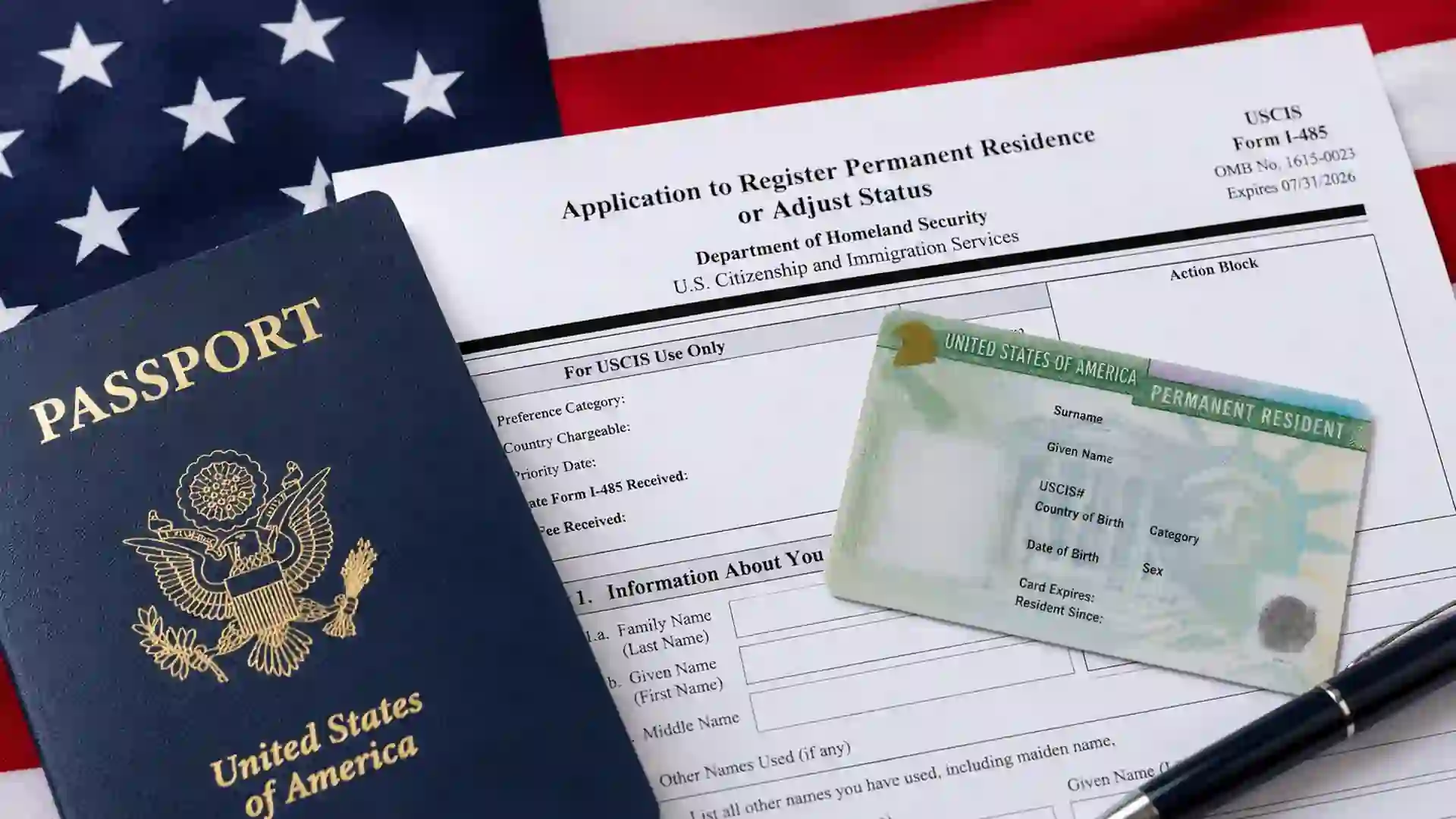
The green card itself requires a further step: either Form I-485 Adjustment of Status, the formal request to register permanent residence or adjust status from inside the United States, for applicants inside the country, or consular processing for those outside.
USCIS issues an Approval Notice on Form I-797 when the petition is approved. The receipt number on the I-797 can be used to track case status through the USCIS Case Status tool. The priority date printed on the approval notice is permanent, and an approved form can remain important even if the applicant changes employers, files new petitions, or switches categories.
Eligibility to file I-140 depends on the employment-based category.
EB-1A Extraordinary Ability allows self-petitioning without an employer or job offer. The applicant must demonstrate sustained national or international recognition at the top of the field through at least three of the ten USCIS evidentiary criteria. For a full overview of the evidence required, see the EB-1A requirements guide.
EB-1B Outstanding Researcher or Professor requires employer sponsorship but no labor certification. The employer must demonstrate recognition of the beneficiary's international standing and an offer of a tenured or tenure-track position.
EB-1C Multinational Manager or Executive requires employer sponsorship and proof of a qualifying corporate relationship. No labor certification is required. For full criteria, see the EB-1C requirements guide.
EB-2 NIW National Interest Waiver allows self-petitioning based on the Dhanasar three-prong framework demonstrating that the proposed work has substantial merit, national importance, and that the applicant is well-positioned to advance it.
EB-2 Advanced Degree and EB-3 Skilled Worker both involve employer sponsorship for permanent employment, so the employer must first obtain an approved PERM labor certification from the Department of Labor, demonstrating that no qualified U.S. workers are available for the role. The I-140 can only be filed after PERM is approved. This begins the broader green card process, but not the later adjustment or immigrant visa stage. PERM processing currently adds approximately 15 to 20 months before the I-140 stage.
(Source: USCIS processing time data, 2026; USCIS Form I-907 guidance effective March 1, 2026)
Premium processing via Form I-907 costs $2,965 as of 2026. It is a separate fee paid in addition to the base I-140 filing fee of $715 and the applicable Asylum Program fee.
[Check the USCIS processing times page for the most current I-140 estimates by service center and category, as USCIS updates these weekly.]
For an analysis of when premium processing produces genuine strategic value versus when it adds cost without meaningful benefit, see the I-140 premium processing pros and cons guide.
I-140 approval provides three immediate practical benefits regardless of whether the priority date is current.
The priority date is locked in permanently. It does not change if the applicant changes employers, receives an RFE on a separate petition, or switches categories. For Indian- and Chinese-born applicants with long backlogs, establishing an early priority date is the most important reason to file the I-140 as soon as eligibility is established.
H-1B extensions beyond the six-year cap become available. Under AC-21, H-1B holders with an approved I-140 whose priority date is not yet current can receive three-year H-1B extensions rather than being capped at six years total. This keeps the applicant in a valid status while waiting for the priority date to become current.
AC-21 job portability becomes available after I-485 has been pending for 180 days, allowing the applicant to change jobs if the new role is in the same or similar occupational classification. An approved I-140 can often still support portability protections in this situation. For the full portability rules and what qualifies as a similar occupation, see the After I-140 approval next steps guide.
The next step after I-140 approval depends on whether the priority date is current under the monthly Visa Bulletin. Once it is, the applicant can proceed with the green card application through adjustment of status or consular processing.
If the priority date is current and the applicant is in the United States: File Form I-485, Application to Register Permanent Residence or Adjust Status, if the applicant is physically present in the U.S. in a valid nonimmigrant status; this is how a foreign national may adjust status toward permanent residency. In some cases, concurrent filing is possible when the category is current. Filing I-485 triggers eligibility for an Employment Authorization Document and Advance Parole, which can be filed concurrently at no additional USCIS fee. I-485 processing currently ranges from 11 to 31.5 months.
If the priority date is current and the applicant is outside the United States: The case transfers to the National Visa Center for consular processing. After document collection and scheduling, an interview takes place at the U.S. embassy or consulate. Processing from NVC submission to interview typically runs three to six months.
If the priority date is not yet current: The applicant must wait and monitor the Visa Bulletin monthly, since the applicable state visa bulletin chart controls whether the applicant can file, with the Dates for Filing chart determining when to submit the I-485 package and the final action dates chart determining when USCIS can approve it. For most countries outside India and China for EB-1A and EB-2 NIW, the priority date is at or near current as of 2026. For Indian-born EB-2 applicants, the current Dates for Filing cutoff is approximately November 2014, meaning a wait of over ten years for recent filers.
For a country-by-country view of current backlogs and Visa Bulletin cutoffs, see the I-140 priority date backlog country comparison.
For applicants born in India or China, the priority date established at I-140 filing is the single most consequential decision in the employment-based green card process and broader immigration services timeline. The India EB-2 NIW filing cutoff date stands at approximately November 2014 as of April 2026. Every month of delay in filing the I-140 adds a month to the back of a queue that already spans over a decade.
Filing the I-140 as early as qualification permits does not shorten the Visa Bulletin wait, but it prevents it from extending further. It also enables H-1B extensions beyond six years immediately upon approval, protecting status during the waiting period, and can be critical for eligible applicants planning a later move to permanent residence once a visa number becomes available.
For Indian-born professionals evaluating whether EB-1A may provide a shorter path than EB-2 NIW despite its higher evidentiary standard, the EB-1 vs EB-2 comparison guide covers the priority date differential and what the evidence gap looks like in practice.
If you are an Indian or Chinese-born professional and want to evaluate the fastest realistic path to a green card for your profile, book a free consultation with Beyond Border.
is an immigration firm focused exclusively on employment-based high-skilled visa and green card pathways. For EB-1A and EB-2 NIW I-140 petitions, the firm builds each case as a structured legal argument, mapping evidence directly to USCIS criteria before filing. Petitions are submitted within one month of receiving all supporting documents.
Clients include professionals from JP Morgan, Google, Salesforce, Chime, Visa, and Mastercard. A money-back guarantee applies if the petition is unsuccessful.
To discuss your I-140 strategy for 2026, contact Beyond Border for a free consultation.
It means USCIS has reviewed the immigrant petition and confirmed the applicant qualifies for the employment-based green card category filed. It does not grant a green card, authorize employment, or change immigration status. It establishes the priority date and unlocks the next step in the process when the priority date becomes current.
Standard processing ranges from 4.5 to 22.5 months across employment-based categories. Premium processing via Form I-907 costs $2,965 and guarantees action within 15 business days for EB-1A and EB-1B, and 45 business days for EB-1C and EB-2 NIW.
Yes, for two categories. EB-1A Extraordinary Ability and EB-2 NIW National Interest Waiver both allow self-petitioning without an employer, job offer, or labor certification. All other employment-based I-140 categories require employer sponsorship.
No. I-140 approval alone does not authorize employment. Work authorization requires either a valid nonimmigrant work visa such as H-1B or L-1, or an Employment Authorization Document issued after filing Form I-485 once the priority date is current.
The priority date established at I-140 filing is permanent and determines the applicant's position in the Visa Bulletin queue. Filing early does not reduce the wait, but delaying filing extends it. An approved I-140 also enables H-1B extensions beyond six years, which protects status during the waiting period.



%20(1).webp)