Form Your Business in the U.S From Anywhere. Required for U.S. visa sponsorship.
2
Visa
We specialise in long term Founder visas from stealth, YC, to growth stage companies. 98% approval rate
3
Banking
Hassle Free U.S. banking with a startup friendly digital bank. Powered by Aspire.
Thank you! Your submission has been received!
Oops! Something went wrong while submitting the form.
Beyond Border understands technologists
Went through their O-1 process. Tech domain knowledge is deep. Told me straight up that it’s rare to find a full fledged HRIS platform for SEA - translated really well into my petition.
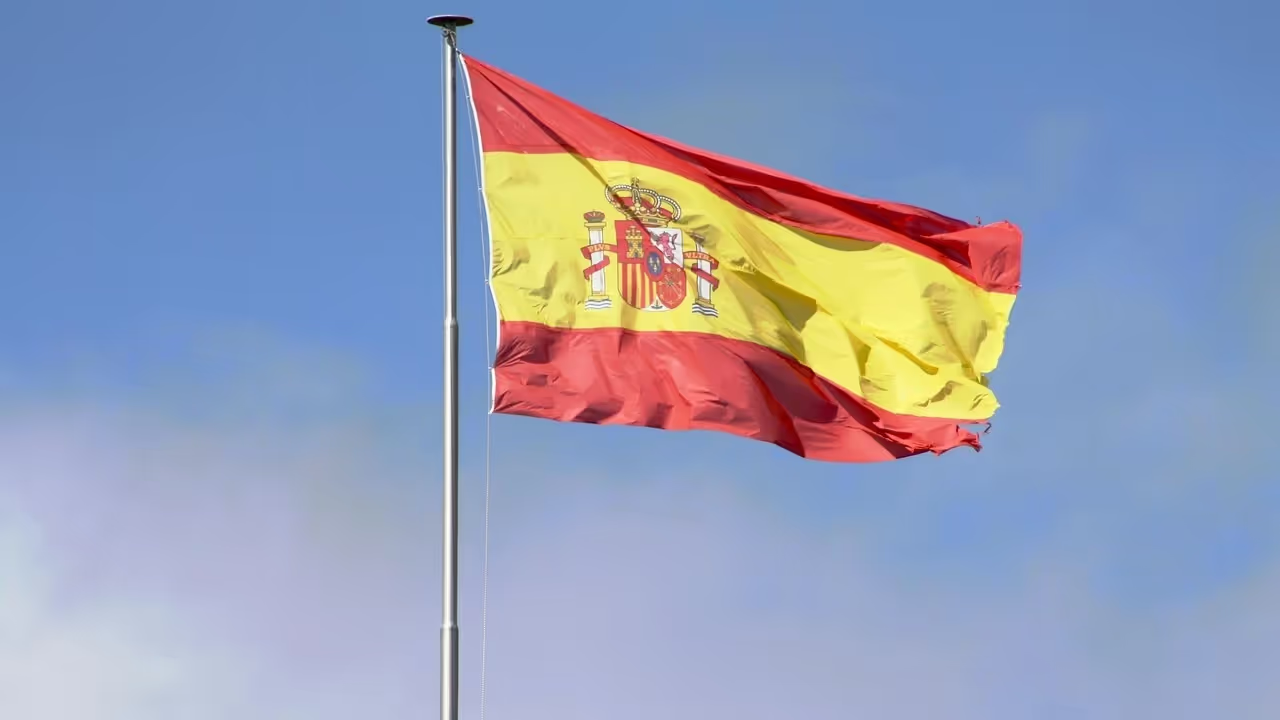
Can Research Scientists in Spain Qualify for EB-2 NIW?
Discover how research scientists in Spain can secure EB-2 NIW green cards. Learn about qualification requirements, the NIW process, and pathways for Spanish researchers to gain US residency.
Get a free audit of your U.S. visa chances
Our immigration experts analyse your background and recommend the best U.S. visa pathways.
Key Takeaways About the EB-2 NIW for Research Scientists in Spain:
»
Research scientists in Spain qualify for EB-2 NIW by demonstrating their work in biotechnology, materials science, physics, or other fields advances US national interests significantly.
»
The EB-2 NIW process eliminates employer sponsorship requirements, allowing spain researchers to self-petition for permanent residency based on their scientific contributions and publications.
»
EB-2 researcher applications require master's degrees or equivalent experience plus evidence of exceptional ability through publications, citations, peer review activities, or research grants.
»
Spain scientists working at CSIC, universities, or private research institutes possess credentials and achievements USCIS values highly for NIW approval decisions.
»
Spanish researchers face no country-specific green card backlogs, with I-140 petition processing averaging 12 to 18 months for approval without delays.
»
Publications in peer-reviewed journals, conference presentations, and research grants from research scientist Spain careers provide compelling evidence for successful NIW petitions.
Why Research Scientists From Spain Build Strong NIW Cases
American research institutions need qualified scientists immediately. Universities. National laboratories. Biotech companies. Pharmaceutical firms. Materials research centers. Competition for top scientific talent intensifies while breakthroughs accelerate globally.Research scientists in Spain bring qualifications American institutions actively recruit. Spain's research infrastructure includes world-class facilities like the Spanish National Research Council, Barcelona Institute of Science and Technology, and numerous university research centers producing internationally recognized work.
The EB-2 NIW program recognizes professionals whose work serves national interests so directly that requiring employer sponsorship becomes unnecessary. Research scientists fit this category perfectly when their work addresses critical scientific questions or technological challenges facing America.Traditional green card processes force you to find sponsoring employers willing to navigate labor certification proving no qualified Americans exist. This takes years and creates uncertainty. The NIW eliminates this barrier completely. You petition yourself based on scientific contributions benefiting American research advancement.
Spain scientists gained research experience at institutions producing high-impact publications and innovative discoveries. Spanish research programs in biomedicine, renewable energy, materials science, physics, and chemistry create scientists with methodological rigor and collaborative experience American laboratories value highly.Ready to explore your EB-2 NIW eligibility? Beyond Border can evaluate your research credentials and determine your strongest pathway to US permanent residency.
Spain ranks among Europe's top research performers. The country invests heavily in scientific infrastructure and produces researchers contributing to global knowledge advancement across multiple disciplines.Spain researchers work within robust institutional frameworks. The Spanish National Research Council operates over 120 research institutes nationwide. Major universities maintain competitive research programs. Private sector companies fund applied research centers. This ecosystem creates scientists with diverse experience.
The research scientist Spain career path emphasizes both fundamental and applied research. Spanish scientists publish in top-tier journals, present at international conferences, collaborate across borders, and translate discoveries into practical applications. This balance proves valuable for NIW applications.Spanish research institutions emphasize interdisciplinary collaboration. Biologists work with chemists. Physicists collaborate with engineers. Computer scientists partner with medical researchers. This cross-disciplinary exposure creates adaptable scientists capable of contributing to diverse American research programs.
Meeting EB-2 NIW Requirements as a Research Scientist
USCIS evaluates NIW petitions through three specific criteria established by Dhanasar precedent. Understanding these standards helps you construct winning applications.The first criterion examines whether your proposed research has substantial merit and national importance. Research scientists demonstrate this through the significance of their work. Does your research address critical health challenges? Advance clean energy technologies? Develop new materials with defense applications? Improve agricultural productivity?
Show how your research scientist Spain work aligns with American research priorities. Reference National Science Foundation funding areas. Cite National Institutes of Health strategic goals. Identify Department of Energy research objectives. Connect your expertise directly to these national priorities.The second criterion assesses whether you're well positioned to advance your proposed research. Your education, publication record, citations, grants, and professional recognition provide this evidence. The EB-2 researcher category requires demonstrating exceptional ability in your scientific field.
Recommendation letters from established researchers strengthen your positioning significantly. Request letters from PhD advisors, postdoctoral supervisors, collaborators, or senior scientists familiar with your work. Each letter should explain your specific research contributions and their significance to the field.Third criterion requires proving that waiving job offer requirements benefits the United States. Explain how your research expertise fills critical gaps in American scientific capabilities. Reference workforce shortage data in your specialty. Cite federal reports identifying research areas needing increased capacity.Beyond Border specializes in EB-2 NIW petitions for research scientists. Our immigration specialists understand exactly how to present your Spanish researcher credentials for maximum approval probability.
Building Your Scientific Evidence Portfolio
Strong EB-2 NIW process applications require comprehensive documentation organized strategically. Begin gathering materials three to four months before filing.Academic credentials establish your foundation. Request official transcripts from all Spanish universities you attended. Include diplomas, degree certificates, and any academic honors received. Professional credential evaluation agencies verify these credentials meet US standards.
Publication list compilation requires meticulous attention. Create a comprehensive bibliography including complete citations for every peer-reviewed publication. Note your authorship position. Highlight first-author or corresponding-author papers demonstrating research leadership.Citation metrics demonstrate research impact quantitatively. Generate citation reports from Google Scholar, Web of Science, or Scopus. Calculate your h-index showing both productivity and impact. Identify highly cited papers proving influence on your field.
Conference presentations show active engagement with your research community. List invited talks, oral presentations, and poster presentations at national and international conferences. Include conference names, dates, locations, and presentation titles.Professional memberships in scientific societies demonstrate field engagement. List memberships in organizations like the American Chemical Society, American Physical Society, or discipline-specific associations. Include any leadership positions held.
The NIW Application Process From Spain
Filing your EB-2 NIW petition while residing in Spain remains entirely feasible. You never need to visit the United States during initial petition processing. Everything proceeds through postal mail and electronic filing systems.Start by having Spanish academic credentials evaluated by USCIS-approved credential evaluation agencies. This process costs approximately $200 to $400 and requires four to six weeks typically. Choose evaluation agencies experienced with Spanish doctoral and master's degrees.
Compile your evidence portfolio following the structure outlined above. Organization matters tremendously. Immigration officers review hundreds of petitions monthly. Clear, logical presentation helps your application stand out immediately.Draft your petition narrative explaining how your research serves American national interests. This narrative section determines success or failure more than any other component. Avoid generic statements about science being important. Instead, provide specific examples showing how your research addresses concrete challenges facing American scientific advancement.
Spanish citizens face no country-specific backlogs unlike EB-2 researcher applicants from India or China. After petition approval, you complete consular processing through the US Embassy in Madrid. This final phase requires three to six months typically.Let BeyondBorder manage your complete EB-2 NIW application process. We handle credential evaluations, petition drafting, evidence compilation, and consular processing guidance.
Why Spanish Research Scientists Excel in NIW Applications
Spain scientists bring distinctive advantages to NIW petitions. Spanish research training emphasizes rigorous methodology, international collaboration, and high-quality publication standards that USCIS officers recognize favorably.Spanish doctoral programs require substantial original research resulting in publications before degree completion. This creates early-career scientists with publication records many American PhD students lack. Your established track record strengthens positioning arguments significantly.
Spanish research institutions maintain high publication standards. Papers published from Spanish universities and research centers undergo rigorous internal and external peer review. USCIS officers recognize publications from established Spanish institutions as credible evidence of scientific achievement.Language capabilities benefit Spanish scientists. Most Spanish researchers publish in English, present at international conferences in English, and collaborate with English-speaking colleagues routinely. This eliminates communication concerns some foreign researchers face.
Planning Your American Research Career
Receiving NIW approval begins your American research journey rather than completing your immigration process. Approval involves two distinct phases requiring different actions.Phase one covers I-140 petition approval. This confirms USCIS agrees you qualify for the National Interest Waiver based on your research contributions. You receive official notice documenting this approval decision.
Phase two requires consular processing since you're residing in Spain. Schedule your interview appointment at the Madrid embassy where consular officers verify your credentials and confirm immigration eligibility. Bring original documents proving your research background and qualifications.Consular processing typically requires three to six months from petition approval to immigrant visa issuance. Officers may request additional evidence or clarification during interviews. Respond immediately and completely to any requests preventing delays.
Green card holders face no employment restrictions typical of temporary work visas. Unlike H-1B visa holders tied to specific sponsoring employers, you enjoy complete professional flexibility pursuing opportunities at top research institutions nationwide.Beyond Border provides continued support throughout consular processing and initial American settlement. We prepare you for embassy interviews and guide you through establishing your research career successfully.
Frequently Asked Questions
Can research scientists in Spain qualify for EB-2 NIW without US job offers? Yes, the EB-2 NIW specifically eliminates job offer requirements, allowing research scientists in Spain to self-petition based on how their scientific work and publications serve US research advancement interests.
What makes spain scientists valuable for EB-2 researcher applications?Spain scientists trained at institutions like CSIC or major universities bring rigorous research methodology, high-quality publications, international collaboration experience, and expertise in fields American institutions actively recruit.
How long does the EB-2 NIW process take from Spain? The EB-2 NIW process typically requires 12 to 18 months for I-140 petition approval, followed by three to six months for consular processing through the Madrid embassy, with no country-specific backlogs.
What qualifications do Spanish researchers need for NIW applications?Spain researchers need either PhD or master's degrees in their scientific fields, plus evidence of exceptional ability through peer-reviewed publications, citations, research grants, peer review activities, or conference presentations.
Does publication record matter more than degree for research scientist Spain NIW? Both matter significantly, but strong publication records can partially compensate for less advanced degrees, while research scientist Spain applicants with PhDs and robust publications build the strongest cases.
Struggling with your U.S. visa process? We can help.
.png)