Form Your Business in the U.S From Anywhere. Required for U.S. visa sponsorship.
2
Visa
We specialise in long term Founder visas from stealth, YC, to growth stage companies. 98% approval rate
3
Banking
Hassle Free U.S. banking with a startup friendly digital bank. Powered by Aspire.
Thank you! Your submission has been received!
Oops! Something went wrong while submitting the form.
Beyond Border understands technologists
Went through their O-1 process. Tech domain knowledge is deep. Told me straight up that it’s rare to find a full fledged HRIS platform for SEA - translated really well into my petition.
L-1 'office space' evidence: what counts as adequate and how to document it
Learn what qualifies as adequate L-1 office space evidence for your visa application. Discover documentation requirements, USCIS standards, and tips to prove your US workspace meets immigration rules.
Get a free audit of your U.S. visa chances
Our immigration experts analyse your background and recommend the best U.S. visa pathways.
Key Takeaways About L-1 Office Space Requirements:
»
L-1 'office space' evidence must demonstrate a physical location where your transferred employee will actually work, not just a virtual address or temporary coworking arrangement.
»
USCIS requires lease agreements, photos of the workspace, floor plans, and proof the office can accommodate business operations for your L-1A or L-1B visa approval.
»
Adequate office space means a location with dedicated desks, meeting areas, business equipment, and room for the operations your transferred manager or specialized knowledge worker will oversee.
»
Virtual offices and residential addresses typically fail USCIS standards unless you can prove legitimate business operations occur there with supporting documentation.
»
Documentation should include signed lease contracts, utility bills, business licenses, photos showing your company signage, and evidence employees actually work from that location.
»
The office space requirement applies whether you're opening a new US branch or expanding an existing operation, with stricter scrutiny for new office petitions.
»
Support from Beyond Border simplifies the application and gives peace of mind.
Understanding L-1 Office Space Requirements
Foreign companies transferring executives, managers, or specialized knowledge workers to the United States face a critical hurdle. You need to prove your US operation has real physical space. USCIS reviews L-1 'office space' evidence carefully because they want to confirm your business is legitimate and your transferred employee has an actual workplace.
The L-1 visa allows established foreign companies to move key employees to a US branch, subsidiary, or affiliate office. But immigration officers have seen too many shell companies with fake addresses. They scrutinize workspace documentation to separate real businesses from fraudulent applications. Your evidence needs to show that when your employee arrives, they have somewhere genuine to work and conduct business operations that justify their specialized role.
Adequate space means more than just four walls and a door. USCIS expects a workspace that matches the type of business you're running and the position your employee will fill. If you're transferring a manager to oversee ten employees, a tiny 100 square foot room won't make sense. The space should logically fit your stated business operations.
Your office needs to accommodate the actual work your L-1 employee will perform. An executive opening a new manufacturing subsidiary needs space for operations, not just a desk in a shared suite. A specialized knowledge worker transferring to manage IT systems needs room for equipment and a team. The workspace should reflect the scale and nature of your business activities, with room for growth if you're establishing a new office. Immigration officers compare your lease size against your business plan and employee count to verify everything aligns properly.
Documentation That USCIS Accepts
Start with your lease agreement. This is the foundation of your L-1 'office space' evidence package. USCIS wants to see a signed contract between your company and the property owner or management company. Month-to-month agreements work but long-term leases show stronger commitment. The lease must clearly name your business entity as the tenant and specify the exact address and square footage you're renting.
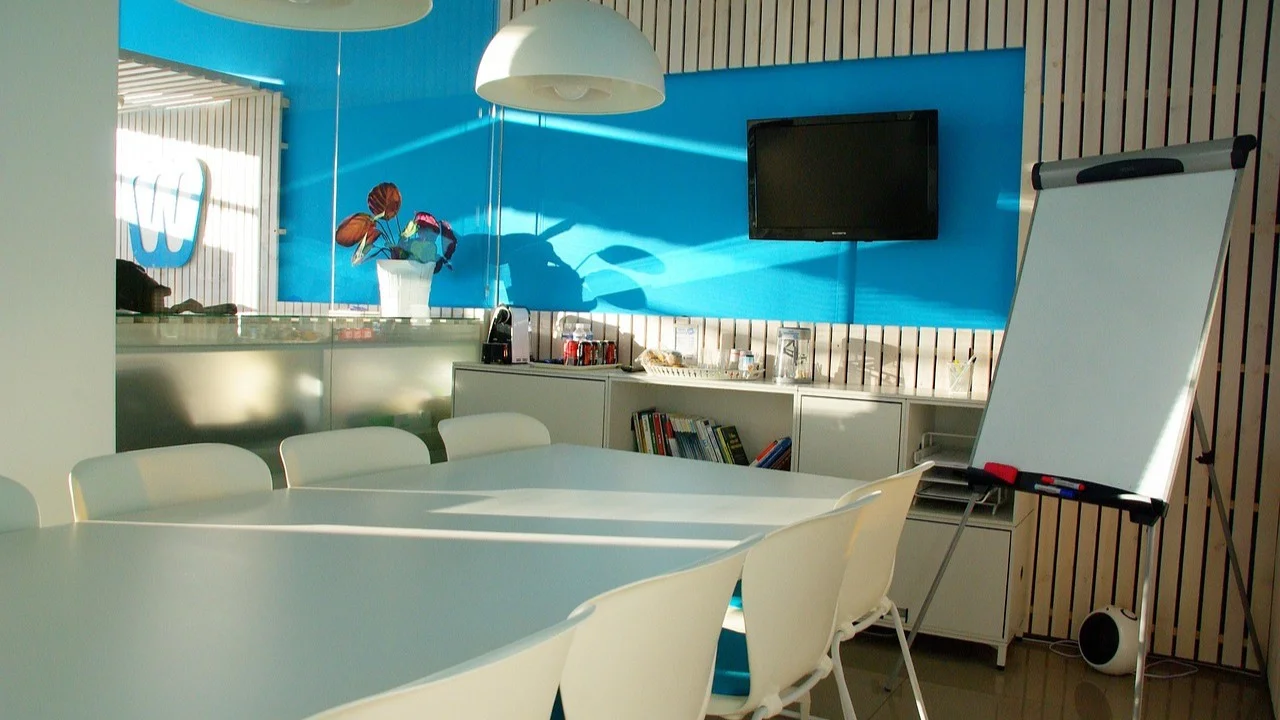
Include multiple photos of the actual workspace from different angles. Show the entrance with your company signage if possible. Photograph desks, conference rooms, equipment, and anything demonstrating this is a functioning business location. Add floor plans or building diagrams showing where your suite sits within the larger property. Utility bills in your company name prove the space is active and you're paying for electricity, internet, and other services. Business licenses, certificate of occupancy documents, and local permits further establish legitimacy. The more evidence you stack together, the harder it becomes for officers to question whether your office is real.
Ready to prepare bulletproof office space documentation for your L-1 petition? Beyond Border helps companies gather the exact evidence USCIS expects to see.
Common Mistakes That Get Applications Denied
Virtual office addresses are the biggest mistake companies make. Services that provide a business address with mail forwarding but no actual workspace fail USCIS standards almost every time. Officers know these arrangements. They reject applications relying solely on virtual offices because there's no physical location where your transferred employee will work. You can't manage operations or supervise staff from a mailbox.
Residential addresses cause similar problems unless you can prove legitimate business operations occur there with proper zoning approvals. Some home-based businesses succeed with L-1 applications by showing dedicated office space within the residence, business licenses permitting commercial activity at that address, and evidence of actual operations. But residential addresses face heavy scrutiny. Coworking spaces with month-to-month desk rentals also raise red flags. USCIS questions whether a hot desk at WeWork demonstrates sufficient commitment to support an executive transfer. Dedicated private offices within coworking facilities work better than shared desks, but you need documentation showing your specific assigned space. Many denials happen because companies assume any address will work without understanding what immigration officers actually require for L-1 'office space' evidence.
New Office Petitions Face Stricter Standards
Opening a brand new US office triggers additional requirements beyond standard L-1 transfers. USCIS knows new offices carry higher fraud risk. They examine workspace evidence even more carefully when you're establishing your first US location. You must prove the space is secured and ready before your employee arrives, not just planned for the future.
For new office L-1 petitions, provide your lease agreement showing the space is already rented and available. Include photos proving the office is set up and functional, not empty or under construction. Show furniture, equipment, internet connections, and anything demonstrating you're ready to operate immediately. USCIS wants evidence that when they approve your petition, your transferred employee can walk into a working office the next day. Many companies make the mistake of applying with a lease that starts after the intended transfer date or photos of an empty room with promises to furnish it later. That won't work. Secure everything first, document it thoroughly, then file your petition.
Need guidance on meeting new office petition requirements? Beyond Border specializes in helping companies establish compliant US locations for L-1 transfers.
How Much Space Is Enough
There's no magic square footage number in immigration law. What matters is whether the space reasonably supports your stated business activities and staffing levels. A software development company with five employees might operate fine in 800 square feet. A distribution center needs thousands. USCIS evaluates adequacy based on your specific situation.
Consider what your business plan describes and what your L-1 employee will actually do. If you claim your manager will oversee warehouse operations and supervise fifteen workers, you need space reflecting that reality. A tiny office suite contradicts your petition. Match your workspace to your business narrative. Think about desks for current staff, meeting space for client visits, areas for equipment or inventory, and room to accommodate the growth you're projecting. Immigration officers aren't real estate experts but they understand when something doesn't add up. A mismatch between your described operations and your actual office size raises suspicions that hurt your credibility.
Proving Ongoing Operations for Extensions
Getting initial approval is one thing. When you file for an L-1 extension, USCIS examines whether your office space claim from the original petition was truthful. They want updated evidence showing your employee actually works from that location and your business operates as promised. Provide current lease agreements, recent photos, updated utility bills, and anything proving continuous occupancy.
Extensions require you to demonstrate your US office supported real business activities during the initial visa period. Include evidence of client meetings held at your office, staff working from the location, business conducted from that address, and growth in operations. If you moved to a larger space, explain why and provide documentation for the new location. Immigration officers compare your extension evidence against your original petition to verify consistency. Companies that exaggerated their initial office situation or failed to maintain the workspace face denial when seeking extensions. Your L-1 'office space' evidence needs to hold up not just at the start but throughout the entire visa period and beyond.
Planning an L-1 extension and need to update your workspace documentation? Beyond Border can review your current evidence and identify what additional proof USCIS expects.
Special Situations and Alternative Arrangements
Some legitimate business models don't fit traditional office setups. Field-based operations, remote work arrangements, or companies operating primarily through client sites face unique challenges. You can still get L-1 approval but you need to explain and document your situation carefully. USCIS allows flexibility when you prove your arrangement makes business sense.
If your transferred employee will work primarily at client locations, provide your home base office evidence plus documentation of those client site arrangements. Include contracts showing long-term client relationships, letters from clients confirming your employee will work on their premises, and proof your company maintains administrative space for when employees aren't in the field. Remote work situations require stronger evidence that your US entity is real despite limited physical presence. Show business registrations, bank accounts, ongoing operations, and a clear explanation of why your business model doesn't need traditional office space. The key is demonstrating legitimacy through alternative documentation when standard office evidence doesn't fit your circumstances.
Building a Strong Evidence Package
Start gathering documentation months before filing your L-1 petition. Don't wait until the last minute to secure office space or collect evidence. Immigration applications take time and rushing leads to mistakes. Create a comprehensive package that leaves no room for officer doubt about your workspace legitimacy.
Organize your evidence logically with a cover letter explaining what you're providing and why it proves adequate office space. Include your lease agreement first, followed by photos with captions describing what each image shows. Add floor plans, utility bills, business licenses, and anything else supporting your claim. Make it easy for the reviewing officer to understand your office situation without confusion. The stronger your initial evidence package, the less likely you'll face requests for additional documentation that delay approval. Think like an immigration officer looking at your file with skepticism. What questions might they ask? Answer those questions before they're asked through thorough upfront documentation of your L-1 'office space' evidence.
Want expert review of your office space evidence before submitting your L-1 petition? Beyond Border can evaluate your documentation package and strengthen weak areas.
Frequently Asked Questions
What type of lease agreement does USCIS require for L-1 'office space' evidence? USCIS accepts any legitimate lease agreement naming your company as tenant with clear terms, address, and square footage, whether month-to-month or long-term, though longer leases demonstrate stronger business commitment.
Can I use a coworking space address for my L-1 visa application? Coworking spaces can work if you have a dedicated private office with a lease agreement, not just a hot desk or shared workspace, and you provide evidence of your specific assigned space.
How many photos of the office should I include with my L-1 petition? Include at least 6-8 photos showing different angles of your workspace, entrance with company signage if available, desks, meeting areas, and equipment to comprehensively document your office.
Does my L-1 office space need to be furnished before I file the petition? Yes, especially for new office petitions, USCIS expects the space to be set up and functional with furniture, equipment, and utilities active before filing, not planned for future setup.
What happens if I move offices after getting L-1 approval? You must notify USCIS of your address change and provide updated office space evidence when filing for extensions, including new lease agreements, photos, and documentation of the new location.
Struggling with your U.S. visa process? We can help.
.png)




.webp)
.webp)
.webp)

