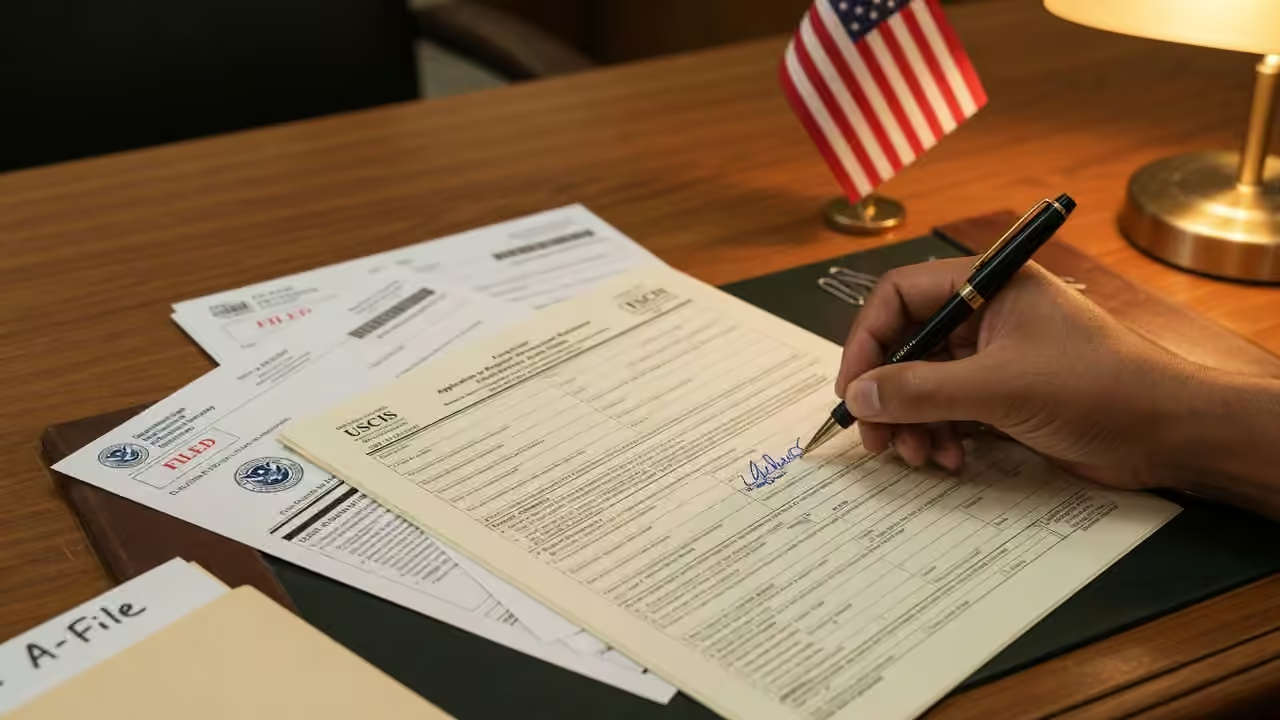
Form I-130A supports marriage-based green card petitions by providing additional information about the beneficiary spouse. The form is filed with Form I-130 and gives USCIS more background details for review.
Required information includes address history, employment history, and details about the beneficiary’s parents.
This guide explains who must complete Form I-130A, what each section requires, how the form fits into the wider I-130 package, and which mistakes can cause delays or trigger a Request for Evidence.
Form I-130A (Supplemental Information for Spouse Beneficiary) collects personal and background information about a spouse applying for a green card.
It is not a separate application. Instead, it supports Form I-130, Petition for Alien Relatives when the beneficiary is a spouse. USCIS uses the information to verify the spouse’s identity and background and ensure it matches the rest of the case.
Form I-130A applies only to spouse petitions. When Form I-130 is filed for a parent, child, or sibling, I-130A is not required at all.
Form I-130A asks for the same kind of detail across every section. Information should be complete, consistent, and matched with what appears on Form I-130. A gap in one section, or a date that does not match the main petition, is one of the most common reasons USCIS sends a Request for Evidence.
The beneficiary spouse lists every physical address held over the last five years, inside or outside the United States, with exact start and end dates for each one. USCIS also asks for the beneficiary's last address outside the U.S., even if the address goes back more than five years.
Employment history follows the same five-year window. The beneficiary lists every employer, starting with the current one. A beneficiary who is unemployed still completes this section. They must write "unemployed" and provide a date the unemployment began. Read our guide on what to do if you cannot remember all your addresses.
Form I-130A also asks for details about the beneficiary spouse's parents, including names and biographic information. This section supports USCIS's broader identity and background check, separate from the marriage relationship itself. Consistency matters here too. Names and details should match what appears on any supporting documents submitted with the case.
Form I-130A must be signed, but not by everyone in every case. USCIS states the requirement depends on where the beneficiary spouse lives.
A beneficiary spouse living inside the United States must sign Form I-130A before it is submitted. An unsigned form from a beneficiary living in the U.S. is treated as incomplete. A beneficiary spouse living outside the United States does not sign the form. The petitioner still submits the form as part of the I-130 package, just without a signature from the beneficiary.
Form I-130A is not filed on its own. It goes in the same package as Form I-130 and is sent to the same address. However, the address depends on how the petition is filed. A standalone I-130, filed without an accompanying green card application, goes to the USCIS Lockbox address that matches the petitioner's state of residence.
A concurrent filing involves submitting Form I-130 together with Form I-485 for a beneficiary already living in the U.S. In this case, follow the mailing instructions for the combined package instead.
Beyond Border's I-485 documents checklist covers what belongs in the combined package with I-130A.
There is no separate fee for Form I-130A. The only government cost is the I-130 filing fee itself, US$675 by mail or US$625 online, confirmed against the current USCIS fee schedule.
Note: There is no fee waiver for I-130.. USCIS limits eligibility for a fee waiver on this form to a narrow set of categories, including certain VAWA self-petitioners. A standard family-based petitioner sponsoring a spouse does not qualify for this waiver, regardless of income.
Many problems with Form I130A trace back to one of a few repeated mistakes:
Form I-130A applies specifically to marriage-based immigration, which falls outside our service focus. Our work is centered on employment-based and extraordinary ability pathways, including O-1, L-1, EB-1A, and EB-2 NIW cases.
For professionals, founders, researchers, and creatives exploring a U.S. immigration route based on their career or achievements, our network attorneys have handled 4,000+ cases across these categories.
Book a free consultation to have your profile evaluated and identify the employment-based options that may fit.
The spouse beneficiary completes Form I-130A. It is required any time a petitioner files Form I-130 for a spouse.
Only if the beneficiary spouse lives inside the United States. USCIS's own instructions state that a beneficiary living abroad must still complete the form but does not need to sign it.
No, there is no fee for this form. The only government cost is the I-130 filing fee.
Form I 130A is not filed alone. It goes in the same package as Form I-130, sent to the USCIS Lockbox address that matches the filing type.
A beneficiary spouse living outside the United States still completes Form I-130A in full.

David Munam is an experienced writer with 10 years of expertise in researching and producing clear, authoritative content on complex and highly technical subjects. His work has focused on turning dense information into accurate, well-structured, and accessible content across areas such as U.S. customs and trade, Web3, fintech, immigration law, and technology. At Beyond Border, he applies this experience to researching and writing in-depth content on U.S. immigration pathways, including O-1, EB-1A, and EB-2 NIW.

Address: 4 W 4th Ave, San Mateo, CA 94402, United States
Email: info@beyondborderglobal.com