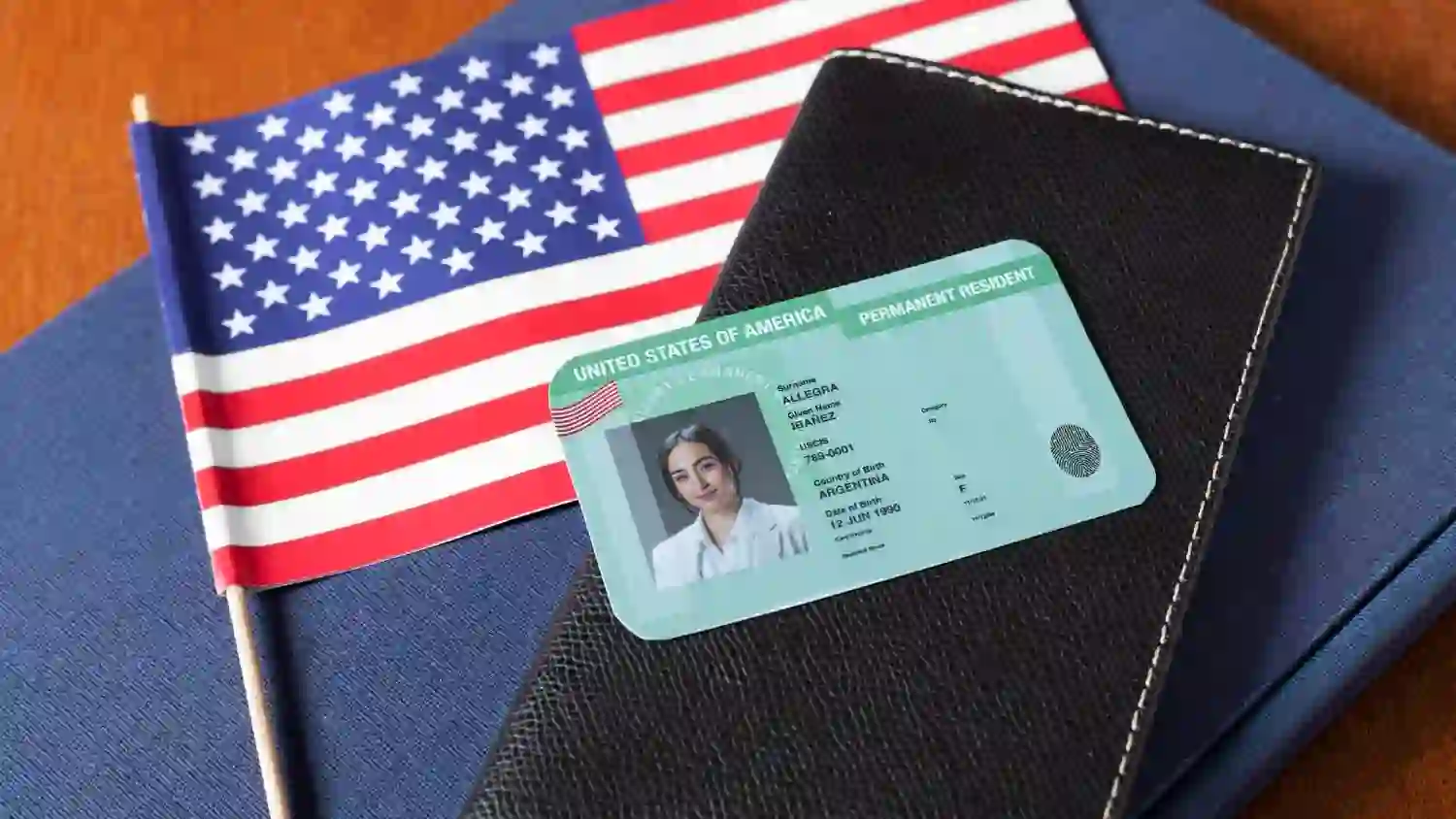
EB-1 is a first-preference employment-based green card category for people with extraordinary ability, outstanding professors and researchers, and certain multinational executives or managers. You can explore Beyond Borders’ EB-1 visa options if you are still deciding which EB-1 route fits your background.
EB-1 wait times by country are not based only on how strong your petition is. They also depend on visa number availability. Even a strong EB-1 petition may need to wait if the applicant’s country has a cutoff date in the Visa Bulletin.
Country of chargeability usually means your country of birth, not your current citizenship, passport, or residence. This matters because two applicants working in the same U.S. company may face different EB-1 timelines if they were born in different countries.
For example, an applicant born in China may need to track EB-1 China wait time separately, while an applicant born in Mexico or the Philippines may fall under a different Visa Bulletin column.
Your EB-1 priority date is your place in line. For many employment-based immigrant petitions, it is tied to when the petition is properly filed.
If your priority date is earlier than the date listed in the Visa Bulletin, your case may be able to move forward. If your country is marked “C,” the category is current.
“Current” does not mean automatic approval. It means a visa number is available for that category and country. You still need a complete petition, a valid adjustment of status filing or consular process, medicals, forms, and supporting documents.
EB-1 wait times by country can change monthly, so applicants should avoid relying on old screenshots, outdated forum posts, or timelines from friends.

The EB-1 China wait time needs careful review because China can have a separate cutoff date. In the June 2026 Visa Bulletin, EB-1 China had a Final Action Date of April 1, 2023, while Mexico and the Philippines remained current under EB-1.
China has a high demand across several employment-based immigration categories. When demand is higher than available visa numbers, the government creates a cutoff date. That is why EB-1 wait times by country matter so much for Chinese applicants.
A cutoff date does not mean you should avoid EB-1. It means you need to plan the filing, work authorization, and long-term green card strategy more carefully.
Chinese applicants should check the EB-1 row, the China-mainland born column, and the correct chart for the month. The Department of State explains that Visa Bulletin dates are listed in day-month-year format.
If your priority date is before the listed cutoff date, the case may be closer to final action. If it is after the cutoff date, you may need to wait for movement.
For some Chinese applicants, EB-1 may still be more attractive than EB-2 NIW green card planning, especially if the applicant has strong awards, original contributions, major publications, critical roles, judging, high salary, or strong industry recognition.
EB-2 NIW can work well for nationally important work, but the wait-time strategy may differ. The better route depends on both evidence strength and timing.
If the applicant needs U.S. work authorization before the green card is available, the O-1 visa for temporary U.S. work authorization may be useful. O-1 is not controlled by immigrant visa backlogs in the same way, so it can support a short-term work plan while EB-1 or EB-2 NIW remains pending.

The EB-1 Mexico wait time is often more favorable than in countries with heavy backlogs. In many Visa Bulletins, Mexico is currently under EB-1, but applicants should still check the monthly update before filing.
As of the June 2026 Visa Bulletin, Mexico was current in EB-1. That means there was no separate EB-1 Mexico cutoff date for that month.
However, “current” is not permanent. Visa Bulletin movement can change if demand increases or annual limits tighten.
Mexican applicants should not assume that a current category will stay current forever. The safest approach is to check the Visa Bulletin before filing Form I-485, before making travel plans, and before deciding whether to use adjustment of status or consular processing.
Mexico-born applicants may consider EB-1A if they have strong individual recognition, EB-1B if they are outstanding professors or researchers with a qualifying employer, or EB-1C if they are multinational executives or managers.
For a broader explanation, read Beyond Borders’ complete EB-1 green card guide.

The EB-1 Philippines wait time is often misunderstood because many people associate the Philippines with long U.S. immigration backlogs. That can be true in some categories, but each Visa Bulletin category must be read separately.
As of the June 2026 Visa Bulletin, the Philippines was current under EB-1. That means there was no EB-1 Philippines cutoff date for that month.
This does not remove the need for a strong petition. It simply means visa number availability was not the main barrier at that time.
A common mistake is mixing EB-1 with EB-2, EB-3, or family-based backlogs. The EB-1 Visa Bulletin line should be reviewed on its own.
For example, a Filipino professional may hear about long waits in other categories and assume EB-1 is also delayed. That may not be true for the relevant month.
Filipino researchers, founders, executives, artists, healthcare innovators, technology leaders, and senior professionals may consider EB-1 if they have strong evidence of recognition and impact.
Before assuming eligibility, review the EB-1 requirements carefully. EB-1 is not granted because of nationality, job title, or ambition alone. The case must prove a high level of achievement.
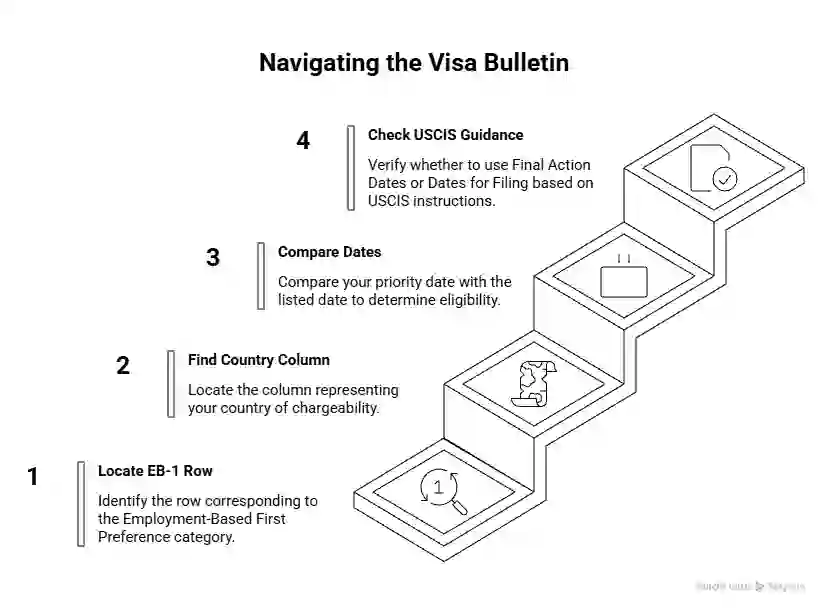
Reading the Visa Bulletin correctly is one of the most important steps in understanding EB-1 wait times by country.
EB-1 is usually listed as “1st” under employment-based preference categories. This is the row you need for EB-1A, EB-1B, and EB-1C.
Look for your country column. China, India, Mexico, and the Philippines may appear separately from “All Chargeability Areas Except Those Listed.”
If your priority date is earlier than the listed date, your case may be eligible to move forward. If the category says “C,” it is current.
For adjustment of status, USCIS tells applicants which Visa Bulletin chart to use each month. USCIS stated that for June 2026, employment-based applicants must use the Final Action Dates chart.
Applicants should not choose a pathway based only on speed. The right strategy depends on evidence, work plans, employer structure, and country timing.
Wait times are only one part of the decision. The stronger question is: which visa strategy fits your evidence, country of chargeability, work plans, and long-term immigration goal?
At Beyond Border, we help applicants compare EB-1, EB-2 NIW, and O-1 based on the strength of their profile, not just generic processing timelines. For some applicants, EB-1 may be the right green card path. For others, EB-2 NIW may offer a better fit, while O-1 can provide a faster temporary work option while a green card strategy develops.
If you are unsure whether EB-1, EB-2 NIW, schedule your free consultation and profile evaluation.
EB-1 wait times usually depend on the country of chargeability, which is commonly the applicant’s country of birth. Citizenship, residence, and work location do not automatically control the Visa Bulletin category.
Often, yes, when Mexico and the Philippines are current and China has a cutoff date. But this can change each month, so applicants should always check the latest Visa Bulletin before filing.
Yes. A backlog does not stop you from preparing or filing the EB-1 petition. It may affect when you can file an adjustment of status or receive final green card approval.
Chinese applicants should compare both the evidence strength and timing. EB-1 may be stronger for applicants with high recognition. EB-2 NIW may fit applicants whose work has national importance but does not yet meet the EB-1 standard.
Yes. O-1 can help qualified applicants work in the U.S. while an EB-1 or EB-2 NIW strategy moves forward.

Address: 4 W 4th Ave, San Mateo, CA 94402, United States
Email: info@beyondborderglobal.com