
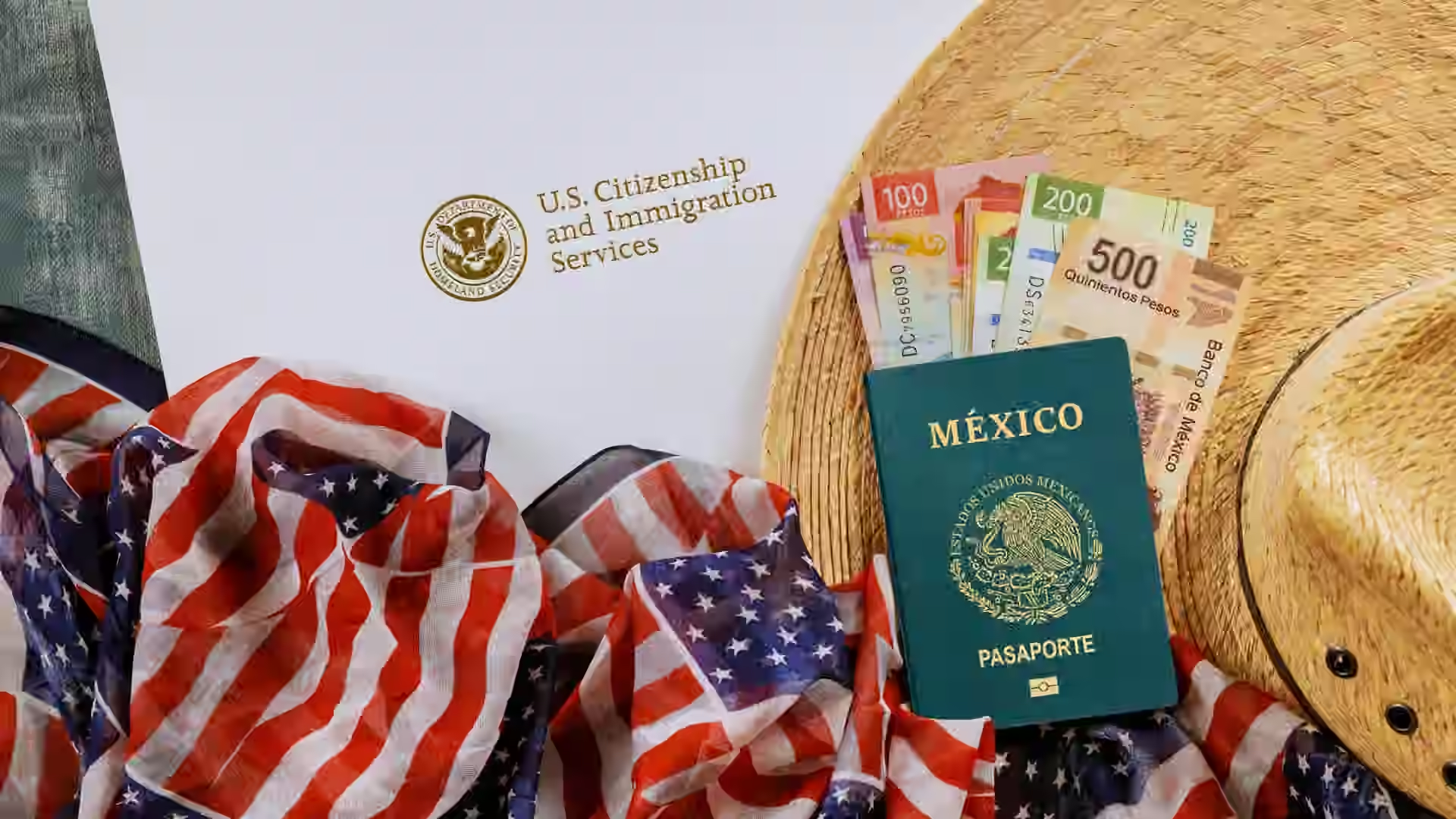
On August 14, 2026, USCIS announced that updated editions of Form I-539 (used to extend or change nonimmigrant status) and Form I-765 (used for employment authorization) will be released on September 15, 2026, with an edition date of 09/15/26.
Most importantly, there is no grace period. Unlike past transitions where USCIS accepted older form versions alongside new ones for a time, these changes will take effect immediately.
If your firm works with clients in O-1A, O-1B, L-1, EB-1A, or EB-2 NIW categories, this mostly affects dependent family members and submission timelines rather than primary petitioners or underlying legal requirements.
The new 09/15/26 editions replace the older versions (08/28/24 for Form I-539 and 08/21/25 for Form I-765).
There is zero overlap. The postmark or electronic submission date determines which edition is required, not when USCIS actually receives the application. For example, mailing a new edition on September 12 will result in a rejection, just as mailing an old edition on September 15 will.
USCIS has provided preview versions of the new forms and instructions for planning purposes, but preview versions cannot be filed before September 15.
These updates follow a Department of Homeland Security final rule issued on July 17, 2026 (91 FR 44976, DHS Docket No. ICEB-2025-0001).
The new rule replaces duration of status admissions with fixed stay periods for F, J, and I visa holders, creating a formal extension process through USCIS. Because this rule takes effect on September 15, 2026, USCIS requires the updated form editions immediately and will not offer a grace period.
Note: This is classified as a major rule and Congress is currently reviewing it. DHS may announce a different effective date later, though USCIS has not stated whether that would change the form deadline.
If you're the main visa holder for an O-1A or L-1 petition, this I-539 update does not affect you directly.
However, it affects your family. Dependents on O-3, L-2, and H-4 visas use Form I-539 to extend or change their status, and these applications are usually submitted right along with the main petition.
If you put together a full family packet in early September using the old forms, but don't mail it until after September 15, your dependents' applications could be rejected even though your main petition is accepted.
Form I-765 applies to an even broader group. Self-petitioners with EB-1A or EB-2 NIW visas who have a pending Form I-485 use Form I-765 to apply for or renew their work permits. Spouses on H-4 visas also use it for work authorization. Spouses on L-2 visas are allowed to work automatically as part of their status, so they don't strictly need a separate work document, though some still choose to apply for one.
The risks here come down to timing not case quality. Unlike receiving a Request for Evidence, a form rejection means your application was never officially filed. For an I-765 renewal, a rejection can void the automatic extension of an expiring work permit. For an I-539 extension, it can leave dependents without legal stay while their case is pending.
One effective way to minimize risk is online filing. Submitting electronically ensures you automatically use the latest form edition on that date, eliminating postmark errors. While paper filings are sometimes necessary, electronic filing removes these uncertainties.
We recommend reviewing any filings scheduled around mid-September to check their postmark dates and confirm compliance. If a filing falls close to the September 15 cutoff, consult legal counsel to determine the best approach.

